Keupp musste sich nur von die russische Armee wird strategisch diesen Oktober geschlagen auf, die russische Armee wird strategisch definitiv diesen Winter geschlagen nach hinten korrigieren
vgl:
- weil die russische Armee im Moment VOR ihren eigenen Schützengräben kämpft, weil das ihre Befehlsstruktur so will, und dort von Cluster Ammunition weggeschossen wird, bei der es ja keine Lieferprobleme gibt, da die US noch 3 Millionen auf Lager haben, die aber gegen Schützengräben wenig ausrichtet.
Und zwar stellen sich die Russen nicht nur bei Robotyne vor ihre eigenen Schützengräben, sondern auch im Nordosten.
Außerdem ist die Abnutzungsrate der gepanzerten und eingegrabenen Einheiten der Russen so hoch wie noch nie zuvor, auch wenn gegen die Cluster Munition nicht hilft.
Und sogar schon auf Sattelitenbildern lässt sich die Feuerüberlegenheit der Ukraine darstellen, die vorgezogenen Artilleriesysteme werden ebenfalls so schnell abgenutzt wie nie zuvor.
Und gute Nachricht, auch die ukrianischen Spezialeinheiten die auf der Krim gelandet sind, mit Flagge, um dort Bilder zu schießen, unterhalten sich dort am Ufer an dem nur Drachenzähne liegen, ha - mit den Partisanen über mögliche Lieferungen, das sind gar keine Himmelfahrtskommandos!
Alles in allem sind wir in einer sehr erfolgreichen Abnutzungsphase auf die wieder eine sehr erfolgreiche Sturm und Drang Phase folgen wird.
Achja, und das geht den Winter durch, weil im Süden spielt die Rasputiza ja auch kaum eine Rolle, googlen sie mal wie warms dort noch ist.
Des weiteren gehen den Russen auch bald die Nachschubeinheiten aus -- während die Kriegsreporterin von russischen Kampfverbänden von 100.000 Mann spricht, die im Osten in einen Angriff übergehen könnten - Keupp sieht die dort in der Masse nicht so.
Und wenn die Abnutzung des Schweren Kriegsgeräts linear so weitergeht wie diese Woche, dann kommt Russland mit dem Nachproduzieren nicht nach.
Also - was ist passiert?
Russland lagert scheinbar die bereits beinahe verbrauchte Artillerie vor und kümmert sich nicht um taktische Verluste - um die Abnutzungsrate der Ukraine zu erhöhen. Die erhöhte Abschussrate von Panzern rührt von einer gescheiterten Lokaloffensive Russlands her. Ansonsten nutzt die Ukraine Russland immer noch nicht im Faktor 1:6 ab, sondern mehr so 1:2.
Wenn Russland doch noch diesen Winter den strategischen Zusammenbruch erlebt, hab ich mich geirrt, falls nicht erzählt der Keupp seit sechs Monaten kompletten Schwachsinn.
Achja, und wenn sich Keupp nicht irrt - steht die Kertsch Brücke noch sehr lange - nicht weil die gelieferten Atacams keine ballistischen Ladungen haben und Deutschland keine Taurus liefert - sondern weil die Ukraine die Russen nicht am Rückzug hindern möchte!
Die US Demokraten wählen geschlossen den republikanischen Repräsentantenhaus Sprecher aus dem Amt?
Auf einen Antrag des ultra rechten Flügels der Republikaner hin.
Da dieser Konzessionen gegenüber der ultrarechten Seite und Trump persönlich gemacht hat um im Amt handlungsfähig zu bleiben.
Die Republikanische Partei stellt einen gemäßigten Kandidaten auf.
Der bekommt keine republikanische Mehrheit, aber die Demokraten wählen ihn ins Amt um einen Lockdown zu verhindern.
- geschwächter republikanischer Einfluss im Repräsentanten Haus
- Parteikrise der Republikaner nicht aus den Fugen geraten
- Demokraten mussten ja, wegen dem Haushalt
- Ultra Rechte weiter im Abseits als bisher (Schlagzeilen, Chaos in der US Regierung weltweit.)
Wo ist das Problem?
Dass der ZDF Korrespondent mit einem Demokraten gesprochen hat und er gemeint hätte, naja -- dass wir einen Republikaner wählen ist auch eher ausgeschlossen?
Jetzt nehmen wir doch mal an die Demokraten werden sich bei ihrem geschlossenen Stimmverhalten heute etwas überlegt haben.
Oder sie haben einfach alle geschlossen und verkatert emotional abgestimmt…
Schwierige Probleme mit denen sich das ZDF herumschlagen muss.
Dann aber noch die Wichtigste Frage des Tages “was denkt sich Putin heute”. “Der wird sicher feixen.” Gut dass wir das alles geklärt haben, da kann der Krieg ja endlich weiter gehen.
Notfalls auch mit Funding das der Präsident unilateral ins Leben ruft, bis die US Judikative ihm das untersagt.
Wir erinnern uns an Rauscher, der von seinem Besuch beim IWMVienna und dem dortigen Willkommensgeheiß von der Bühne aus - Richtung Rauscher im Publikum, so derartig begeistert war, dass er ab dem Zeitpunkt seinen Lesern, der österreichischen Regierung und der österreichischen Opposition in der Form der SPÖ öffentlich ausgerichtet hat - dass sie allesamt auf die falschen Experten hören würden?
(Quellenbelege weiter unten.)
Und die einzig echten (!) Experten nur im IWMVienna zu finden seien, nämlich der Yes Conference Attendee und Stammgast, Timothy Snyder (“Historiker im Kassandra-Modus: Wie wurde Timothy Snyder zum Kriegsexperten?” im Original hier: click) von dem bereits die ukrainischen Propagandisten (Nataliya Gumenyuk), die sich nicht nur von ukrainischen Staats-Fonds ihre neu gegründeten “Medienwirkunsforschungs-Institute” finanzieren haben lassen -
https://en.journlab.online/home
Mission Statement:
We create high quality content to promote a constructive discussion around complex social topics, and test this content on audiences, before developing editorial strategies based on the sociological research. Our experts research public opinion and test content among different audiences, and media architects
[WHATS A MEDIAARCHITECT? I’m just asking, because I studied this.]
develop editorial strategies based on sociological research and audiences’ feedback.
src: https://en.journlab.online/home
sondern dort (!) auch Kriegspropaganda-Messaging an Focus Groups “in Punkto öffentlicher Wirkfähigkeit” getestet haben, öffentlich verlautbart haben, dass sie für die “Geschichte der Ukrainischen Vergangenheit” ja bereits den Snyder “hätten”, aber sich noch Sorgen um das Narrativ für die Zukunft machen würden, sie wissen schon - das nach dem Sturz Putins.
(Sollte alles in folgendem IWMVienna Panelinterview zu finden sein:)
Wobei, wenn ich “öffentlich verlautbart” schreibe dann meine ich natürlich - im IWMVienna selbst öffentlich verlautbart. In Wien, auf offener Bühne - weil dort ist man ja unter Freunden. Und wenn ich Propagandistin sage, meine ich natürlich die Person die dort als “Journalistin” vorgestellt wird.
und die Victoria aber wirklich nochmal fragen müssen, mehr Geld und mehr Waffen, wegen der ehrlichen Kommunikation zwischen zwei annähernd gleich unabhängigen Staaten - also mehr Geld und mehr Waffen, heute - oder morgen?
Und dann als Antwort bekommen “wir sind hier öffentlich, ich muss ihnen sagen, erst mal 20 Milliarden und dann nicht mehr so ganz viel”.
Also die selben Propagandisten, die beim IWMVienna erklären “den Snyder hätten sie fürs Narrativ der Vergangenheit der Ukraine”, bei dem IWMVienna, der dann den Meinungsjournalisten Rauscher vom Standard lädt.
Und dann von der Bühne aus offen namedropt und willkommen heißt, worauf der Rauscher seiner Leserschaft, der österreichischen Regierung und der österreichischen Opposition in Form der SPÖ nahelegt ihre Experten zu wechseln, und von jetzt an auf Timothy Snyder zu hören.
Permanent Fellow beim IWMVienna, bevor er in diesem oder dem letzten Jahr endlich eine Professur für Geschichte in Yale angetreten hat.
Sie wissen schon, der Timothy Snyder, der nicht nur die Yes Conferences sehr toll findet
sondern als Yale Geschichtsprofessor auch aktiv betriebenen Geschichtsrevisionismus sehr toll findet - ein spannendes und interessantes Feld, an dem aktuell viele seiner Kollegen arbeiten:
Ok, also der Rauscher, der nach dem IWMVienna Namedrop, und der Einladung beginnt der österreichischen Regierung und der österreichischen Opposition in der Form der SPÖ den Timothy Snyder als Experten nahezulegen, öffentlich im Standard, weil die österreichische Regierung und die österreichische Opposition ja allesamt auf die falschen Experten hören würden -
die guten wären, Timothy Snyder vom IWMVienna, die Erfinderin des “Putins denkt wie ein Zar - denn ich habe seine Zarenstatuen in seinem Büro gesehen, vor Jahren - nach einem Dinner” Narratives - Fiona Hill - von der US regierungsnahen Brookings Institution, sie wissen schon die Brookings Institution die per Gründungsauftrag US aussenpolitische Interessen weltweit durchzusetzen hat (Gründung nach dem ersten Weltkrieg) (und die erste US Institution gegen die im Zusammenhang mit dem Ukraine Krieg Code Pink protestiert hat) - ach, lassen sie sich das einfach von der Fiona selbst erklären…
Also der Rauscher, der der österreichischen Regierung und der österreichischen Opposition in der Form der SPÖ, in der Woche nach seinem IWMVienna Besuch mit Namedrop vom Podium aus, öffentlich in seiner Kolumne - die beiden Experten empfiehlt, da die österreichische Regierung, und die österreichische Opposition auf die falschen Experten hören würden, der die beiden empfiehlt - und den Ivan Krastev (ebenfalls IWMVienna), nichts gegen Krastev (ja, so einfach kanns gehen, nichts gegen Krastev, der ist in Ordnung 😉 ), also der Rauscher der der österreichischen Bevölkerung, der österreichischen Regierung und der österreichischen Opposition in der Form der SPÖ, diese drei Experten empfiehlt --
nachdem er beim IWMVienna von offener Bühne aus genamedropped wurde. In seiner Kolumne - in der selben Woche…
Neben “Imperialismus und Neokolonialismus” (Synder) und neben “Putin denkt wie ein Zar, ich erkenne das an seinen Steinstatuen” (Fiona Hill) und neben “es hat demographische Gründe” (Krastev, aber Krastev ist ok)…
*räusper*
der Kriegsgrund und die Motivation Putins - Revanchismus ist.
HANSRAUSCHER
Die Revanche für den Zerfall der sozialistischen Imperien
Ungelöste Konflikte brodeln wieder hoch: erst in der Ukraine, jetzt auch in Bergkarabach und am Balkan
Sie wissen schon, Revanchismus - wie ihn weder Snyder, noch Hill vertreten!
Sondern Revanchismus, was die Position des deutschen auswärtigen Amts und des deutschen Verteidigungsausschusses zu Kriegsbeginn war.
Bevor das deutsche auswärtige Amt WEGENSNYDER (!) der die öffentliche Debatte dominiert hat, von Revanchismus, zuerst auf Neokolonialismus als Kriegsbegründung, und dann auf Neoimperialismus als Kriegsbegründung gewechselt ist.
Ich habe mich vor zwei Tagen gefragt was eigentlich die Konsequenz von Eliteversagen im Wertewesten sei.
Ich glaub heute hab ich die Antwort.
Beförderung, oder?
Der Rauscher, der beim Standard MEINUNGSJOURNALIST ist, und noch nie ein Außenpolitik-Ressort von innen gesehen hat.
#Diskurs
#Kolumne
Aber eben nicht im Politikressort.
Der sich deshalb besonders freut vom IWMVienna eingeladen und dort von der Bühne aus willkommen geheissen zu werden.
Wie kann man die Öffentlichkeit eigentlich noch verarschen?
Propaganda hat aber natürlich immer noch niemand entdeckt.
Einstiegsfrage: Wie lange dauert der Krieg noch? Antwort, wie von den US Thinktanks ausgegeben: Noch Zehn Jahre (und dann noch eine Metric Shitton an strategischer Ambiguität “aber genau weiß ichs nicht!”). Siehe Clüver Ashbrook:
(Das Spannende ist immer wann Narrative das erste Mal im deutschen Medien Spektrum auftauchen - Clüver Ashbrook war hier die erste. (Also nach der Krieg ist nächstes Jahr zu Ende, die Offensive ist ein voller Erfolg und dauert noch im Winter und durch die Rasputiza hindurch an, dauert jetzt aber halt nicht ein Jahr, sondern zehn - ein voller Erfolg! Man kennt das ja.
Wer war jetzt die erste Person die zehn Jahre in den deutschen Medien verbreitet hat? Clüver Ashbrook.) Hurra!)
Also so weit so auswendig gelernt - was ja belegbar die Spezialität von Claudia Major ist, also das auswendig Lernen von US PR-Positionen - siehe:
Jetzt aber - böser, böser, gefinkelter Moderator, der weiß dass Claudia Major ihre Statements nur von der US Administration abkupfert… Verständnis Frage!
So ein böser Moderator…
Claudia Major: […] zweites Antwort Element ist - das hängt auch von uns ab, also von den westlichen Unterstützerstaaten, wenn sie die Ukraine politisch, militärisch, finanziell, humanitär - substanziell unterstützen, kann sie den Krieg hoffentlich schneller zu ihren Gunsten beenden [WIEVERSCHLAGENMUSSMANEIGENTLICHSEIN… Neuer Gamechanger! Alles liefern! Sagt die alleinige Erfinderin der Lernkurve!] deswegen die kurze Antwort - ich weiß es nicht wie lange hängt von uns ab. Und wahrscheinlich eher länger.
Moderator: Sie verweisen auf die Forschung und sagen, wenn es nach einem Jahr nicht vorbei ist dauert es dann meistens sehr viel länger. Was ist da die Ursache dafür, rein wissenschaftlich, für die Länge des Krieges?
Claudia Major: Na ja, das sind verschiedene Gründe, das sind natürlich einmal die materiellen Fähigkeiten diesen Krieg zu führen [?] und da darf - in diesem Falle hängt die Ukraine sehr stark von der westlichen Unterstützung ab. Es hängt natürlich aber auch an den Kriegsgründen und hier müssen wir sagen, dass so lange Russland oder so lange die Regierung Putin an ihren Kriegszielen festhält also solange sie die Identität und die eigene Staatlichkeit und das Existenzrecht der Ukraine in Frage stellt solange wird es keinen Frieden mit Russland und auch keine Stabilität geben - und solange Russland ein in Intention also in Absichten und Zielen und auch Instrumenten zutiefst militarisierter Staat ist auch so lange wird das keine Stabilität und kein Frieden geben und wenn man sich diese beiden Faktoren zusammen ansieht ist klar dass wir auf absehbare Zeit ohne einen fundamentalen Wandel in Russland keine Stabilität, keine Sicherheit und keinen Frieden haben werden und auch deswegen müssen wir uns auf einen langfristigen Konflikt einstellen.
[Ja danke, wissenschaftlich bedeutet “was mir bedeutende Leute zum Sturz Putins sagen” schon klar. Hier ist sie, Claudia Major - Applaus! Der Moderator versuchts noch mal -]
Moderator: Kann man auch sagen dass es eben doch auch ein ganz anderer Krieg ist als im Irak und in Afghanistan wo die eine Seite Haus hoch überlegen war - etwa mit ihrer Luftwaffe und hier in der Ukraine kämpfen nun zwei Gegner auf Augenhöhe in einem Infanterie und Stellungskrieg ist das auch ein Grund weswegen es lag so lange dauert?
Claudia Major: Ich weiß nicht ob der Begriff Augenhöhe wirklich zutrifft, denn wenn sie die nackten Zahlen nehmen besteht ja ein Himmel weiter Unterschied zwischen Russland und der Ukraine. [Und zwischen sowjetischen und NATO Waffen] Russland mit 140 Millionen Einwohnern die Ukraine um die 40 - Russland ein Atomwaffenstaat, die Ukraine nicht. Das heißt zahlenmäßig ist die Ukraine Russland deutlich unterlegen. Wir haben in diesem Krieg aber auch gesehen, dass die nackten Zahlen alleine nicht weiterhelfen, weil es große Unterschiede gibt - beispielsweise in der Qualität der Armee, in dem Kampfes Willen in der Moral der Armee, deshalb ist es so schwer auch die Ergebnisse vorherzusagen - und deshalb haben wir momentan diese Patt-Situation, die sich nur sehr langsam zugunsten der Ukraine wendet.
Ich erzählen was ich gelernt habe von guten Freunden in US Thinktank Szene und Administration.
Ich auch nicht wissen was Propaganda ist.
Ich Propaganda jedenfalls ja auch nie entdecken.
Ich aber fähig beraten deutsche Bundesregierung - immer!
Ich gern gesehener Gast in deutschem Maischberger Idiotenfernsehen.
Ich Claudia Major.
Ich nix Wissenschaft, nur Propaganda.
Propaganda hat aber immer noch niemand entdeckt. Was will man machen.
Und der Rest der öffentlichen Erzählung wird einfach mit VOLLKOMMENENLÜGENZURECHTGEZIMMERT.
Ich wusste ja nicht, ob sies wussten, aber - Claudia Major bei 27 min in, Putin (wer sonst) ist bisher nicht von seinen Forderungen aus dem Essay im Juli zurückgestiegen, und verlangt ja immer noch…
Claudia Mayor: So lange Russland immer noch das Existenzrecht der Ukraine in Frage stellt [Oh wir sind von es ihr abspricht abgekommen! In der Formulierung? Ist das neu?] und von den Zielen die Putin damals in seinem Essay damals aufgeschrieben hat und die seit damals regelmäßig wieder wiederholt worden sind - solange Russland davon nicht abrückt, wird jeder Waffenstillstand nur eine taktische Atempause sein.
Kleines Problem, das Essay enthält keine einzige Forderung und nicht ein Ziel.
edit: Es sei denn man legt das hier als Forderung aus:
You want to establish a state of your own: you are welcome! But what are the terms? I will recall the assessment given by one of the most prominent political figures of new Russia, first mayor of Saint Petersburg Anatoly Sobchak. As a legal expert who believed that every decision must be legitimate, in 1992, he shared the following opinion: the republics that were founders of the Union, having denounced the 1922 Union Treaty, must return to the boundaries they had had before joining the Soviet Union. All other territorial acquisitions are subject to discussion, negotiations, given that the ground has been revoked.
Die Kriegsziele wurden immer noch in der Kriegserklärungsrede von Putin formuliert. Nicht im Juli, im Jahr davor.
Der Juli Text war eine geschichtsrevisionistische Abhandlung über die historische Eigenständigkeit der Ukraine, die ihr - historisch - abgesprochen wurde, noch nicht mal mit - “vielleicht muss ich “zur Lösung des Konflikts” die Separatistengebiete anerkennen”. Auch das kam erst später.
Hier der Inhalt des Essays vom Juli 2021:
[…] Therefore, modern Ukraine is entirely the product of the Soviet era. We know and remember well that it was shaped – for a significant part – on the lands of historical Russia. To make sure of that, it is enough to look at the boundaries of the lands reunited with the Russian state in the 17th century and the territory of the Ukrainian SSR when it left the Soviet Union.
[…]
Of course, inside the USSR, borders between republics were never seen as state borders; they were nominal within a single country, which, while featuring all the attributes of a federation, was highly centralized – this, again, was secured by the CPSU’s leading role. But in 1991, all those territories, and, which is more important, people, found themselves abroad overnight, taken away, this time indeed, from their historical motherland.
[…]
What can be said to this? Things change: countries and communities are no exception. Of course, some part of a people in the process of its development, influenced by a number of reasons and historical circumstances, can become aware of itself as a separate nation at a certain moment. How should we treat that? There is only one answer: with respect!
You want to establish a state of your own: you are welcome! But what are the terms? I will recall the assessment given by one of the most prominent political figures of new Russia, first mayor of Saint Petersburg Anatoly Sobchak. As a legal expert who believed that every decision must be legitimate, in 1992, he shared the following opinion: the republics that were founders of the Union, having denounced the 1922 Union Treaty, must return to the boundaries they had had before joining the Soviet Union. All other territorial acquisitions are subject to discussion, negotiations, given that the ground has been revoked.
In other words, when you leave, take what you brought with you. This logic is hard to refute. [außer natürlich durch territoriale Integrität in international anerkannten Grenzen.] I will just say that the Bolsheviks had embarked on reshaping boundaries even before the Soviet Union, manipulating with territories to their liking, in disregard of people’s views.
The Russian Federation recognized the new geopolitical realities: and not only recognized, but, indeed, did a lot for Ukraine to establish itself as an independent country. Throughout the difficult 1990’s and in the new millennium, we have provided considerable support to Ukraine. Whatever ”political arithmetic“ of its own Kiev may wish to apply, in 1991–2013, Ukraine’s budget savings amounted to more than USD 82 billion, while today, it holds on to the mere USD 1.5 billion of Russian payments for gas transit to Europe. If economic ties between our countries had been retained, Ukraine would enjoy the benefit of tens of billions of dollars.
Ukraine and Russia have developed as a single economic system over decades and centuries. The profound cooperation we had 30 years ago is an example for the European Union to look up to. We are natural complementary economic partners. Such a close relationship can strengthen competitive advantages, increasing the potential of both countries.
[…]
Today, high-tech industrial giants that were once the pride of Ukraine and the entire Union, are sinking. Engineering output has dropped by 42 per cent over ten years. The scale of deindustrialization and overall economic degradation is visible in Ukraine’s electricity production, which has seen a nearly two-time decrease in 30 years. Finally, according to IMF reports, in 2019, before the coronavirus pandemic broke out, Ukraine’s GDP per capita had been below USD 4 thousand. This is less than in the Republic of Albania, the Republic of Moldova, or unrecognized Kosovo. Nowadays, Ukraine is Europe’s poorest country.
Who is to blame for this? Is it the people of Ukraine’s fault? Certainly not. It was the Ukrainian authorities who waisted and frittered away the achievements of many generations. We know how hardworking and talented the people of Ukraine are. They can achieve success and outstanding results with perseverance and determination. And these qualities, as well as their openness, innate optimism and hospitality have not gone. The feelings of millions of people who treat Russia not just well but with great affection, just as we feel about Ukraine, remain the same.
[…]
Even after the events in Kiev of 2014, I charged the Russian government to elaborate options for preserving and maintaining our economic ties within relevant ministries and agencies. However, there was and is still no mutual will to do the same. Nevertheless, Russia is still one of Ukraine’s top three trading partners, and hundreds of thousands of Ukrainians are coming to us to work, and they find a welcome reception and support. So that what the ”aggressor state“ is.
When the USSR collapsed, many people in Russia and Ukraine sincerely believed and assumed that our close cultural, spiritual and economic ties would certainly last, as would the commonality of our people, who had always had a sense of unity at their core. However, events – at first gradually, and then more rapidly – started to move in a different direction.
[…]
In essence, Ukraine’s ruling circles decided to justify their country’s independence through the denial of its past, however, except for border issues. They began to mythologize and rewrite history, edit out everything that united us, and refer to the period when Ukraine was part of the Russian Empire and the Soviet Union as an occupation. The common tragedy of collectivization and famine of the early 1930s was portrayed as the genocide of the Ukrainian people.
Radicals and neo-Nazis were open and more and more insolent about their ambitions. They were indulged by both the official authorities and local oligarchs, who robbed the people of Ukraine and kept their stolen money in Western banks […] [Ich kürz das mal ab…]
Step by step, Ukraine was dragged into a dangerous geopolitical game aimed at turning Ukraine into a barrier between Europe and Russia, a springboard against Russia. Inevitably, there came a time when the concept of ”Ukraine is not Russia“ was no longer an option. There was a need for the ”anti-Russia“ concept which we will never accept.
The owners of this project took as a basis the old groundwork of the Polish-Austrian ideologists to create an ”anti-Moscow Russia“.
[…]
Lastly, as early as May of this year, the current president introduced a bill on ”indigenous peoples“ to the Rada. Only those who constitute an ethnic minority and do not have their own state entity outside Ukraine are recognized as indigenous. The law has been passed. New seeds of discord have been sown. And this is happening in a country, as I have already noted, that is very complex in terms of its territorial, national and linguistic composition, and its history of formation.
There may be an argument: if you are talking about a single large nation, a triune nation, then what difference does it make who people consider themselves to be – Russians, Ukrainians, or Belarusians. I completely agree with this. Especially since the determination of nationality, particularly in mixed families, is the right of every individual, free to make his or her own choice.
But the fact is that the situation in Ukraine today is completely different because it involves a forced change of identity. And the most despicable thing is that the Russians in Ukraine are being forced not only to deny their roots, generations of their ancestors but also to believe that Russia is their enemy. It would not be an exaggeration to say that the path of forced assimilation, the formation of an ethnically pure Ukrainian state, aggressive towards Russia, is comparable in its consequences to the use of weapons of mass destruction against us. As a result of such a harsh and artificial division of Russians and Ukrainians, the Russian people in all may decrease by hundreds of thousands or even millions.
Our spiritual unity has also been attacked. As in the days of the Grand Duchy of Lithuania, a new ecclesiastical has been initiated. The secular authorities, making no secret of their political aims, have blatantly interfered in church life and [ich kürz das mal ab …]
I think it is also natural that the representatives of Ukraine over and over again vote against the UN General Assembly resolution condemning the glorification of Nazism. Marches and torchlit processions in honor of remaining war criminals from the SS units take place under the protection of the official authorities. Mazepa, who betrayed everyone, Petliura, who paid for Polish patronage with Ukrainian lands, and Bandera, who collaborated with the Nazis, are ranked as national heroes.
Everything is being done to erase from the memory of young generations the names of genuine patriots and victors, who have always been the pride of Ukraine.
For the Ukrainians who fought in the Red Army, in partisan units, the Great Patriotic War was indeed a patriotic war because they were defending their home, their great common Motherland. Over two thousand soldiers became Heroes of the Soviet Union. Among them are legendary pilot Ivan Kozhedub, fearless sniper, defender of Odessa and Sevastopol Lyudmila Pavlichenko, [ich kürz das mal ab]
[…]
[und jetzt der gesamte Schluss ohne edit]
The anti-Russia project has been rejected by millions of Ukrainians. The people of Crimea and residents of Sevastopol made their historic choice. And people in the southeast peacefully tried to defend their stance. Yet, all of them, including children, were labeled as separatists and terrorists. They were threatened with ethnic cleansing and the use of military force. And the residents of Donetsk and Lugansk took up arms to defend their home, their language and their lives. Were they left any other choice after the riots that swept through the cities of Ukraine, after the horror and tragedy of 2 May 2014 in Odessa where Ukrainian neo-Nazis burned people alive making a new Khatyn out of it? The same massacre was ready to be carried out by the followers of Bandera in Crimea, Sevastopol, Donetsk and Lugansk. Even now they do not abandon such plans. They are biding their time. But their time will not come.
The coup d’état and the subsequent actions of the Kiev authorities inevitably provoked confrontation and civil war. The UN High Commissioner for Human Rights estimates that the total number of victims in the conflict in Donbas has exceeded 13,000. Among them are the elderly and children. These are terrible, irreparable losses.
Russia has done everything to stop fratricide. The Minsk agreements aimed at a peaceful settlement of the conflict in Donbas have been concluded. I am convinced that they still have no alternative. In any case, no one has withdrawn their signatures from the Minsk Package of Measures or from the relevant statements by the leaders of the Normandy format countries. No one has initiated a review of the United Nations Security Council resolution of 17 February 2015.
During official negotiations, especially after being reined in by Western partners, Ukraine’s representatives regularly declare their ”full adherence“ to the Minsk agreements, but are in fact guided by a position of ”unacceptability“. They do not intend to seriously discuss either the special status of Donbas or safeguards for the people living there. They prefer to exploit the image of the ”victim of external aggression“ and peddle Russophobia. They arrange bloody provocations in Donbas. In short, they attract the attention of external patrons and masters by all means.
Apparently, and I am becoming more and more convinced of this: Kiev simply does not need Donbas. Why? Because, firstly, the inhabitants of these regions will never accept the order that they have tried and are trying to impose by force, blockade and threats. And secondly, the outcome of both Minsk‑1 and Minsk‑2 which give a real chance to peacefully restore the territorial integrity of Ukraine by coming to an agreement directly with the DPR and LPR with Russia, Germany and France as mediators, contradicts the entire logic of the anti-Russia project. And it can only be sustained by the constant cultivation of the image of an internal and external enemy. And I would add – under the protection and control of the Western powers.
This is what is actually happening. First of all, we are facing the creation of a climate of fear in Ukrainian society, aggressive rhetoric, indulging neo-Nazis and militarising the country. Along with that we are witnessing not just complete dependence but direct external control, including the supervision of the Ukrainian authorities, security services and armed forces by foreign advisers, military ”development“ of the territory of Ukraine and deployment of NATO infrastructure. It is no coincidence that the aforementioned flagrant law on ”indigenous peoples“ was adopted under the cover of large-scale NATO exercises in Ukraine.
This is also a disguise for the takeover of the rest of the Ukrainian economy and the exploitation of its natural resources. The sale of agricultural land is not far off, and it is obvious who will buy it up. From time to time, Ukraine is indeed given financial resources and loans, but under their own conditions and pursuing their own interests, with preferences and benefits for Western companies. By the way, who will pay these debts back? Apparently, it is assumed that this will have to be done not only by today’s generation of Ukrainians but also by their children, grandchildren and probably great-grandchildren.
The Western authors of the anti-Russia project set up the Ukrainian political system in such a way that presidents, members of parliament and ministers would change but the attitude of separation from and enmity with Russia would remain. Reaching peace was the main election slogan of the incumbent president. He came to power with this. The promises turned out to be lies. Nothing has changed. And in some ways the situation in Ukraine and around Donbas has even degenerated.
In the anti-Russia project, there is no place either for a sovereign Ukraine or for the political forces that are trying to defend its real independence. Those who talk about reconciliation in Ukrainian society, about dialogue, about finding a way out of the current impasse are labelled as ”pro-Russian“ agents.
Again, for many people in Ukraine, the anti-Russia project is simply unacceptable. And there are millions of such people. But they are not allowed to raise their heads. They have had their legal opportunity to defend their point of view in fact taken away from them. They are intimidated, driven underground. Not only are they persecuted for their convictions, for the spoken word, for the open expression of their position, but they are also killed. Murderers, as a rule, go unpunished.
Today, the ”right“ patriot of Ukraine is only the one who hates Russia. Moreover, the entire Ukrainian statehood, as we understand it, is proposed to be further built exclusively on this idea. Hate and anger, as world history has repeatedly proved this, are a very shaky foundation for sovereignty, fraught with many serious risks and dire consequences.
All the subterfuges associated with the anti-Russia project are clear to us. And we will never allow our historical territories and people close to us living there to be used against Russia. And to those who will undertake such an attempt, I would like to say that this way they will destroy their own country.
The incumbent authorities in Ukraine like to refer to Western experience, seeing it as a model to follow. Just have a look at how Austria and Germany, the USA and Canada live next to each other. Close in ethnic composition, culture, in fact sharing one language, they remain sovereign states with their own interests, with their own foreign policy. But this does not prevent them from the closest integration or allied relations. They have very conditional, transparent borders. And when crossing them the citizens feel at home. They create families, study, work, do business. Incidentally, so do millions of those born in Ukraine who now live in Russia. We see them as our own close people.
Russia is open to dialogue with Ukraine and ready to discuss the most complex issues. But it is important for us to understand that our partner is defending its national interests but not serving someone else’s, and is not a tool in someone else’s hands to fight against us.
We respect the Ukrainian language and traditions. We respect Ukrainians’ desire to see their country free, safe and prosperous.
I am confident that true sovereignty of Ukraine is possible only in partnership with Russia. Our spiritual, human and civilizational ties formed for centuries and have their origins in the same sources, they have been hardened by common trials, achievements and victories. Our kinship has been transmitted from generation to generation. It is in the hearts and the memory of people living in modern Russia and Ukraine, in the blood ties that unite millions of our families. Together we have always been and will be many times stronger and more successful. For we are one people.
Today, these words may be perceived by some people with hostility. They can be interpreted in many possible ways. Yet, many people will hear me. And I will say one thing – Russia has never been and will never be ”anti-Ukraine“. And what Ukraine will be – it is up to its citizens to decide.
Vertrauen sie nicht mir, LESENSIESNACH.
http://en.kremlin.ru/events/president/news/66181
Oder vertrauen sie Stanford CISAC die damals, vor dem Krieg, noch nicht einmal einen Satz gefunden haben, der die Staatlichkeit der Ukraine HEUTE, in Frage gestellt hat.
Schon Scheisse - wenn der Stanford CISAC Typ damals noch
On the russian side in july, russian president Vladimir Putin published a lengthy five to six thousand word essay, in which he all but denied Ukraine the right to exist as a sovereign independent state.
formuliert.
Was will man machen - Claudia Major kennt die Forderungen des Putin Texts vom Juli.
Sind aber keine drinnen.
Bei 28min in:
Claudia Major: Aber noch mal, ich finde das ganz wichtig zu sagen, solange Russland seine Ziele nicht verändert, und das hat es nicht verändert. Es ist immer noch der Meinung, dass die Ukraine als eigenständiger Staat kein Existenzrecht hat, und so lange es -- sowohl die Regierung als auch die Gesellschaft zu tiefst militarisiert ist, und sie auch die Fähigkeiten dazu haben, solange sehe ich keine Chance auf Frieden. Sondern solange ist, ich sage es nochmal jeder Waffenstillstand lediglich eine Atempause. Meine sehr geschätzte Kollegin Magarete Klein hat von einem Sequenzkrieg gesprochen! […]
Claudia Major, meine Damen und Herren - Claudia Major.
Applaus.
Diese Gesellschaft ist einfach das absolut grotesk, abartigst Allerletzte.
Alles voller Lügen.
edit: Boah, voll toller Zufall eigentlich, zdfheute spricht heute mit Clüver Ashbrook, was eigentlich in den US momentan so abgeht… Ich hol mir schon mal den Notizblock!
Wie kann man die Bevölkerung eigentlich noch verarschen?
Ok, jetzt sitzt der Reisner schon seit über eineinhalb Monaten bei diesem Whitespot fest, dass er glaubt, dass die Ukraine ohne Donezk und Luhansk und die Regionen vor der Krim nicht überlebensfähig wäre, da die (aus dem Gedächtnis) laut ihm 90% der ukrainischen Getreideproduktion ausmachen und die Getreideproduktion 30% des ukrainischen GDP ausmacht.
[edit: Korrektur! Erinnerungsschwäche meinerseits. Reisner im Video:
[…] und auch hier auch vorweg gesagt dass die Ukraine wenn sie als Staat eigenständig überleben möchte, vor allem jene Gebiete braucht die sie jetzt verloren hat - denken sie alleine nur an die Situation der Getreidewirtschaft. 90% des Getreides der Ukraine verlässt dieses Land auf dem Seeeweg - zur Zeit ist nur ein einziger Hafen noch nutzbar, nämlich Odessa und da diese 90% der Getreideexporte haben im Prinzip zur Folge, dass 35% des BIPs der Ukraine davon bestritten wird, also einfach zu sagen na ja man könnte sich jetzt mit dem zufrieden geben ist schon sehr kurz gegriffen. Abgesehen natürlich von dem absoluten völkerrechtlichen Verstoß den Russland hier begonnen hat.
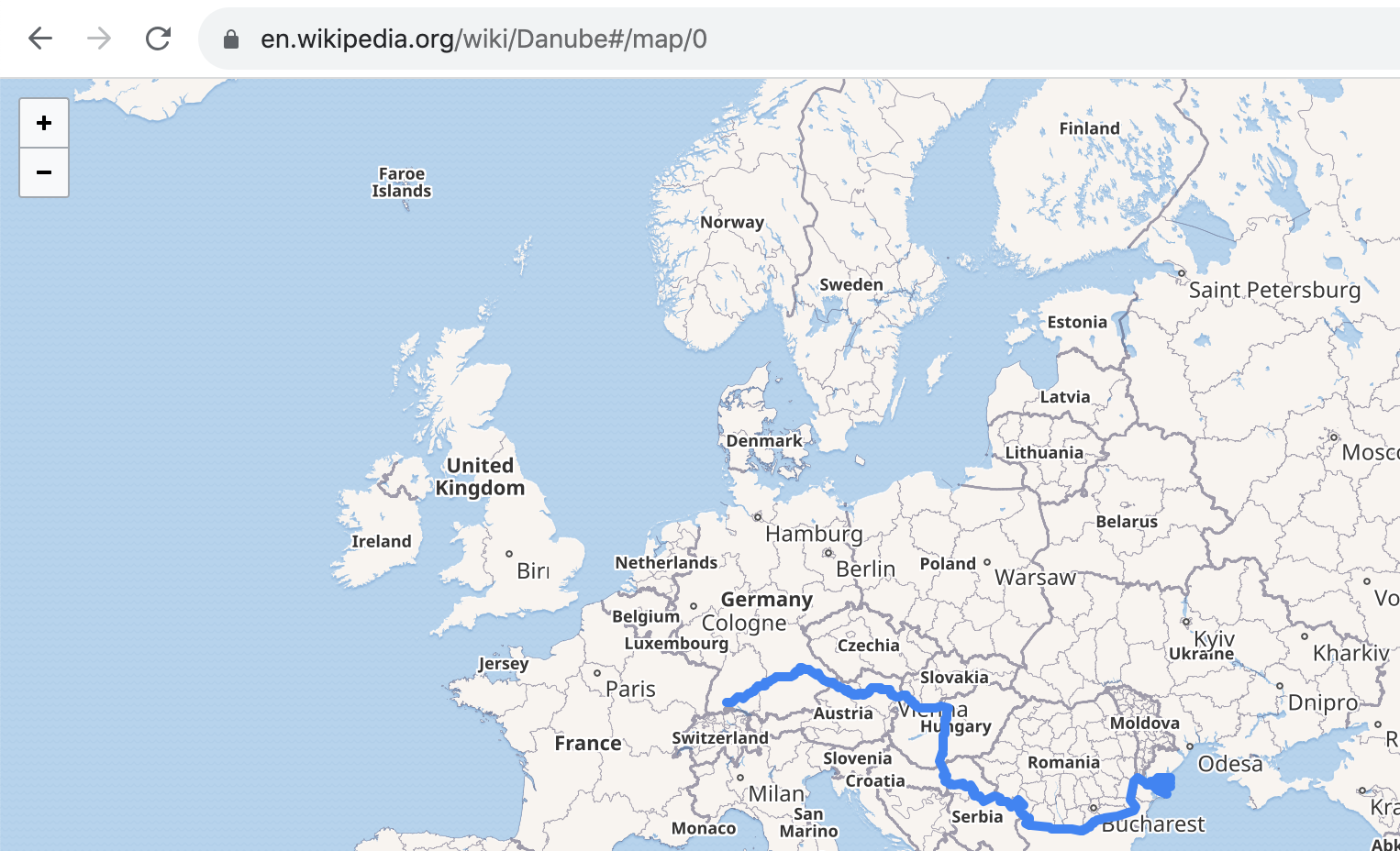
Ah ja, das gute die Ukraine hat nur Odessa, darüber gings ja seit 2014 nicht mehr, seitdem die Ukraine nur Odessa hatte, und die anderen Transportwege über die Donau blenden wir aus Argument.
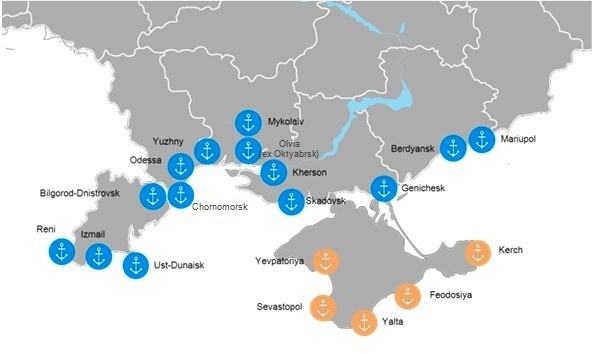
The major container terminals are located in Odessa and Ilyichevsk [near Odessa, still Ukrainian held] ports. There are other types of ports located in largest Ukrainian rivers of Dnepr and Yuzhniy Bug, namely Nikolaev, Kherson, Oktyabrsk [all three also still Ukrainian held] ports operating for bulk and with general cargo. On coast of the Crimean peninsula, port of Sevastopol, Yalta, Feodosiysky, Kerch are located. These ports are firstly intended for service and transportation needs of the Crimea. On the northern coast of the Sea of Azov, Berdyansk and Mariupol sea trade ports are located, with proximity to most industrially developed regions of Ukraine – to Donbas and Pridneprovya. The ports are mainly used for export of metal and other production of these regions. Ukraine has also three sea trade ports in lower reaches of Dunai – Reniysky, Izmail and Ust-Dunaysky [all three also still Ukrainian held], serving mainly the needs for countries along Danube].
Propaganda hat aber immer noch niemand entdeckt.
Gekoppelt an das gute denn Russland könnte ja jederzeit mit einem Schwarzmeerhafen die Ausfuhr blockieren, und das kann man ja in einem Waffenstillstandsvertrag nicht berücksichtigen, weil Russland hält sich ja nicht an Verträge Argument. Also nachdem es sich eine Zeit lang an den Getreide Deal gehalten hat. Bis aus Sicht der Russen die Ukrainer mit Drohnen aus dem geschützten Korridor heraus die russische Schwarzmeerflotte attackiert haben.
Schon scheiße wenn ums Verrecken nicht recherchieren kann und daher Meinungen ungeprüft übernehmen muss…
Die 90% sind 90% der Region Krim und Umland der Krim, nicht 90% der Landesproduktion. Die gesamte Produktion der besetzten Regionen macht weniger als 24% der Jahresproduktion in der Ukraine aus.
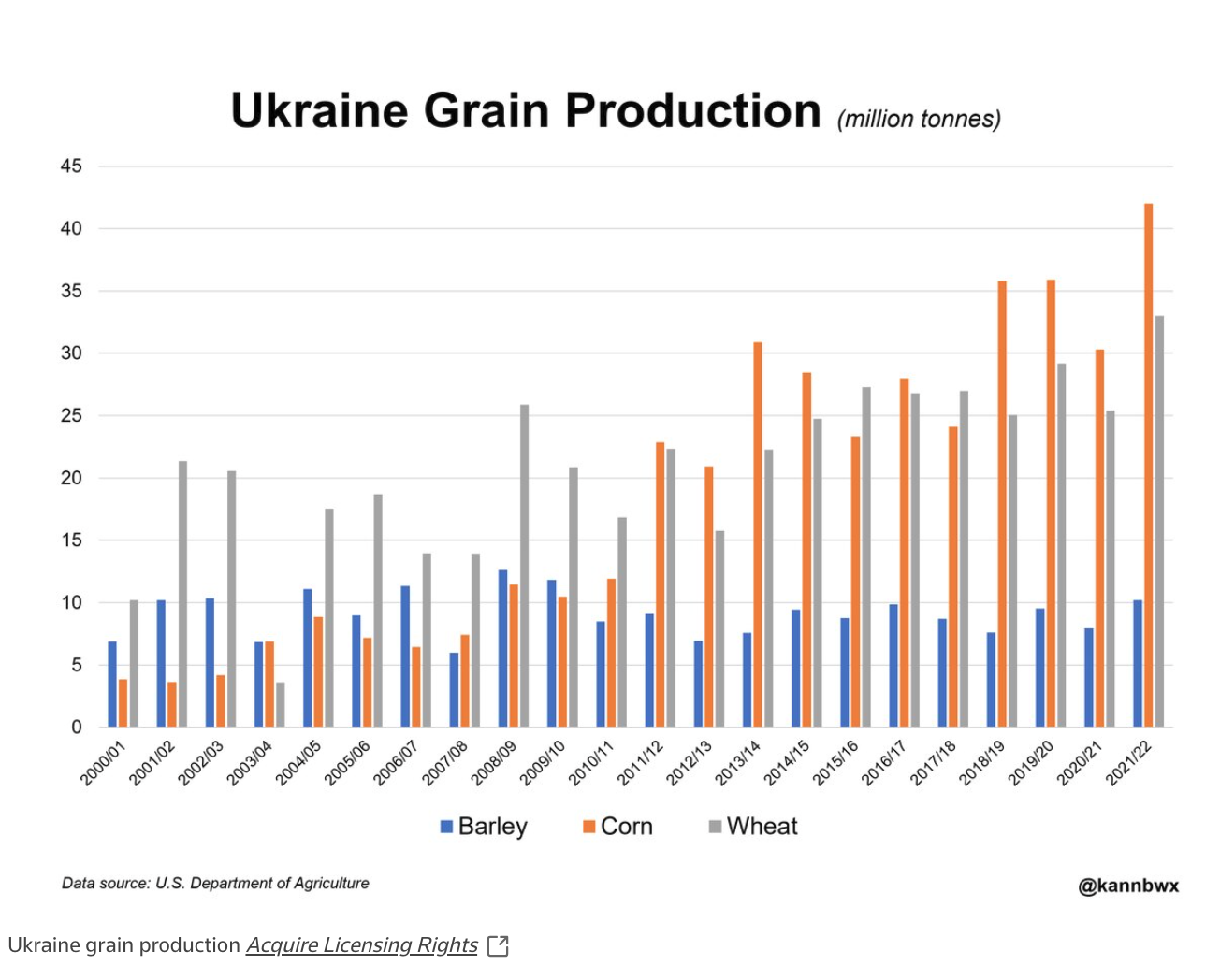
Und die Ukraine hat in ihrem unendlichen Fortschrittswillen bald der EU beitreten zu wollen in den 20 Jahre davor mal schön die Getreideproduktion verzehnfacht. Weil Zukunftsbrache!
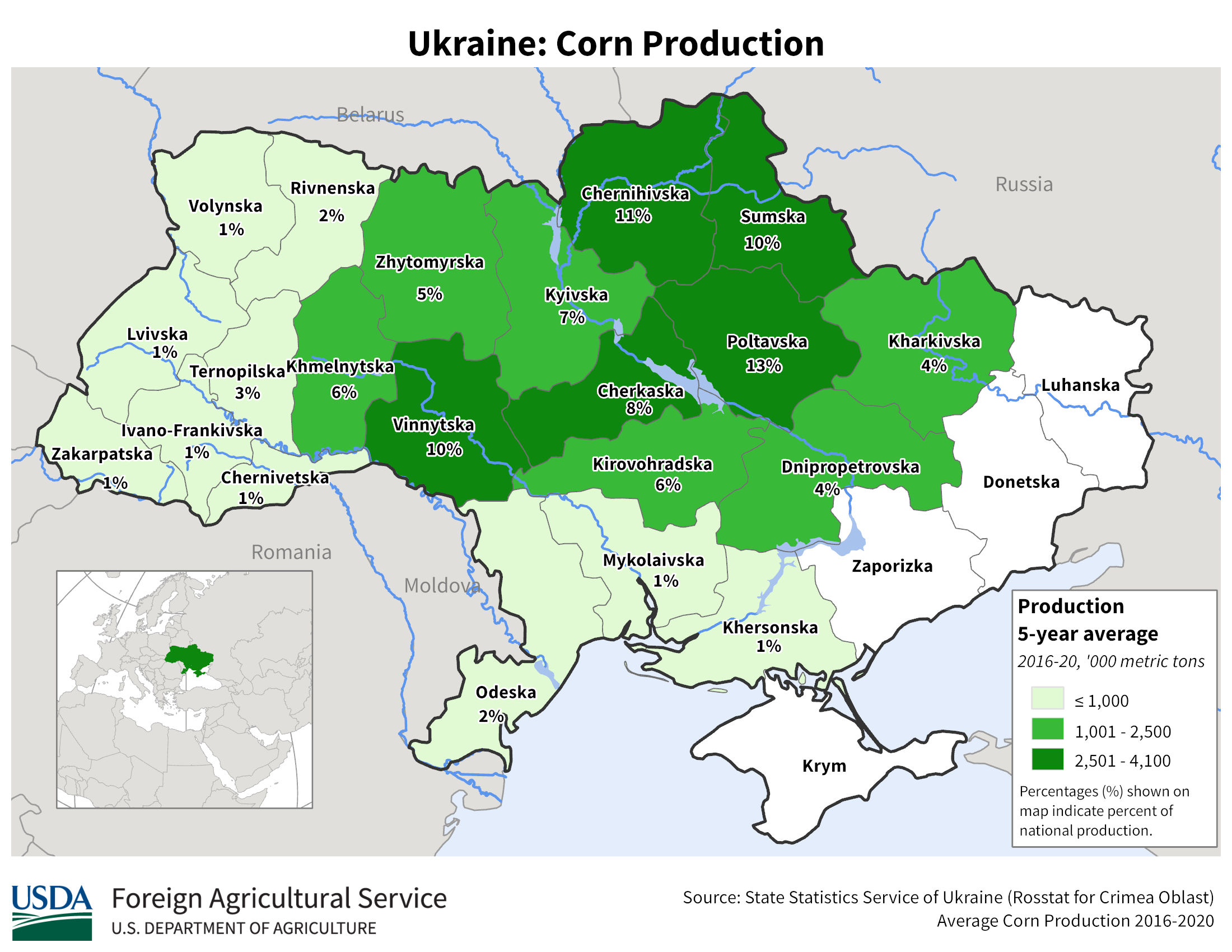
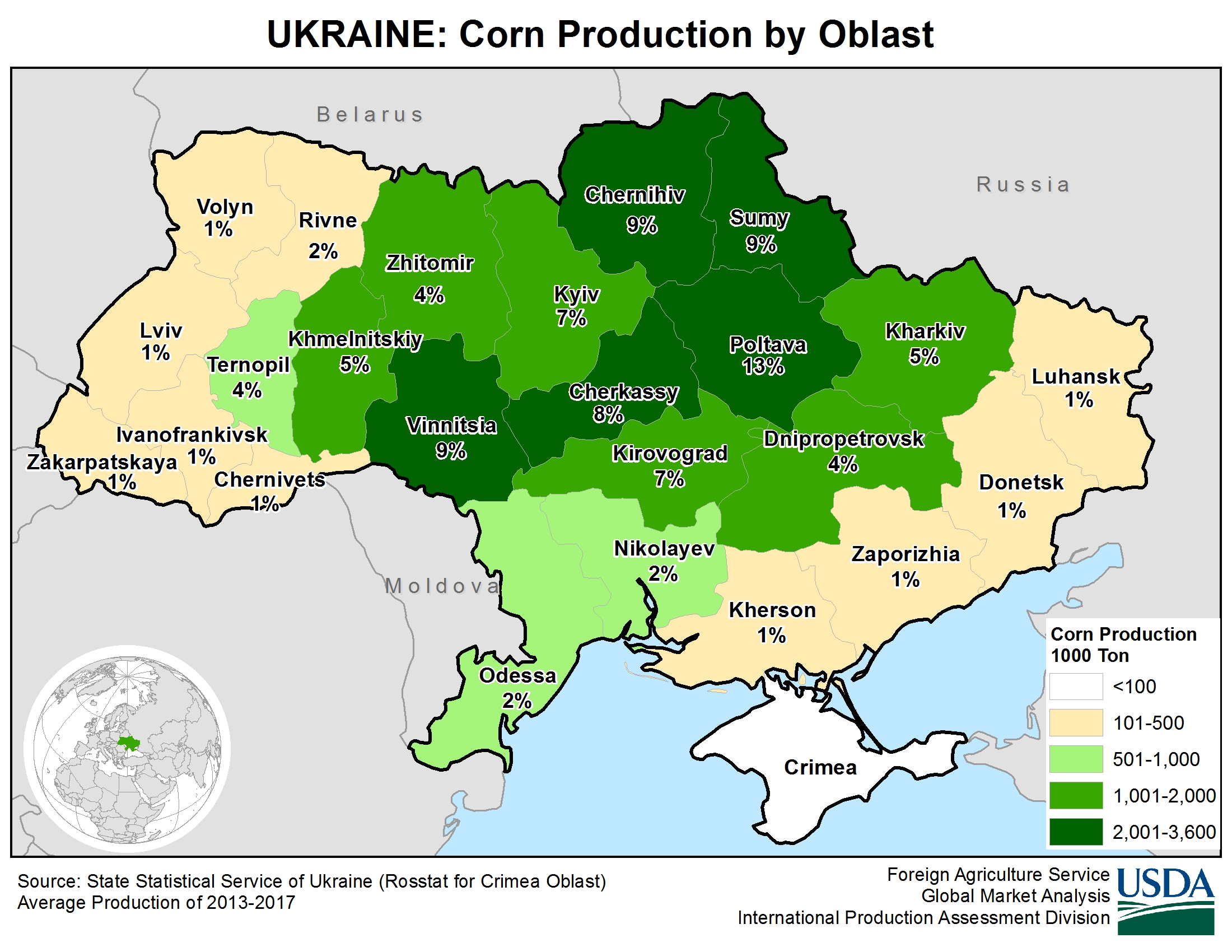
Gut, werden jetzt aber viele sagen, die Ukraine exportiert ja nicht nur Weizen, sondern auch in erheblichem Umfang Mais. Als Futtermittel. Für den Export.
Stören sie sich übrigens nicht daran, dass die USDA seit 2016 die Getreide Produktionsdaten in Luhansk, Donetsk, Saporischschja und auf der Krim nicht zu kennen scheint. Nein, nicht der Krieg. Hier die Karte von 2020:
Man beachte auch dass die Kategorie ≤100 in den USDA Karten nach 2020 plötzlich wegfällt. Künstlerische Freiheit wahrscheinlich.
Also der Propagandist der das dem Reisner so erklärt hat, dass der Reisner bis heute glaubt (war vermutlich Medienberichterstattung) dass - die Krim wegen dem Getreide befreit wird, verdient einen Medienpreis.
So einfach nachzuprüfen (die Ukraine hat selbst die Tonnen der Produktionsmenge rausgegeben die durch die Besetzung wegfallen, man muss die einfach nur mit dem aktuellen Marktpreis korrelieren und schon sieht man, dass da etwas nicht stimmen kann…)
Aber jetzt hat der Reisner seit eineinhalb Monaten diesen FUCKING whitespot, dass er andauernd herumerzählt, die Ukraine kämpft wegen der Getreideproduktion um die Krim, und Donezk und Luhansk.
Na Gott sei Dank gibt es keine Medien, die das nachprüfen und richtigstellen könnten. Nachprüfen be rocket science for current era journalists. Better ask an expert.
Apropos ask an expert: Es gibt aber natürlich auch wieder gute Nachrichten, wem heute aufgrund dessen noch nicht übel geworden ist, der Stieglitz schaffts bestimmt!
Der Stieglitz hat nämlich herausgefunden, dass Europa sich erweitern muss, dass Europa unabhängiger von den US werden muss, dass man nicht zwischen Demokratien und Autokratien zuspitzen soll -- und dann hat er noch verschwiegen, dass die Idee aus der US Verwaltung ist. Sowas.
Transatlantic Take
On NATO, the United States is Leading from the Front, Now Europe Must Step Up JUNE 29, 2015 - German Marshal Fund of the United States
Naja, für den Liegestuhl nächstes Jahr in Alpbach reichts, und hoffentlich bringt er wieder seine werte Frau mit, die in Punkto Journalismus wieder das sagen kann was seit 10 Jahren eh schon alle wissen, nur von der Bühne aus.
Wobei, das ist auch die Qualität von Stieglitz.
Wenn sie noch nicht wissen wie sich die Gesellschaft die aktuelle Situation zurechtlügen soll, kommt von irgendwo ein Stieglitz her und vermittelt uns - wir brauchen aber auch a bisserl Selbstkritik. Wenn das mit dem Klimaschutz noch soll.
Ich habe in diesem Zusammenhang nur eine Frage. Was sind eigentlich die Konsequenzen von Elite-Versagen?
Sich aus der Geschichte rausreden, und dann weiter gut bezahlt werden? Die freundliche Gesellschaft verpflichtet eben…
Mir wird von der Selbstdarstellung so dermaßen kotzübel..
Diese Gesellschaft ist und bleibt das absolut grotesk und abartigst Allerletzte.
edit: Gut, also diese Erklärung dass die Ukraine die besetzten Gebiete wegen der Getreideanbaufläche zurückgewinnen muss ist also mehr als offensichtlich falsch.
Also, warum muss die Ukraine gewinnen?
Jetzt nur nicht verzagen, dafür gibt es einen guten Grund, den dieser Herr, Mr. Thomas Cromwell, ehm… in einem Buch… ehm festgehalten hat, und den wir, ehm… kennenlernen dürfen, wenn wir zu ihm in die Vorträge gehen, oder sein Buch kaufen.
Erste Erwähnung von Hitler auf der dritten Folie, bei 7:35 min in.
Propaganda hat immer noch niemand entdeckt.
For reference:
The Institute of World Politics (IWP) was founded in 1990 by John Lenczowski, the former director of European and Soviet Affairs at the United States National Security Council during the Reagan administration.[2] His stated purpose for establishing the Institute was to develop a graduate school and curriculum that teaches students to apply “all the instruments of statecraft” across the spectrum of conflict but to remain grounded in American founding principles and the rule of international law.[3][2]
From 1991 to 2005, it maintained an affiliation with Boston University.[2][4] This affiliation ended in 2006, as IWP attained independent accreditation by the Middle States Commission on Higher Education.[5] IWP is licensed to operate in Washington, DC by the DC Higher Education Licensure Commission[6] and in Virginia by the State Council of Higher Education for Virginia.[7]
In 2008, IWP became one of 17 academic institutions qualified by the US Army to host Senior Service Fellows.[8]
Mit besonderem Dank an das polnische Kulturinstitut feturing Lady Blanka Rosenstiel für den Erhalt des US Instituts, das uns so essentielle Informationen wie die von Mr. Thomas Cromwell in Buchform präsentiert. Solche plötzlich unabhängigen Bildungseinrichtungen in International Relations habens ja vor allem am Anfang ihrer plötzlichen Unabhängigkeit schwer…
Additionally, a $1 million matching challenge for the Kościuszko Chair of Polish Studies was met, thanks to a $75,000 gift from the Polish and Slavic Federal Credit Union and another $75,000 gift from Adam and Ava Bak. This gift unlocks an additional $1 million for an endowment for the Kościuszko Chair from the American Institute of Polish Culture, made possible by Lady Blanka Rosenstiel. This match has enabled IWP to put a total of $2 million into the Kościuszko Chair endowment.
The Kościuszko Chair serves as a center for Polish Studies in the broadest sense, including teaching, researching, and writing about Poland’s history, culture, government, and foreign policy and relations between the United States and this strategic country in NATO’s Eastern flank. This Chair, originally established at the University of Virginia in 1998, was inaugurated at IWP on November 7, 2008. The Chair is held by Dr. Marek Chodakiewicz, a professor of history at IWP and expert on the Intermarium region. The Kościuszko Chair holds an annual Spring Symposium in honor of Lady Blanka to show gratitude and appreciation for her dedication to the study of this strategic region.
This run of success is welcome to John Bergholz, who began as Vice President for Institutional Advancement late in the fall of 2017. Mr. Bergholz said: “When I came on board, we were behind on our totals, down a couple of staff, and had our work cut out for us. President Lenczowski and I went on what we would later call a ‘development surge’ as we crisscrossed the country and contacted our supporters in personal meetings. New major donors came forward, and old friends stepped up generously.”
The results of the “surge” included a gift this past summer of half a million dollars to the Institute for general operations from the WEM Foundation, thanks to Betty and Whitney MacMillan. Other significant support included an anonymous gift of $100,000 from a new donor to close the fiscal year. Fundraising activity has not let up, as the “surge” continues via personal approaches to donors, a new planned giving program, and a new and innovative direct mail and social media schedule to which donors are responding as IWP pushes forward in 2019.
A Russian victory against Ukraine would be devastating for Europe’s security and stability. European governments have no excuse for not realizing what is at stake.
Die Ukraine muss gewinnen, denn es gibt für Europäische Regierungen keinen Grund nicht zu sehen, um was es hier im Kern geht. Die Europäische Sicherheitsordnung.
Was aber halt leider der Oberst Reisner nicht auf dem Radar hat.
Jetzt sind wir endlich alle wieder ein kleines Stück schlauer.
Diese Webseite verwendet Cookies um die Nutzungserfahrung für seine Besucher zu verbessern. Bitte informiere dich bei Gelegenheit darüber wie sich Cookies auf deine Privatsphäre im Web auswirken.