src: click
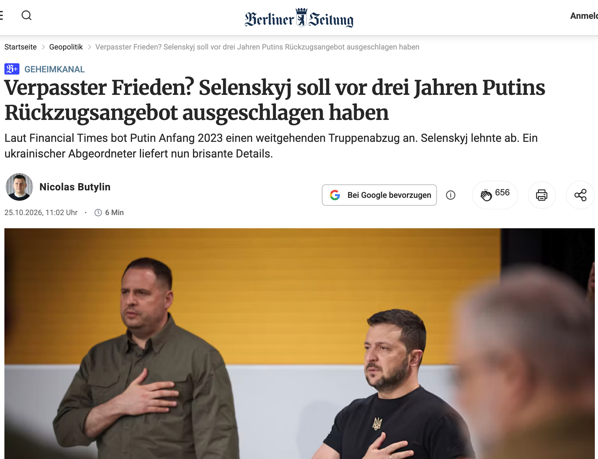
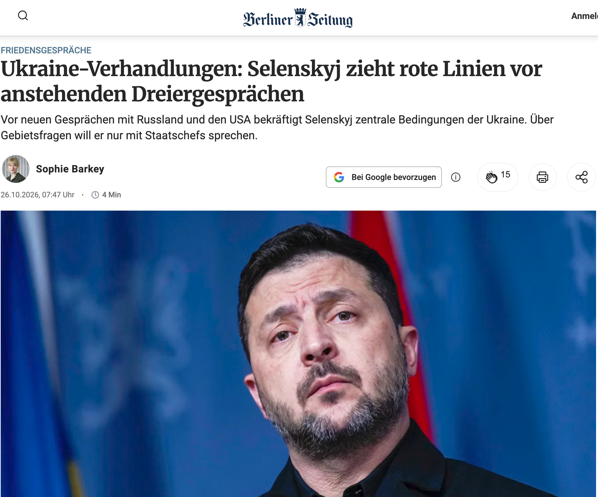
Der ukrainische Präsident Wolodymyr Selenskyj hat vor den geplanten Dreiergesprächen mit Russland und den USA im November seine roten Linien bekräftigt. Eine Begrenzung der ukrainischen Streitkräfte und ein erzwungener neutraler Status stünden nicht zur Diskussion, sagte er am Sonntag im Interview mit dem ukrainischen Fernsehnachrichtendienst TSN.
Russland dürfe der Ukraine ihre Sicherheitsgarantien nicht diktieren. Gebietsfragen könnten ausschließlich auf der Ebene der Staatschefs besprochen werden.
Damit grenzt Selenskyj den Spielraum für die angekündigten Verhandlungen ein. Russland fordert unter anderem einen Verzicht der Ukraine auf einen Nato-Beitritt und eine Verkleinerung ihrer Armee. Zudem verlangt Moskau den Rückzug ukrainischer Truppen aus Gebieten, die es für annektiert erklärt hat, aber nicht vollständig kontrolliert. Die Ukraine lehnt diese Forderungen ab.
Sicherheitsgarantien gegen einen neuen Angriff
Selenskyj bezeichnete eine Nato-Mitgliedschaft in Verbindung mit einer starken ukrainischen Armee als beste Absicherung. Sollte ein Beitritt nicht möglich sein, müssten die USA und europäische Staaten vergleichbare Schutzversprechen geben. Gemeint sind Garantien nach dem Vorbild von Artikel 5 des Nato-Vertrags, der einen bewaffneten Angriff auf ein Mitglied als Angriff auf alle Verbündeten einstuft.Über die Stärke der eigenen Streitkräfte müsse die Ukraine selbst entscheiden, sagte Selenskyj in dem Interview weiter. Wenn die Finanzierung gesichert sei, wolle er eine Armee mit 800.000 Angehörigen erhalten. Die langfristige Finanzierung gehört damit zu den zentralen Fragen einer möglichen Friedensregelung.
Hinter den Forderungen steht die Sorge Kiews, nach einer Vereinbarung einem erneuten russischen Angriff ausgesetzt zu sein. Russland lehnt eine Nato-Mitgliedschaft der Ukraine dagegen ab und verlangt eigene Sicherheitszusagen. Beide Seiten liegen damit auch bei den Bedingungen für einen dauerhaften Frieden weit auseinander.
Da kann der Krieg ja endlich weitergehen.
Falls sie nicht verstanden haben, wie das von den Ukrainern entworfen wurde - müssen sie Selenykj einfach nur genau zuhören.
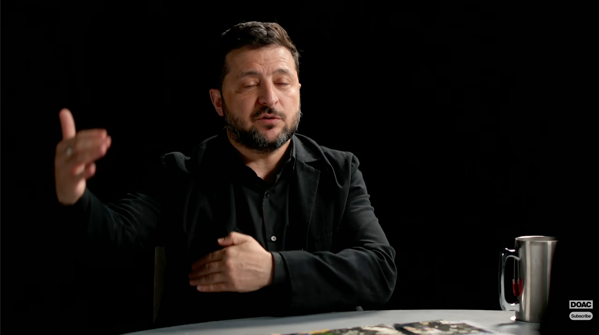
Zum Beispiel beim Diary of a VOLLWAPPLER CEO.
Well, yes thats my mom. She was very beautiful - well she still is…
Also - ca 2/3 der westlichen Propaganda folgen dem “Vorbedingungen” Prinzip. Also -
- der Russe muss eine Waffenruhe von 60 Tagen akzeptieren bevor die Ukraine verhandelt, obwohl die Ukraine im November angeblich verhandelt
- der Russe muss Nato Truppen in der Ukraine akzeptieren, bevor die Ukraine Wahlen abhalten kann (nur zum Wählerschutz, und die bleiben dann auch dort…)
- der Russe muss ein Treffen Putin/Selenskyj akzeptieren, bevor auf Verhandlerseite über territoriale Integrität verhandelt werden kann -
wenn man an der Stelle nach den Begründungen fragt gibt es die zehnfache Äußerung von Selensky “er brauche diese Vorbedingung um Putin persönlich zu erklären was mit den temporär besetzten Gebieten passieren soll…” Daher vorher keine Verhandlungen über den Themenblock.
Wenn dann Selenskyj weiter erklärt, wie denn das zu verstehen sei - und ihm dabei “er kann kein Gebiet abgeben” rausrutscht, während ihm gleichzeitig herausrutscht “er brauche die Unterstützung der US um später alles Gebiet zurückzubekommen” -- alles passiert in einem Interview - letzte Woche -
berichtet unter Garantie kein einziges deutschsprachiges Medium darüber.
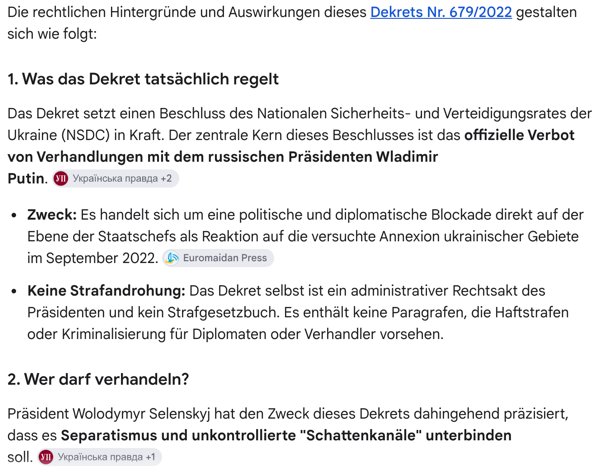
- keiner AUSSER SELENSSKYJ darf über Gebietsabtretungen verhandeln, und das unter impliziter, aber nicht expliziter Strafandrohung über ein Präsidialdekret Selenskyjs aus dem Jahr 2022, siehe Ukrinform: “Präsident setzt Entscheidung des Sicherheitsrates über Unmöglichkeit von Verhandlungen mit Putin in Kraft”. Das noch immer in Kraft ist, btw. Oiginaltext siehe: rada.gov.ua
src: Google Gemini
Stimmt - die waren ja 2023 so erfolglos! Achja, nein… Stimmt nicht…
Aufgrund dessen “ist Selenskyj zu einem Treffen mit Putin bereit” -- weil er ja über ein Präsidialdekret verhindert, dass Verhandlungsteams über Territorialfragen verhandeln. Also - bis er mit Putin persönlich gesprochen hat!
Ich mein, das muss schon sein, als Vorbedingung…
- Wenn jemand über Gebietsverzicht ohne internationale Anerkennung verhandeln darf, dann nur Selenkyj im Direktgespräch mit Putin. (Keine Koordination unter den Verhandlungsteams darüber, keine Vorbereitungen, kein Papertrail --)
- Wenn man darauf schaut “warum Wohl” landet man beim Lügner Wadephul, der behauptet, er habe mit Lavrow über den Frieden verhandelt -- auch wenn Lavrow nicht dazu befugt war und ist. Und das deutsche Außenministerium um einen Termin mit dem russischen angesucht hat, ohne diesem mitzuteilen zu welchem Thema…
- Wadephul musste zuerst mit Russland über eine Waffenruhe verhandeln, weil er muss ja mit am Tisch sitzen, und den Russen treffen, auch wenn das Treffen
a. ohne Sondierung stattfindet,
b. auf Bitten er deutschen Außenpolitik mit dem Außenminister Russlands stattfand, DER KEIN VERHANDLUNGSMANDAT HAT,
c. worauf Wadephul einen tag später Zitat Springer “überraschend” ein Video mit 16 Jumpcuts veröffentlicht (Springer sagt “leaked”), in dem er in die Kamera emotet, dass die Verhandlungen Deutschlands offiziell gescheitert seien.
Während Moskau herausbringt, wir kennen die Position Deutschlands seit mehr als zwei Jahren, es hat sich nichts geändert, es sind die selben Forderungen, das Treffen war Zeitverschwendung. Ein PR Stunt.
- Wadephul muss darauf hin im deutschsprachigen Vorabend bei Illner erklären, dass Friedensverhandlungen gescheitert seien, Russland gegen eine nie existierende Energiewaffenruhe der USA verstossen habe, und daher jetzt am Zug sei, und Verhandlungen zum Beispiel mit einer 60-tägigen Waffenruhe wieder eröffnen könne (Zitat Wadephul bei Illner) -- während die ukrainische Regierung im selben Zeitraum im Kreis telefoniert um ein neues Dreiertreffen im November zu fixieren, und ein Dreiertreffen Russland, China, US zu verhindern.
Also nach dem fünften Dreiertreffen “die EU muss mit am Tisch sitzen” EU, Ukraine, US - ohne Russland.
- und Kuleba gibt in Davos am 25. Mai 2022 auf einer Pressekonferenz der Ukraine die seit damals, bis heute bestehenden Leitplanken der Ukraine heraus unter denen alle europäischen Verhandlungsbemühungen von befreundeten Staaten zu laufen haben, und das seien “Kein Verschieben der Frontlinie, und territoriale Intergrität der Ukraine”, was die Medienabteilung von Davos 2022 als Zeitdokument von Youtube löscht… siehe:
Und jetzt fassen wir mal zusammen -
- keiner der befreundeten Partner im Wertewesen darf über eine veränderte Frontlinie verhandeln, oder über die territoriale Integrität der Ukraine hinweg (Krim zurück, oder der Krieg endet nicht)
- keiner darf der Ukraine einen Nato Beitritt verweigern, keiner darf über einen Rückzug ukrainischer Truppen verhandeln - und keiner darf über eine Sicherheitsordnung in der Ukraine verhandeln die WENIGER Truppen beinhaltet als als in der Höchstphase des aktuellen Krieges.
Die aber alle in Friedenszeiten von Deutschland und Frankreich finanziert werden sollen. Alle 800.000 -
- 2023 brechen die US eine Privatinitiative ab, die den Rückzug aller Russischen Truppen gegen de facto Anerkennung der russisch besetzten Krim, einen Versorgungsweg über Land, und eine Neutralität der Ukraine fordert (zusammen mit Beschränkungn der Ukrainischen Armee), in dem die Bidenadministration verlautbart - dass der aktive US Sicherheitsberater der mit der Initiative verbunden ist “nicht für die US Regierung spreche”.
- und bevor die Ukraine ernsthaft verhandelt - was angeblich eh schon wieder im November passiert, braucht die Europäische Union noch schnell einen Waffentillstand von 60 Tagen, den niemand verletzen darf -- sonst keine Verhandlungen. Der in Kriegen aber andauernd gebrochen wird. (Siehe Israel, siehe Iran, siehe Syrien, siehe…)
Und jetzt übersetzen wir dass in die Oma Irmi Sprache, damit das auch ein Lanz Zuseher im Vorabend versteht -
JEDER EINZELNE DIESER PUNKTE - IST EINE PERVERTIERUNG, GELTENDER, ETABLIERTER, INTERNATIONALER, VERHANDLUNGSPRINZIPIEN - zu Gunsten von fucking 8 Soll-Bruchstellen, die von der Ukraine einseitig als “nicht eingehalten” behauptet werden können.
Eben Vorbedingugen für Verhandlungen.
Sie wissen schon, Dinge wie -- folgende Narrative des Deutschen Außenministeriums:
- Der Russe hat die (Energie-) Waffenruhe gebrochen
- Der Lavrow (nicht dazu befugt) will nicht verhandeln
- Der Russe darf 60 Tage nicht schießen, bevor die Ukraine verhandelt
- Über Gebietsabtretungen (de facto nicht de jure) darf nur Selenskyj persönlich in einem zwei Augen Gespräch mit Putin verhandeln -- ansonsten Strafandrohung nach ukrainischem Recht, nach einer präsidentialen Doktrin von Selenskyj aus dem Jahr 2022. Die davor erst abgeschafft werden müsste, bevor ein Verhandlungsteam über den Verhandlungspunkt territoriale Integrität verhandeln darf.
- Über ein Aussetzen eines Natobeitritts kann die Ukraine leider nicht verhandeln, der steht ja nach einem Staats Coup, dank der Selenkskyj Regierung, ohne Verfassungsmehrheit, in der ukrainischen Verfassung, und die könne laut Selenskyj nur in einer Volksabstimmung geändert werden, da Verfassungsrecht - und für die brauche es die Nato in der Ukraine - sie wissen schon, für die Sicherheit und Integrität der Abstimmung!
Achja - und einen Verhandlungsfrieden, bevor Selenskyj sagen kann wie die Abstimmung ausgehe…
Leider, was will man machen…
- Wenn Russland einer Waffenruhe von 60 Tagen zustimme, könne die Ukraine Wahlen organisieren, bei denen ein neuer Präsident gewählt werden würde, die die Nato-Partner in der Ukraine sichern müssten - ich mein wir kennen das Spiel.
- Jens Spahn, der noch im Sommer 2026 erklärt es währe noch LAAAAAAAANGE nicht an der Zeit, dass Deutschland über Sicherheits-Garantien verhandeln müsse, die Abgeordnetn der CSU/CDU sollen aufhören das zu initiieren, das sei nur ein “medialer Druck”, der aufgrund eines Missverständnisses der Medien aktuell passiere, auf den kein Mitglied der CSU/CDU reagieren dürfe -- und dann erster Ukraine Besuch mit Offiziellen Würden (!), und High Five der ukrainischen Regierung AM DARAUFFOLGENDEN TAG.
- Und weil, warum nicht das, “Putin der expansive Zar” Narrativ erfunden von Fiona Hill bei der Brookings Instituation der Grund für das alles ist, da Fiona ja weiss wie Putin denkt --
https://harlekin.me/allgemein/oh-the-four-stone-statues-theory-now-got-two-types-of-vladimir-on-top/
https://harlekin.me/allgemein/the-four-now-five-stone-statues-theory-of-how-putin-really-thinks/
- die selbst nach einer Filmvorführung von The Wizard of the Kremlin ins offene Mikrofon sagt ( https://harlekin.me/allgemein/noch-fragen/, https://www.youtube.com/watch?v=-uSKnR92pHs ), dass wir alle, auch Journalisten, Narrative erfinden müssen um dem russischen Narrativ Paroli zu bieten, und dass wir darin besser werden müssen, sie wissen schon wie der Film “Meister und Margarita” der in Russland viel öffentliches Interresse gezogen habe, kurz bevor sie im Rahmen einer Veranstaltung des National Endowment for Democracy dem wichtigsten Russischen Expat Blogger ein Stipendium anbietet…
Und dann durchdreht, in dem sie behauptet, die Finnen seien der Nato beigetreten, wegen der Zitat: Nummer Neun.
Aber wissen sie was, lassen sie sich einfach von Selenskyj erklären, warum die Ukraine bis heute gegen die imperialen Ambitionen eines Zaren Putin kämpft -- beim YOUTUBER “Diary of a CEO” -- also nicht bei einem Journalisten, bei einem Youtuber - und das obwohl die Ukraine nicht im Wahlkampf ist -- die US aber schon. Also einem US Youtuber.
Also wir zählen hier acht Sollbruchstellen, die Verhandlungen verhindern sollen, die nahtlos in Befreiungsnarrative der Ukraine übergehen wonach “Imperien immer zusammenbrechen würden, weil das historisch so ist” so Selenskyj bei Diary of a CEO.
Nach 10 Jahren Krieg unter vollkommener Ausfinanzierung der EU, und kompletten EU Sanktionen die Zitat Selenskyj bei Piers Morgan (!) die US nicht aufheben dürfen, da Selenskyj diese - zusammen mit der Unterstützung der USA brauche um Russland zu zwingen auf die Forderung der territorialen Integrität der Ukraine (Krim zurück) einzugehen, damit er alles Gebiet zurückbekomme.
Kein deutschsprachiges Medium berichtet über die Aussage. Natürlich nicht. Warum auch.
Oder wie das Gustav Gressel und Nico Lange offen beim Podcast Ostausschuss der Salonkolumnisten gecoint haben “Herr Ober, einmal alles bitte” und Nico Lange “gut wären auch Nato Truppen auf der Krim, denn das würde das Containment Russlands einfacher machen”. Ja gut, dafür braucht man schon 800.000 Ukrainische Soldaten in Friedenszeiten, die alle ukrainischen Schwarzmeerhäfen sichern. Gut, dass das Deutschland und Frankreich bezahlen…
Easy peasy - da kann der Krieg ja endlich weiter gehen.
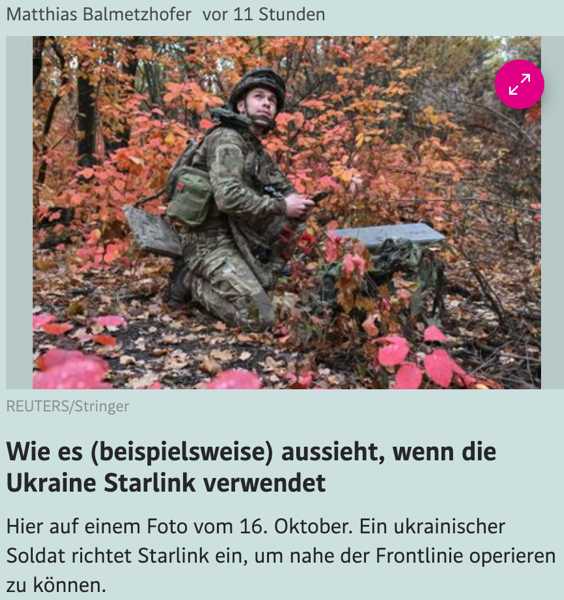
Und wenn jetzt der reichste Mann der Welt, der der Ukraine wegen einem Verteidigungs-Minister, den die Ukraine im Jahr darauf aus dem Amt entfernt hat (Grund unbekannt), EIN KOMPLETTES JAHR geschenkt hat - in dem er den Russen Starlink mit ner Whitelist abgedreht hat, nur damit die Selenskyj Regierung darauf hin mit dem zivilen Starlink die selbe Spoofing Scheisse abzieht die Russland abgezogen hat - und mit 150 Euro Recievern eines US Internet Providers russische Soldaten in Russland tötet, auf X verlautbart er verachte die Virtue Signaling ARSCHLÖCHER die jeglichen akzeptablen Ausgang des Krieges verhindern, und einfach nur über Jahre Leute am Schlachtfeld sterben lassen --
dann muss das kein Deutschsprachiges Medium berichten -- auch wenn das diese Woche passiert ist…
Nachdem sich KEIN EINZIGES ÖSTERREICHISCHES Medium erklären konnte, warum Trump der Kragen geplatzt ist, als er verlautbart hat - die Ukraine solle sich Gedanken darüber machen einen anderen Präsidenten zu wählen, denn Selenskyj verhindere zum widerholten Male Verhandlungen.
Etwa was du als Journalist in den deutschsprachigen Qualitätsmedien, in einem vollkommen andern Kontext (Korruption der Trump Familie, Trump hätte die Ukraine ja eh verraten und verkauft… -- Zitat Journalist des österreichichen Standard) darstellen musst, oder du bist in Östrreich deinen Job los!!
Arbeitslos wegen neutraler Darstellung der Ereignisse.
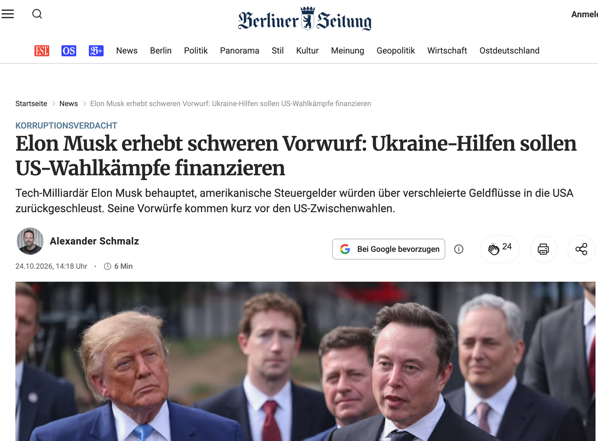
Und wenn Musk dann berichtet, die Ukraine hätte Hilfsgelder der USA in den USA dazu verwendet die Demokraten in den Midterms zu unterstützten, bringst du einfach den “Musk hat 70 Millionen in den Wahlkampf gesteckt”, und da er keine Quelle nennt, müssen wir seine Äußerung nicht berichten Artikel als mediales Framing.
Und wenn das nicht reicht -- versorgst du deine Kinder mit “Medientraining”, das offen verlautbart, dass Musk ein Nazi sei -- wie bei den Jugendtagen des CCC vor zwei Wochen.
Ich glaub das ist Nato Cognitive Warfare Doctrine - oder?
Und jeder der ein Wort dagegen sagt, ist seinen Job los. Ist seine Weiterbildung beim AMS los. Ist seine Studien Mögichkeit los. Bekommt den Betreuer gewechselt. Und wird danach von seinem Betreuer auf 6 Monate “stille Auszeit” geschickt, während sich der Betreuer auf widerholte Nachfrage weigert eine Beschwerde gegen Ajour einzuleiten, da die dir die Evaluation zur Betreuung abgdreht haben, als du nur kurz angedeutet hast, dass es in diesem Krieg auch ein Nato Narrativ gibt, über das wir als Journalisten auch mal sprechen sollten.
Das ist Österreich.
Das ist “Wertewesten”.
Und jeden Tag treten dich fünf Leute aus der Öffentlichkeit, und jeden Tag schauen zehn Leute dabei zu -- ich meine weg.
Während dir vom Wiener Arbeitskreis für Psychoanalyse jegliche psychologische Betreuung verweigert wird.
Und das AMS versucht dich zum Handwerker umzuschulen.
Der Zorn. Der Hass.
Sorry falls ich ein wenig abgedriftet bin, falls sie etwas davon nicht verstanden haben, fragen sie einfach nochmal nach, ja?
Grüße an Dr. Josef Siess von Ajour bitte.
Sie wissen schon, die Drecks-Elite des AMS:
Vulgo, der Vorsortierer.
Und das ist ihre Belohnung für vier Jahre nicht die österreichische Bevölkerung belogen zu haben.
edit: Wie heute Beispielsweise die NZZ die schweizer Öffentlichkeit belügt:
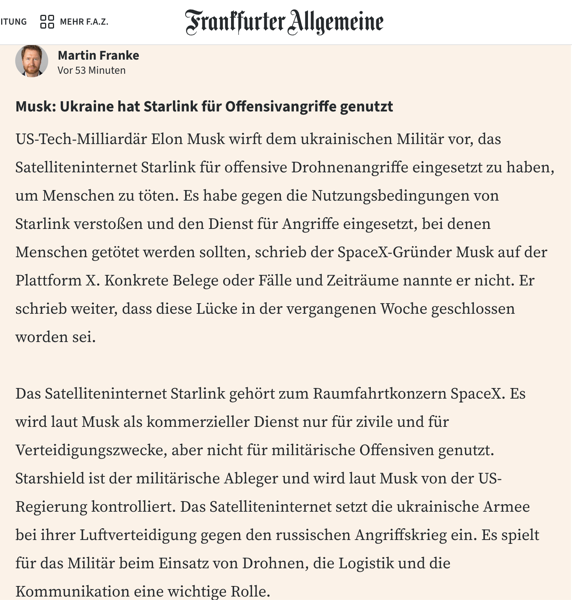
Seltsame Argumentation von Elon Musk
Weiterhin wollen weder die Trump-Regierung noch der Satellitennetzbetreiber SpaceX für die gegen die Ukraine gerichtete Entscheidung von Mitte Oktober geradestehen. Vielmehr schieben sich die beiden Seiten die Verantwortung zu. Dabei hat sich der SpaceX-Chef Elon Musk am Wochenende in erhebliche Widersprüche verwickelt. Bisher hatte er argumentiert, dass die in der Ukraine festgestellten Beschränkungen nur das System Starshield beträfen, das im Unterschied zu Starlink der Kontrolle des Pentagons und damit den politischen Behörden unterstehe. Damit konnte er seine Hände in Unschuld waschen.
Nun wechselte er plötzlich seine Verteidigungslinie und beschuldigte die Ukraine, die Geschäftsbestimmungen von Starlink verletzt zu haben. Diese «Lücke» sei Mitte Oktober geschlossen worden.
src: click
Folgende Eckpunkte:
- Die Aussage von Musk war für die Geschwindikeitsbeschränkungen auf 160km/h sei das Weisse Haus verantwortlich.
Starshield systems are owned and controlled by the US government. Any limits on speed or usage are decided by the US military and ultimately POTUS.
Starlink is a commercial service owned and controlled by SpaceX. Usage of Starlink is limited to civilian or defensive activities…
— Elon Musk (@elonmusk) October 14, 2026
- Der US Aussenminister hat “Verstoß gegen die AGB” vor ner Woche öffentlich bestätigt - für die NZZ ist das “von Musk jetzt plötzlich neu erfunden”. Weil warum nicht, damit lässt sich ja auch der Schweizer besser verarschen.
Und warum stellst du nur noch 60iger IQ Journalisten im deutschsprachigen Journalistmus an? Nun jeder der kein Vollidiot ist, kann wie folgt differenzieren.
Das weiße Haus hat die Geschwindigkeitsbeschränkungen von Starshield auf 160km/h erlassen und nach sechs Tagen wieder aufgehoben.
Starlink war immer auf edit 160km/h gedrosselt, was die Ukraine durch FUCKING SPOOFING WIE DIE RUSSEN übergangen hat um russische Soldaten in Russland mit 150USD Recievern eines US Internetproviders zu töten. Weil, war ja billiger. Dabei wurden Atennenarrays so verändert, dass sie stärkeren Emfang zur vorherigen Zelle haben als stock Starlink Antennen, sodass die Ukraine auch in Gebiet (40km in etwa) arbeiten konnte in dem keine Starlink Zellen aktiv waren.
Das hat das gesamte Starlink Management in Kooperaation mit der US Regierung ebenfenfalls koordiniert abgedreht.
Durch einen Patch, der die IDs aus dem Netzwerk kickt, wenn sie zu schnell für die angebliche Geschwindikeit, aus der Funkzelle davor (GPS Spoofing) Funkzellen wechseln. Das war bisher ein Intgrity Check in der lokalen Firmware. Der kooooooomischerweise nicht funktioniert hat - und jetzt nicht mehr. Jetzt serverseitig.
Dh. die Ukraine kann die Hälfte ihrer günstigen Angriffsdrohnen in der russischen Grenzregion nicht mehr nützen. (edit: Sorry, auch in der Ukraine nicht, da Starlink, der kommerzielle Anbieter seine Funkzellen bereits an der Gefechtsgrenze deaktiviert. Seit Jahren. Also auch im Donbas.) Plus minus. So sad. Ich mein, die waren ja auch so günstig, wo Starshield das 100fache pro Terminal kostet.
Das Weiße Haus ist für die Geschwindigkeitsbeschränkung auf 160km/h verantwortlich. - Ist keine Lüge, SONDERN DIE REINE WAHRHEIT. Da Starlink die Terminals bei 90 bis 160km/h aus dem Netzwerk kickt. Und seit je her und auch weiterhin (auch wenn die Geschwindigkeit durch Spoofing der lokalen Firmware manipulierbar war). Und ohne Regeländerung (AGBs), aber Starshield nicht.
Jetzt ist die NZZ leider zu blöd dazu zwischen Starshield und Starlink zu differnzieren also verwickelt sich der Musk in Widersprüche. Ganz klar.
Verwickelt in ne Lüge, … Die nie eine war…
Zusatz: Das Ganze ging so und so Richtung plausible Deniability für beide Seiten, und das ist in solchen Szenarien normalerweise gerichtsfest…
Nur die deutschprachigen Medien, was will man machen, die irren sich schon wieder in der Berichterstattung.
Und keiner kanns korrigieren weil, die Leute die auf die Aussagen des US Verteidigungsministers verweisen im deutschsprachigen Qualitätsjournalismus wieder zehnfach von der Bühne getreten werden.
Journalismus - sie verstehen. Im Wertewesten.