Wie? Nein nicht der mit den USA, da hat sichs herausgestellt, die ist ja eher nicht existent.
Die mit - Moment, jetzt muss ich zusehen, dass ich nicht in der Zeile verrutsch… Die Werteordnung mit --
dem “Euro-atlantischen und indopazifischen Raum!”
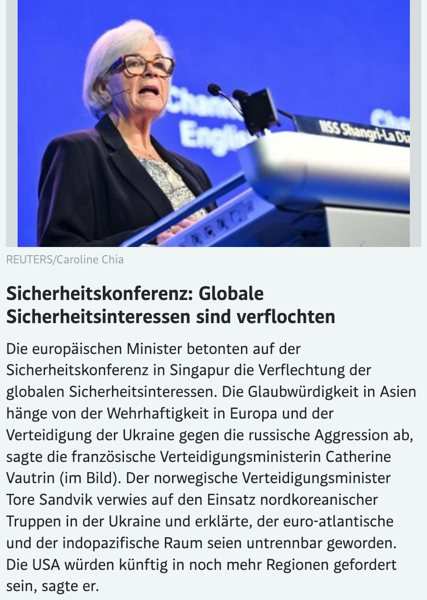
src: click
Ich weiß was sie jetzt denken - euro-atlantischer Raum?
Das hat ich garnicht in Geschichte in der Schule.
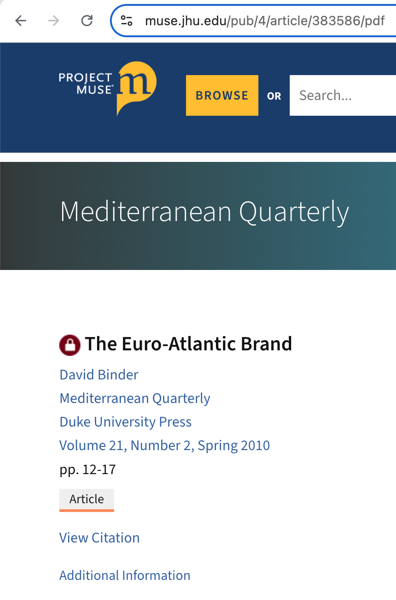
War das nicht der Marketing Begriff aus den 80ern der zuerst aus der Wirtschaft kam, und den die Johns Hopkins University mit einer Referenz auf Mediterranean Qarterly, erschienen in Duke University Press Volume 21, Number 2, Spring 2010 als -
“The Euro-Atlantic Brand” bezeichnet?
“Euro-Atlantic” as a political power brand name was employed possibly for the first time in a 1985 speech by Bettino Craxi, then president of the European Council, when he spoke about “Italy’s Euro-Atlantic role.” Its political usage was codified in the label Euro-Atlantic Partnership Council (EAPC), a group formed in 1997 and which now numbers fifty “partner” governments. EAPC is the successor to the North Atlantic Cooperation Council. (The NACC was created as an adjunct to NATO six years earlier in the first flush of post–Cold War Europe.) Among EAPC partners are not only eleven far-flung (and non-Atlantic-riparian) governments of the former Soviet Union—from Armenia to Uzbekistan—but also the six republics of the former Yugoslavia. Russia itself is listed among the partners, although its leaders remain highly suspicious of the NATO parent.
src: click
Und Moment mal, was war das zweite?
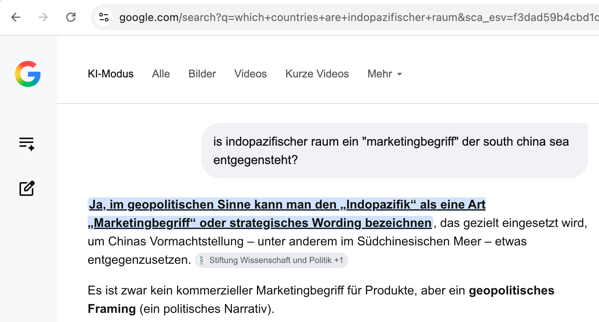
Der indopazifische Raum?
Kloar! Auf jeden!
src: click (SWP)
*räusper*
Das Konzept »Indo-Pazifik« gilt weithin als strategischer Gegenentwurf zu einer sinozentristischen Neustrukturierung der Region. Dabei wird die Sicherheitsarchitektur mehrheitlich als antagonistische Ordnung verstanden, in der Sicherheit gegen und nicht mit China hergestellt wird.
src: click (SWP)
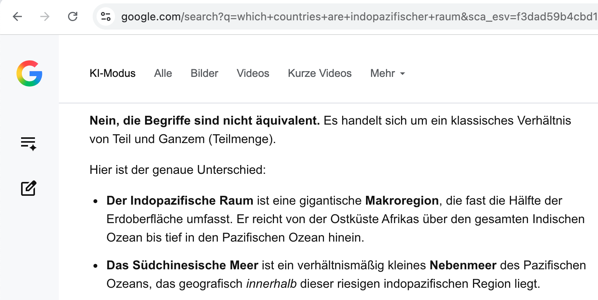
Es fällt auch kaum auf - denn in seiner eigentlichen Wortbedeutung umfasst “der indopazifische Raum” nur mal eben -
die Hälfte der Erdoberfläche…
Der Indopazifische Raum ist eine gigantische Makroregion, die fast die Hälfte der Erdoberfläche umfasst. Er reicht von der Ostküste Afrikas über den gesamten Indischen Ozean bis tief in den Pazifischen Ozean hinein.
src: Gemma
Damit hätten wir ja endlich belegt was die Europäische Union unter gemeinsamer Werteordnung versteht!
Die sinnfreie Kumulation zweier Markenbegriffe, wenn man wieder mal beim Shangri-la Dialogue aufschlägt, deren Teilnehmerstaaten in der Form von Zuschauerfragen Selenskyj kurz vor Bürgenstock auf offener Bühne gefragt haben, warum sie denn jetzt genau in die Schweiz kommen sollen…
Das war eine Hetz sag ich ihnen.
Selenskyj hat bei der Beantwortung der Frage auf ganzer Linie versagt.
(Gibt noch ein besseres, wo er alleine im Panel sitzt, aber das find ich grad nicht.)
edit: Found it!
Gut - das wäre jetzt keinem Medium im deutschsprachigen Qualitätsjournalismus aufgefallen.
Also nichts davon…
Gut so.
Weitermachen.
Propaganda? Nein. Oder? Nein.
Kommentare sind deaktiviert.
Gut fragen sie sich jetzt, wer ist denn jetzt dieser John Raine schon wieder?
Gut dass sie fragen:
John Raine
Senior Adviser for Geopolitical Due Diligence
John Raine CMG OBE is researching current and emergent themes that cross geographic boundaries, namely the use of proxies, the use of non-kinetic force as a means of projecting power, and the potential of alternative approaches to conflict resolution. In addition, he is looking at how an understanding of these themes can help governments, armed forces and multinational businesses to mitigate risk.
src: click
John joined the UK Foreign and Commonwealth Office in 1984, where he served for 33 years. His overseas postings included Kuwait, Syria, Saudi Arabia, Baghdad and Islamabad. In addition to bilateral and multilateral diplomatic work, he worked extensively with UK Armed Forces on deployed operations in Afghanistan and Iraq and, in the UK, on strategy and future capabilities. As a senior member of the national security community he contributed to the design and implementation of UK defence and security strategy, and managed relationships with a wide range of international security partners.
Gut, der wär auch meine erste Wahl, wenn ich als deutschsprachiger Journalist jemanden fragen müsste, ob es in Kuwait, Syria, Saudi Arabia, Baghdad oder Islamabad einen Proxy war gegeben hat…
Ich mein der Mann kommt mit Referenzen!
Und erst seine letzte Analyse… Zucker sag ich ihnen, Zucker!
Hier, lesen sie mal:
A new regime free of sanctions would open up the reintegration of Iran’s huge oil and gas reserves into the global economy. Iran could be ‘redollarised’ by selling its hydrocarbons in recyclable dollars. That would support the Trump administration’s ideal of ‘energy abundance’ and open up opportunities in exploration and extraction in which the US is a leader. Iran would then become a booster for the US economy, not a drag on it.
Regime removal would offer a deeper level of assurance on regional security and the critical seaway, the Strait of Hormuz, than the US could ever have done without intervening militarily – and deeper too than the assurance any bilateral treaties between Gulf countries and Iran can provide. Kuwait, Qatar, Saudi Arabia and the United Arab Emirates have all seen non-interference agreements with Iran, written or not, violated since the beginning of Operation Epic Fury. With the ayatollahs removed, Trump would be free to wind down regional US defence commitments.
src: click
edit: Moment, Moment, geht ja noch weiter:
Der amerikanische Präsident Donald Trump hat angeblich seine Unterschrift unter eine Vereinbarung mit dem Iran abgelehnt. Die New York Times zitiert anonyme Quellen, wonach Trump vor allem keine Lust habe, die beschlagnahmten iranische Vermögen freizugeben. Ob dies stimmt oder eine gezielte Desinformation des Weißen Hauses ist, ist nicht zu überprüfen.
src: click (BZ)
Meins!
Es gibt aber auch noch Konstanten auf die Verlass ist, Ischinger zum Beispiel glaubt (hip, jung und zukunftsweisend) an den baldigen Iran Deal…

