Autorenarchiv

Wait what?!

24. September 2024

18.10 Uhr: Pis­to­ri­us - Bun­des­wehr schnellst­mög­lich kriegs­tüch­tig machen

Ver­tei­di­gungs­mi­nis­ter Boris Pis­to­ri­us (SPD) hat die Not­wen­dig­keit der schnellst­mög­li­chen Aus­stat­tung der Bun­des­wehr bekräf­tigt. Bis 2029 müs­se man damit rech­nen, dass Russ­land sei­ne mili­tä­ri­sche Rekon­sti­tu­ti­on abge­schlos­sen haben wer­de und in der Lage sein könn­te, einen mili­tä­ri­schen Schlag gegen Nato-Gebiet zu füh­ren, sag­te Pis­to­ri­us ange­sichts des rus­si­schen Angriffs­kriegs gegen die Ukraine. 

src: click

Kann man das bit­te mal genau­er begrün­den, oder ist schon Vorwahlkampfphase?

Hin­ter­grund: Weder Chat­ham House, noch Kof­man, noch CSIS, noch Gres­sel, noch… Also nie­mand hat das bis­her auch nur angedeutet.

Selen­skyj behaup­tet Sieg Ende 2025 - gut, hörn wir nicht drauf, der Rest mehr so 3-10 Jah­re war of attri­ti­on, aber der SPD Kanz­ler­kan­di­dat in spe…

edit: Ah, schau an - der Pis­to­ri­us liest Atlan­tic Coun­cil Copy, und BR24 weist das als Eigent­leis­tung aus…

[edit: Kor­rek­tur, er liest doch nicht Atlan­tic Coun­cil, der sagt das schon län­ger (seit Juni)…]

NATO-Russia dyna­mics: Pro­spects for recon­sti­tu­ti­on of Rus­si­an mili­ta­ry power

Exe­cu­ti­ve summary

The Rus­si­an Federation’s full-scale inva­si­on of Ukrai­ne on Febru­a­ry 24, 2022, brought war to the North Atlan­tic Alliance’s doorstep—altering the political-military dyna­mics bet­ween NATO and its neigh­bor to the east. Sin­ce the Rus­si­an inva­si­on, NATO has been under­go­ing a dra­ma­tic chan­ge that has impac­ted its plans, com­mand struc­tu­re, for­ce model, and capa­bi­li­ties requi­re­ments. The effec­ti­ve­ness of this chan­ge must be gau­ged against the adversary’s abi­li­ty to field its for­ces and resour­ce them in a way that nega­tively impacts the Supre­me Allied Com­man­der Europe’s abi­li­ty to exe­cu­te the new regio­nal plans. The del­ta bet­ween how quick­ly Rus­sia can rebuild its mili­ta­ry and how quick­ly NATO can rearm, espe­cial­ly the Euro­pean allies, will defi­ne the risk level for the Alli­an­ce should deter­rence fail. A credi­ble assess­ment of the speed with which Rus­sia can recon­sti­tu­te and expand its military—especially its land for­ces com­po­nent, which has been signi­fi­cant­ly attrit­ted during the cur­rent cam­pai­gn in Ukraine—is cru­cial to accu­rate­ly asses­sing NATO’s over­all for­ce pos­tu­re and abi­li­ty to respond should Rus­sia choo­se to attack a mem­ber of the Alli­an­ce. Here, the exper­ti­se and assess­ments of the United Sta­tes’ allies most expo­sed to the Rus­si­an thre­at along the eas­tern flank offer valu­able insights from the front­li­ne, aug­men­ted by their regio­nal exper­ti­se and under­stan­ding of Rus­si­an cul­tu­re, poli­tics, and mili­ta­ry infu­sed with cen­tu­ries of expe­ri­ence of living next door to Russia. 

In sup­port of United Sta­tes Euro­pean Command’s Rus­sia Stra­te­gic Initia­ti­ve, the Atlan­tic Coun­cil orga­ni­zed two workshops—in War­saw, Poland, and in Hel­sin­ki, Finland—to gain a bet­ter under­stan­ding of alter­na­ti­ve futures for Rus­si­an mili­ta­ry recon­sti­tu­ti­on and its impli­ca­ti­ons for secu­ri­ty on the Euro­pean con­ti­nent. The work­shops were desi­gned to assess (1) how Rus­sia will recon­sti­tu­te its land for­ces in respon­se to ongo­ing deve­lo­p­ments in Ukrai­ne and NATO for­ce adap­t­ati­on, (2) the vul­nera­bi­li­ties hin­de­ring Russia’s visi­on for the recon­sti­tu­ti­on of its mili­ta­ry, and (3) the thre­at of future Rus­si­an capa­bi­li­ties to the trans­at­lan­tic secu­ri­ty architecture.

Key takea­ways from this line of effort include:

Rus­sia has demons­tra­ted that it can fight and mobi­li­ze at the same time.
The pace of Rus­si­an mili­ta­ry recon­sti­tu­ti­on has been fas­ter than Wes­tern ana­lysts expec­ted, inclu­ding both refur­bis­hed and new equip­ment and man­power mobi­liz­a­ti­on. Still, the rea­di­ness of the Rus­si­an armed for­ces is not likely to be the princi­pal dri­ver of decision-making in Moscow; rather, any decisi­on to attack a NATO mem­ber will fac­tor in the “cor­re­la­ti­on of for­ces,” with the goal of explo­i­t­ing the Alli­an­ce in a moment of weakness.
Based on pro­duc­tion data, the big­gest risk of Rus­sia attacking a NATO mem­ber will be in 2025–26 when peak pro­duc­tion, refur­bish­ment, and training/readiness lines inter­sect. One ana­lyst pro­jec­ted Rus­sia will pro­du­ce well over one thousand tanks annu­al­ly by then.
Moscow will not, howe­ver, make decisi­ons based on objec­ti­ve indi­ces of rea­di­ness alo­ne. It will deci­de to move against a NATO sta­te when it deems that the win­dow of oppor­tu­ni­ty has opened—hence, under­stan­ding the poli­ti­cal cul­tu­re that under­girds Russia’s decision-making is as important as having an accu­ra­te assess­ment of its mili­ta­ry capabilities.
The West is in a race against time, with the del­ta bet­ween Rus­si­an for­ce recon­sti­tu­ti­on and NATO’s invest­ment in real, exer­cis­ed mili­ta­ry capa­bi­li­ties con­sti­tu­ting the level of risk in the Euro­pean thea­ter in the event of a full-scale war. Clo­sing the gap will requi­re NATO to prio­ri­ti­ze rear­ma­ment across the board, inclu­ding its defen­se indus­tri­al base in Euro­pe and the United States.

src: click (Atlan­tic Council)

edit: Oh Wun­der, oh Wun­der, Chat­ham­house sah das noch im Juli ganz anders… Pick your favou­rite Anlaysts! I KNOW, I KNOW, I’M BORIS PISTORIUS, I’M PICKING ANALYSTS FROM War­saw, Poland, and Hel­sin­ki, Fin­land, THOSE WILL TELL ME THE UNFILTERED AND BALANCED TRUTH! (Well in EU terms, you got to lis­ten to the most frea­ked out mem­bers, I guess…)

08 Conclusion
Mathieu Boulègue
Con­sul­ting Fel­low, Rus­sia and Eura­sia Programme

Just as the war in Ukrai­ne has high­ligh­ted both weak­nes­ses and resi­li­en­ce in the Rus­si­an mili­ta­ry, the les­sons for the West are equal­ly mixed. Signs of Rus­si­an vul­nera­bi­li­ty offer no grounds for Wes­tern com­pla­cen­cy – but point to the impor­t­ance of redu­cing Russia’s war-making capa­ci­ty by attri­ti­on. Abo­ve all, con­ti­nued Wes­tern sup­port for Ukrai­ne will remain crucial.

More than two years into the full-scale inva­si­on of Ukrai­ne, Rus­sia remains able simul­ta­ne­ous­ly to con­ti­nue to pro­se­cu­te the war and to effect war­ti­me adap­t­ati­ons to its com­mand struc­tu­re. With vary­ing degrees of suc­cess, the Krem­lin has been able to rapidly mobi­li­ze reser­vists, employ pri­va­te mili­ta­ry com­pa­nies, sus­tain military-industrial pro­duc­tion for basic sys­tems, and hea­vi­ly mili­ta­ri­ze the public infor­ma­ti­on space in sup­port of the war.

In terms of com­mand struc­tu­re, the sepa­ra­ti­on of the Wes­tern Mili­ta­ry District into Moscow and Lenin­grad districts in March 2024 is also telling.163 Moscow is now rever­ting to its ‘com­fort zone’, name­ly Soviet-era com­mand struc­tures in the Euro­pean theat­re. The new Moscow Mili­ta­ry District will con­cern its­elf exclu­si­ve­ly with Ukrai­ne, Bela­rus and Kali­nin­grad, which will ine­vi­ta­b­ly be of direct con­cern to the US and NATO in the Bal­tic theat­re as well as on the eas­tern flank of the Alliance.

The pace of imple­men­ta­ti­on and the effi­ci­en­cy of con­ti­nued reforms in the com­mand struc­tu­re, howe­ver, remain to be seen. They will part­ly depend on the effec­ti­ve­ness or other­wi­se of the new minis­ter of defence, And­rei Belou­sov, appoin­ted in May 2024. Simi­lar­ly, it is unknown if the Rus­si­an Armed For­ces can be a ‘lear­ning orga­niz­a­ti­on’ able to imple­ment genui­ne chan­ges, whe­ther struc­tu­ral or cultural.164

On top of war­ti­me adap­t­ati­ons in the com­mand struc­tu­re, the mili­ta­ry indus­try has dis­play­ed resi­li­en­ce in its abi­li­ty to deli­ver mili­ta­ry equip­ment and hard­ware in the war against Ukrai­ne. The ongo­ing recon­sti­tu­ti­on of mili­ta­ry equip­ment and hard­ware will ine­vi­ta­b­ly inform the next cycle of the Sta­te Arma­ment Pro­gram­me (GPV) after 2027, as well as future plans regar­ding modern mili­ta­ry tech­no­lo­gy and mili­ta­ry innovation.

The Rus­si­an Armed For­ces remain a credi­ble thre­at to NATO and its allies. In Ukrai­ne, the Rus­si­an mili­ta­ry has shown it can absorb los­ses and main­tain tactical-operational credi­bi­li­ty des­pi­te stra­te­gic fail­u­res. Rus­si­an for­ces can count on impro­ved recon­nais­sance fire and strike com­ple­xes equip­ped with a vast arse­nal of long-range pre­cisi­on muni­ti­ons, as well as lar­ger quan­ti­ties of impro­ved uncrewed aeri­al vehi­cles (UAVs). Rus­si­an long-range strike and stand-off muni­ti­ons, cou­pled with multi-layered air defence sys­tems, repre­sent the big­gest con­ven­tio­nal thre­at to NATO.

The Aero­space For­ces (VKS) and the Rus­si­an Fede­ra­ti­on Navy (RFN) remain cri­ti­cal parts of the nuclear and con­ven­tio­nal stra­te­gic deter­rence for­ce, poten­ti­al­ly hol­ding NATO assets at risk of dest­ruc­tion. Final­ly, asym­metric capa­bi­li­ties – espe­cial­ly the use of cyber and infor­ma­ti­on war­fa­re; elec­tro­nic war­fa­re for counter-UAV and counter-precision-guided-munitions ope­ra­ti­ons; and space-based assets – are still able to off­set NATO and US con­ven­tio­nal superiority.

Russia’s pro­spects for rege­ne­ra­ting its mili­ta­ry machi­ne remain mixed, both in terms of speed and effec­ti­ve­ness. Yet as the war against Ukrai­ne con­ti­nues, and regard­less of the depth of the recon­sti­tu­ti­on of Russia’s mili­ta­ry power, the cur­rent Krem­lin lea­ders­hip will remain a thre­at to Euro­pean and trans­at­lan­tic secu­ri­ty as well as a stra­te­gic com­pe­ti­tor to NATO and its allies.

Ana­ly­sis of Moscow’s nuclear decla­ra­to­ry poli­cy sug­gests that if Rus­sia were to suf­fer suf­fi­ci­ent­ly seve­re degra­dati­on of its con­ven­tio­nal mili­ta­ry power, such that the lea­ders­hip deemed the exis­tence of the Rus­si­an sta­te to be under thre­at, this would crea­te con­di­ti­ons under which Rus­sia might con­si­der the use of nuclear weapons.165 Howe­ver, this pos­si­bi­li­ty remains remo­te, espe­cial­ly while Russia’s air arms, and its naval for­ces bey­ond the Black Sea, remain rela­tively intact.

Fur­ther­mo­re, Rus­sia will con­ti­nue to explo­it its tool­kit of asym­metric capa­bi­li­ties and ambi­guous sub-threshold tac­tics. The­se tools must no lon­ger be ana­ly­sed as part of a ‘grey zone’ or ‘hybrid’ ran­ge of mea­su­res aimed at blur­ring the line bet­ween war and peace. They are fun­da­ment­al­ly part of Russia’s con­ti­nued low-intensity war­fa­re against Wes­tern interests.

Con­ti­nued assess­ments of Russia’s mili­ta­ry reform and of its ongo­ing recon­sti­tu­ti­on of equip­ment are vital to under­stan­ding in which sec­tors Moscow still repres­ents a thre­at to Wes­tern inte­rests. Such assess­ments will be essen­ti­al for the US and NATO in terms of retai­ning both a tech­no­lo­gi­cal and over­all deter­rence advan­ta­ge against the Kremlin.

The sin­gle most signi­fi­cant fac­tor that can impair Russia’s abi­li­ty to recon­sti­tu­te its over­all mili­ta­ry power and leverage asym­metric capa­bi­li­ties in com­ing years will be ongo­ing Wes­tern sup­port for Ukraine.

Final­ly, the sin­gle most signi­fi­cant fac­tor that can impair Russia’s abi­li­ty to recon­sti­tu­te its over­all mili­ta­ry power and leverage asym­metric capa­bi­li­ties in com­ing years will be ongo­ing Wes­tern sup­port for Ukrai­ne. Wes­tern coun­tries must con­ti­nue to work tog­e­ther to pro­vi­de Ukrai­ne with arms, ammu­ni­ti­on, finan­cial sup­port and refu­gee assi­s­tance, and to show moral soli­da­ri­ty with the Ukrai­ni­an war effort.

Deny­ing Rus­sia vic­to­ry and for­cing it to con­ti­nue in a long attri­tio­nal strugg­le will fur­ther degra­de all ele­ments of its war-making capa­ci­ty, inclu­ding its abi­li­ty to invest in and pro­du­ce cutting-edge tech­no­lo­gi­cal enab­lers. Cri­ti­cal­ly, the­se efforts will also fur­ther under­mi­ne the Kremlin’s infor­ma­tio­nal stra­te­gy both at home and abroad, dimi­nis­hing its abi­li­ty to desta­bi­li­ze Wes­tern demo­cra­tic sys­tems and, ulti­mate­ly, wea­ke­n­ing its long-term hold on power.

src: click (Chat­ham­house)

Halbzeit Fazit

23. September 2024

This House Would Fight for Demo­cra­cy, Liber­ty & the Rule of Law Abroad (Oxford­Uni­on)

https://www.youtube.com/watch?v=mEwmtZtOgGo

I coun­ted:

3x Hit­ler
2x Genocide
1x shame
and
1x neve­r­en­ding war for our child­ren, if we let Rus­sia win

on the side of the “would fight for demo­cra­cy” fraction.

The unsett­ling part being, that the majo­ri­ty of peop­le in euro­pe think like me, when it comes to figh­t­ing for their coun­try - never mind democracy.

But as we all know, the emo­tio­nal argu­ment wins -- damit kann der Krieg dann ja end­lich weitergehen.

Bonus: The US inter­ven­ti­on in Kuwait, accord­ing to the pro­pon­ents for the moti­on was also to safe­guard inter­na­tio­nal rule of law.

Its inte­res­ting to see how far back some con­cepts go.

Rechnen lernen mit dem ukrainischen Kriegsbedarf

23. September 2024

oder Neu­ig­kei­ten auf dem Gebiet der kon­ven­tio­nel­len und weni­ger kon­ven­tio­nel­len Kriegsführung

Reis­ner schätzt aktu­ell den Defen­siv­be­darf der Ukrai­ne bei Kampf­pan­zern und Kampf­schüt­zen­pan­zern auf 300 -- und den Bedarf für eine Offen­si­ve die das aktu­el­le Kriegs­ziel der Ukrai­ne erfül­len könn­te auf “wei­te­re 3000”.

Das Ver­hält­nis Kampf­pan­zer zu Kampf­schüt­zen­pan­zer ist dabei 1:2 (sel­bes Videointerview).

Laut statistica.com hat Euro­pa im Jahr 2024 gesamt 4540 Kampf­pan­zer, von denen die Ukrai­ne in der Defen­si­ve dem­nächst 100 braucht um wei­ter­zu­kämp­fen, und 1000 um noch­mal in die Offen­si­ve gehen zu kön­nen -- um auf dem kon­ven­tio­nel­len Weg ihre Zie­le (Rück­erobe­rung aller ukrai­ni­schen Gebie­te mit dem Stand vor 2014) zu erreichen.

Das wäre also noch­mal ein Vier­tel aller in Euro­pa ver­füg­ba­ren Panzer.

Laut wiki­pe­dia liegt die Auf­sto­ckungs­quo­te in Deutsch­land bei 39 in vier Jah­ren, dh 10 Pan­zern pro Jahr - bei 300 Bestand. Dh. die Ukrai­ne bräuch­te von Deutsch­land so viel, wie Deutsch­land in 8 Jah­ren durch Pro­duk­ti­on lukrie­ren kann.

Laut Oryx hat die Ukrai­ne bis­her etwa 1000 Pan­zer und Schüt­zen­pan­zer ver­lo­ren. Aktu­ell hat die Ukrai­ne eben­falls laut Oryx etwa 2000 Pan­zer und Kampf­schüt­zen­pan­zer im Einsatz.

Zusam­men­ge­fasst, für das Poten­ti­al eines kon­ven­tio­nel­len Sie­ges (alles Gebiet zum Stand von vor 2014 zurück) bräuch­te die Ukrai­ne 2.5 mal MEHR Pan­zer als sie der­zeit hat -- und das wären ein gutes Vier­tel aller in Euro­pa der­zeit noch ver­füg­ba­ren Pan­zer. (Ohne Anga­be zur tat­säch­li­chen Ein­satz­be­reit­schaft der staat­lich ange­ge­be­nen Zah­len, wir ken­nen das Pro­blem aus Deutsch­land. Zumal 1365 von den 4540 in Grie­chen­land sta­tio­niert sind.)

(Alles unter dem Vor­be­halt, dass die US kei­ne Abra­hams mit Tur­bi­nen­an­trieb schi­cken. (Aktu­ell warens 31.))

Jetzt zur weni­ger Kon­ven­tio­nel­len Kriegsführung:
Laut Zei­han hat die Ukrai­ne mög­li­cher­wei­se die rus­si­sche Rail Logis­tik ein­se­hen kön­nen und bei­de Sei­ten wissens.

Bedeu­tet - die Ukrai­ne hat ein bes­se­res Ver­ständ­nis von Rus­si­schen Muni­ti­ons­de­pots (Zahl - Ort, Men­ge) -- und könn­te jetzt die Rus­si­sche Logis­tik durch Angrif­fe auf die rus­si­sche Ener­gie­in­fra­struk­tur emp­find­lich ent­schleu­ni­gen (rus­si­sche Züge sind zum Groß­teil elek­tri­fi­ziert und fah­ren mit Strom).

edit: Kiev Post Edi­tor in Chief indi­ca­tes, that Ukrai­nes “win­ning” is in lar­ge part a regime chan­ge play, so get­ting the cur­rent regime to topp­le in russia:

What is NATO Propaganda

22. September 2024

SPÖ-Wehrsprecher sieht Druck auf Neu­tra­li­tät durch “trans­at­lan­ti­sche Elite-Zirkel”

src: click Der Stan­dard dazu: click

Wie kann er nur!

Sie­he:

Öster­reich du gei­le Sau

Sie­he dazu auch:

First off - it is ama­zing to see Fio­na Hill show that much restraint. For once. The selec­ti­ve framings are few and far in bet­ween if you just look at the state­ments of Hill and Con­stan­ze Stel­zen­mül­ler. They are still the­re, but this time they are very muted.

Of cour­se Hill is still nee­ded to tell the sto­ry that this is one per­sons war - and Putin was so iso­la­ted, and most­ly worried about his lega­cy, and that this was a plan that he had for years and plan­ned out meti­cu­lous­ly, which of cour­se is dis­pu­ted by both the initi­al Nafta­li Ben­nett Inter­view (the iso­la­ti­on part) - as well as Ste­phen Kot­kin, and David Arak­ha­mi­ia (the head of Selen­sky­js par­ty) by now -- but Fio­na this time around has down­gra­ded her “iso­la­ti­on” argu­ment to “iso­la­ted with the same peop­le” (so didnt talk to the west, during the Coro­na lock­downs?), which was when Putins decisi­on - accord­ing to Fio­na - was made to attack Ukrai­ne, becau­se Putin thought most­ly about his lifes lega­cy in tho­se days. Which Fio­na of cour­se knows, becau­se she knows how Putin thinks. Becau­se of tho­se four stone sta­tu­es she saw in his office in 2015 - when she last par­ti­ci­pa­ted in a Val­dai Dis­cus­sion Club mee­ting. Thats a very tame ver­si­on of her sto­ry (that still con­tains dou­ble Vla­di­mir btw - which is ama­zing), but none of her other logic jumps - she pre­vious­ly made, when pre­sen­ting her “what Putin thinks” sto­ry in the past.

Of cour­se Fio­na Hill is now also con­tra­dic­ted by Ste­phen Kot­kin (the per­son who inven­ted the initi­al wes­tern war nar­ra­ti­ve at the Hoo­ver Insti­tu­ti­on, which then every euro­pean news out­let copied, see Kot­kin at the Hoo­ver Insti­tu­ti­on on the 4th of March 2022):

Becau­se Kot­kin by now sta­tes, that the most popu­lar public nar­ra­ti­ve in the west has now chan­ged from “cra­zy Putin” to a “this was the goal of the broa­der rus­si­an lea­ders­hip” one, becau­se the rus­si­an peop­le seem ok with it, and becau­se the “cra­zy Putin nar­ra­ti­ve” kind of fizz­led out over time, making Fio­nas input, nar­ra­ti­ve wise, less and less important.

Ste­phen Kot­kin: “So it’s real­ly Putin per­so­nal, capri­cious, whim­si­cal, his per­so­na­li­ty, his KGB past, all the things that you wri­te about. That explana­ti­on was popu­lar until recent­ly when peop­le star­ted to see that it was­n’t only Putin in the war in Ukrai­ne, that Rus­si­an eli­tes see­med to fall in line. Not ever­yo­ne, but many of them.

The Rus­si­an peop­le did­n’t seem on on mass to oppo­se the war. Yes, many did and suf­fe­red for it, and many are in exi­le or in pri­son as a result. But it’s hard to say that this is one per­son alo­ne. It’s also hard to say that any of the alter­na­ti­ves woul­d’­ve been dif­fe­rent once they’­re in power.

Cau­se Putin was­n’t today’s Putin when he first came to power. It’s also hard to under­stand how if they had been dif­fe­rent, they woul­d’­ve sur­vi­ved. Just becau­se you come to power does­n’t mean you sur­vi­ve in power. You can come to power by acci­dent. But sur­vi­ving in power for deca­de after deca­de is not an accident.

And so this, the second explana­ti­on, it’s Putin or pre­do­mi­nant­ly Putin, I don’t think holds water.”

Of cour­se Fio­na Hill is also famous for her appearan­ce at the CFR here:

Whe­re she encou­ra­ges the audi­ence the peop­le in the CFR and jour­na­lists to come up with bet­ter sto­ry­tel­ling, to tell to peop­le in a simp­le way what has hap­pen­ed, try­ing to regain them in mass, after having lost them -- refe­ren­cing the two thirds of the world that might belie­ve in chi­nas view on the events f.e.

Here the moneyquote:

Fio­na Hill: “You know, you’ve lost—forgotten—and this is exact­ly what he said. You’ve kind of lost huma­ni­ty. What’s hap­pen­ed to the Ame­ri­cans who go out the­re and tell a sto­ry, you know, that makes it very clear about why peop­le are doing things? And, you know, that’s some­thing that mem­bers of the Coun­cil on For­eign Rela­ti­ons do. It’s why we’re having this event.

It’s also what peop­le do in jour­na­lism, like Ser­ge and, you know, all of his opi­ni­on and com­men­ta­ry pie­ces. But it’s kind of, you know, some­thing that we’re all going to have to do on a regu­lar basis. And, you know, I think some of you might have read just recent­ly in the New York Times the movie of Bul­ga­kov, Mas­ter and Mar­ga­ri­ta, that’s being shown, you know, right now in in Rus­sia and having an impact. We’ve got to start being crea­ti­ve about things like this, about tel­ling stories.

The sto­ry of Ale­xei Naval­ny dying—you know, some­bo­dy of that kind of unspeaka­ble bra­very to, you know, do the things that he did, and to sacri­fice hims­elf in the way that he did—telling that sto­ry and moving it forward.

Becau­se you can’t just lea­ve Vla­di­mir Putin to tell the sto­ry. And I think that this docu­men­ta­ry is a chal­len­ge to all of us about how do we get out the­re and work on the narrative.”

Thank you Fiona!

Next we look at Con­stan­ze Stel­zen­mül­ler, who of cour­se, as always, finds it so hard to deal with that fact, that in ger­ma­ny the­re still isnt this noti­on, that the­re is a real war going on right now bet­ween the west and chi­na, and that we real­ly ought to take a hint and side with the ame­ri­cans on this -- “becau­se of demo­cra­ci­es vs. aut­ho­cra­ci­es”, right?

Right. So - here is why thats so hard for the ger­mans to under­stand. Becau­se the ger­man eco­no­mic infra­st­ruc­tu­re is inter­wo­ven with Chi­na in a dif­fe­rent way, than the one in the US is. So while the US bene­fits from 100% tar­rifs on chi­ne­se goods, the ger­man eco­no­my actual­ly suf­fers even from the lower impact tar­rifs the EU has by now put on chi­ne­se electric vehi­cles (see, Poli­ti­co: Ger­ma­ny laun­ches 11th-hour bid to avert tra­de war with Chi­na) but Con­stan­ze just cant fathom why thats still the domi­nant view in germany.

Try­ing to debunk the two male coun­ter­parts on this panel is an excer­cise in futi­li­ty, becau­se they flog emo­tio­nal “US, the shi­ning city on a hill” nar­ra­ti­ves whe­re about every second sen­tence is wrong - in a fun­da­men­tal way -- so I will not even try that to -- for once, keep this pos­ting from explo­ding into 10 pages of dealing with idio­tic gobbledigug.

And the­re is a final slight, soft framing thats estab­lis­hed in the Broo­kings Insti­tu­ti­on panel dis­cus­sion here, that still tou­ches on -- well rus­sia had no real rea­sons to start this war.

While on the fun­da­men­tal level thats cor­rect, this seeks to sim­ply out­fence all the inter­na­tio­nal poli­cy maneu­vers the US and the Ukrai­ne put in place befo­re­hand to essen­ti­al­ly free Cri­mea, which might have been an essen­ti­al impe­tus for Rus­sia to start this war -- as Her­fried Münk­ler sta­tes here:

Spä­te Erkenntnis

And which Ange­la Mer­kel also open­ly allu­ded to when tal­king about the natu­re of Minsk 2.

So take your NATO nar­ra­ti­ve, and essen­ti­al­ly stuff it -- even though this is the tamest and clo­sest ver­si­on to what will be in our histo­ry books ten years from now.

(Putin mani­pu­la­ted rus­si­an histo­ry as a high prio­ri­ty goal sin­ce 2015 - I’m still an equal oppor­tu­ni­ty take your shit and stuff it kind of guy. (Hope­ful­ly.))

Hey - das kommt unerwartet!

22. September 2024

USA mah­nen Isra­el vor neu­em Krieg

Washing­ton will eine fried­li­che Lösung im Kon­flikt mit der pro­ira­ni­schen His­bol­lah. Doch Isra­el setzt wei­ter auf mili­tä­ri­schen Druck.

src: click

Vorurteile bestätigt

21. September 2024

Vor­ur­teil 1: Es gibt nie­mand Düm­me­ren als die die deut­schen Ver­tre­ter in der Atlan­tik Brü­cke. Punkt.

Vor­ur­teil 2: Jeder redet nur so wies ihms selbst ins Geld­säckl oppor­tu­niert. Ich habe dafür eine eige­ne Kate­go­rie in der Vor­trags­be­wer­tung die ich mit “give me more money” titu­liert habe - was so ziem­lich in jedem zwei­ten Vor­trag einer der Haupmo­ti­va­tio­ren eines der Vor­tra­gen­den ist. Ich war­te immer sehr gespannt dar­auf, wanns denn wie­der so weit ist. Das ist unab­hän­gig von der Sinn­haf­tig­keit einer Aus­sa­ge im Vor­trag zu wer­ten, da das Motiv auch unab­hän­gig davon von Leu­ten zum Ein­satz gebracht wird. Jeder will bes­ser leben, und das am Bes­ten ab mor­gen -- und wenn der Vor­trag dem Vor­tra­gen­den dabei hilft - kommt das zum Ein­satz, egal obs im Kon­text Vor­trags sinn­voll ist, oder nicht.

Vor­ur­teil 3: Wenn du von den US fürs Den­ken bezahlt wirst, wirst du von den US bezahlt.

Hier nur ein paar klei­ne Wider­sprü­che in Folge:

Was glau­ben sie denn war­um Japan Nr. 5 Geld­ge­ber der Ukrai­ne ist!”.

Ver­sucht das Motiv “weil wir uns in einem Krieg Demo­kra­tien gegen Auto­kra­tien befin­den” als Begrün­dung raus­zu­co­a­xen, das ist aber an der Stel­le Schwachsinn.

Also: Hin­ter­grund -

1. Japan bekommt die Rüs­tungs­quo­ten im Land nicht so zusam­men wie Japan das möchte:
https://www.nzz.ch/meinung/japan-sucht-verzweifelt-soldaten-und-setzt-auf-das-falsche-rezept-ld.1847584
2. Japan setzt (neben Chi­na, das poli­ti­scher Riva­le in der Regi­on ist, und zukünf­tig als Absatz­markt an Bedeu­tung ver­lie­ren wird) als Export­na­ti­on voll auf die US als Absatz­markt, und das bereits vor dem Ukrai­ne Krieg, wes­halb Japan auch zu grot­ten­schlech­ten Kon­di­tio­nen in US Wirt­schafts­part­ner­schafts­ab­kom­men ein­ge­wil­ligt hat - als es rein um sei­ne öko­no­mi­sche Zukunft ging. Deutsch­land nicht. Das macht das ja erst unter Fried­rich Merz.
3. Chi­na ist nicht Russ­land nach zwei­ein­halb Jah­ren Krieg.

Also - lie­ber Herr Atlantikbrücken-Vertreter, denk nicht so sehr an den nächs­ten Mamor­brun­nen in dei­nem Vor­gar­ten, lass Japan als Begrün­dung für “war­um wir das in Deutsch­land auch wei­ter­hin so hand­ha­ben soll­ten” ste­cken, und schau dir die Sache im Detail an.

Genann­te Detail­aspek­te: “In den nächs­ten 10-15 Jah­ren schau­ts um die Ver­tei­di­gungs­fä­hig­keit Euro­pas nicht gut aus, sie unter­schät­zen Russland”.

Wirk­lich? Sicher?

Also hier ist mei­ne Auf­fas­sung von “der Atlantik-Brücke Trot­tel gibt vor dass wir Russ­land unterschätzen”:

1. In exakt zehn Jah­ren hat Russ­land eine Demo­gra­phie mit Leu­ten im ein­satz­fä­hi­gen Alter (Mili­tär), die der von Polen ent­spricht. Nicht pro­por­tio­nal - 1:1. Und das ein­fach nur nach Demo­gra­phie­da­ten gerech­net, nicht nach Kriegs­to­ten im Ukrai­ne Krieg.
2. Die US behaup­ten seit Anfang des Krie­ges, dass sie im Fal­le eines Atom­waf­fen­ein­sat­zes nicht nur die gesam­te Rus­si­sche Flot­te, son­dern auch die gesam­te akti­ve Armee ver­nich­ten werden.
3. Wir zah­len für die gesam­te Unter­stüt­zung der US seit Jahr­zehn­ten, auch wenn sie im Zwei­fels­fall das Geld nicht wert ist - wenns grad innen­po­li­tisch nicht oppor­tu­niert, oder die US fürch­ten müss­te aus­sen­po­li­tisch “over-stretched” zu wer­den, wenn Chi­na beginnt geo­po­li­tisch Akti­vi­tä­ten anzuziehen.

Wor­aus sich fol­gen­de Fak­ten­la­ge ergibt.

1. “Sie unter­schät­zen die Lage” ist nichts ande­res als “lass doch die Ukrai­ner sich für uns auf­rei­ben”, mit Waf­fen die wenig kosten.

2. Das ist spiel­theo­re­tisch das schlech­tes­te Sze­na­rio für bei­de Sei­ten. Also das Idio­ten Sze­na­rio, das im rea­len Leben nie zustan­de kommt, weil nie­mand so blöd ist rein nach spiel­theo­re­ti­schen Kri­te­ri­en zu agie­ren. Es ist auch das am wenigs­ten huma­nis­tisch idealtypische.

3. Dahin­ter steckt nichts ande­res als Furcht vor Ver­ant­wor­tung (Auf­ar­bei­tung von “wer hat was aus­ge­löst”, “was waren die Moti­va­tio­nen der ande­ren Sei­te”, denn wenn ich mei­ne Zeit bis zur Pen­si noch mit “der Putin ist Hit­ler” rum­be­komm, war ich in ver­ant­wort­li­cher Posi­ti­on für feh­ler­haf­te poli­ti­sche Len­kungs­ent­schei­dun­gen nicht schuld. Hur­ra.) Und ein Stück weit stra­te­gi­sches Kal­kül, das einen Abnüt­zungs­krieg eigent­lich ganz pri­ma sieht, weil er die zukünf­ti­ge Eska­la­ti­ons­wahr­schein­lich­keit senkt.

4. Dass Russ­land dabei bereits heu­te am Ran­de einer Demo­gra­phie­fal­le steht, wird aus­ge­blen­det (viel­leicht zurecht, Auto­kra­tien haben ande­re Mög­lich­kei­ten zur inter­nen Stabilisation).

und

5. Unse­re offi­zi­el­le Begrün­dung für unser “inte­ge­res Ver­hal­ten” im Sin­ne von “soll die Ukrai­ne nur wei­ter machen” sind -- die Wer­te die hier genau an jeder Ecke und Stel­le schmerz­lich nicht vor­han­den sind.

Über die­sem Kom­plex von Theo­re­ti­sie­rung und Begrün­dung (“Russ­land ist ja so enorm gefähr­lich”) steckt immer nur - ein­zig und allei­ne Risk Miti­ga­ti­on (“mehr Abnützungskrieg”).

Der Ansatz “Putin kann man nicht trau­en” und “Putin ver­steht nur Macht” reicht nicht aus - um wie aktu­ell Tag täg­lich statt­fin­dend, Ansät­ze für Ver­hand­lungs­lö­sun­gen zu delegitimieren.

Es sei denn Euro­pa ist wirk­lich der Mei­nung (also die jewei­li­gen Nato Staa­ten inner­halb Euro­pas) die US wür­den im Ernst­fall rein gar­nichts beitragen.

Und daher bräu­che es noch 10 Jah­re um selbst so hoch zu rüs­ten, dass wir für einen Ver­hand­lungs­kom­pro­miss eigen­stän­dig das Abschre­ckungs­po­ten­ti­al stel­len können.

Das ist aber nicht der Fall - wes­halb die mora­li­sche Per­spek­ti­ve des Atlan­tik­brü­cken Hon­chos eine kom­plet­te Lüge ist.

Eine ein­wand­freie, rhe­to­ri­sche Finte.

Aus Sicht der Risk­mi­ti­ga­ti­on (auch im Sin­ne einer höhe­ren Abhän­gig­keit, falls die US tat­säch­lich in die­sem Sin­ne noch ein­mal mas­siert gegen Russ­land in Euro­pa vor­ge­hen müss­ten (*hust* soll­ten da mal nicht zuerst Atom­bom­ben auf Deutsch­land run­ter­ge­hen, der Reis­ner hat da mal so was erwähnt *hüs­tel*?) ist das aktu­el­le Agie­ren Euro­pas verständlich.

Aus mora­li­schen, oder libe­ra­len Hand­lungs­ma­xi­men her­aus ist es abar­tig, und das Hinterletzte.

(Wir wol­len kein Risi­ko ein­ge­hen, bei dem am Ende Polen den Krieg wei­ter füh­ren muss, so gering es nach zwei ein­halb Jah­ren Krieg, und Ver­hand­lun­gen mit Russ­land auch aus­fal­len wür­de. Und noch­mal das wäre nicht das ide­al­ty­pi­sche Sze­na­rio, das wäre das “Russ­land hat uns erneut gelegt, und das sind die Fol­gen” Sze­na­rio. Spiel­theo­re­tisch gäbs beid­sei­tig und auch für die Ukrai­ne bessere.)

Und um das zu kaschie­ren - wird die Ukrai­ne zu mora­lischs­ten Opfer auf Got­tes wei­ter Flur hin­sti­li­siert (ein Krieg von Gut gegen Böse) -- und sie ist ein Opfer eines Angriffs­kriegs - nur die mora­li­sche Über­hö­hung ist noch­mal ein Stück­weit etwas ande­res - solan­ge sie nur wei­ter­kämpft. (Für demo­kra­ti­sche idea­le! Für die Wer­te­ord­nung! Für den Sieg!)

Ein­schub:

Chris­ti­na Rebhahn-Roither vor 16 Stunden

Offen­bar wei­te­re Per­so­nal­um­stel­lun­gen im ukrai­ni­schen Verteidigungsministerium

Im ukrai­ni­schen Ver­tei­di­gungs­mi­nis­te­ri­um lau­fen offen­bar wei­te­re Per­so­nal­um­stel­lun­gen. Über­ein­stim­men­den Medi­en­be­rich­ten zufol­ge wur­den zwei Stell­ver­tre­ter des Mili­tär­ge­heim­dienst­chefs Kyry­lo Budanow durch Ver­tei­di­gungs­mi­nis­ter Umje­row ent­las­sen. Die Ent­las­sun­gen sei­en bereits ver­gan­ge­ne Woche ohne Rück­spra­che mit Budanow erfolgt. Initia­tor der Per­so­na­lie soll Prä­si­den­ten­bü­ro­chef Andrij Jer­mak sein, der damit den Chef des Mili­tär­ge­heim­diens­tes schwä­chen wol­le, hieß es in den Berichten.

Dem Nach­rich­ten­por­tal “Ukra­jins­ka Praw­da” zufol­ge soll Umje­row zudem etwa 20 Gene­rä­le und hoch­ran­gi­ge Mit­ar­bei­ter ent­las­sen wol­len oder bereits geschasst haben. Weder Umje­row noch Budanow kom­men­tier­ten die Berichte.

src: click

(Back­ground: click (Eco­no­mist))

Chris­ti­na Rebhahn-Roither vor 15 Stunden

Selen­skyj setzt Erhö­hung der Mili­tär­aus­ga­ben in Kraft

Das ukrai­ni­sche Mili­tär bekommt im Abwehr­kampf gegen Russ­land mehr Geld. Prä­si­dent Wolo­dym­yr Selen­skyj setz­te per Unter­schrift die zuvor vom Par­la­ment beschlos­se­ne Erhö­hung der Mili­tär­aus­ga­ben um 500 Mil­li­ar­den Hrywn­ja (rund 10,8 Mil­li­ar­den Euro) in Kraft, wie Medi­en in Kiew mel­de­ten. Finan­ziert wird die Erhö­hun­gen dem­nach durch Schul­den, Steu­ern und durch eine Erhö­hung der Abga­ben auf Tabak und Treib­stoff. Von den Erhö­hun­gen sol­len noch in die­sem Monat auch Front­zu­schlä­ge für Sol­da­ten bezahlt werden.

Die Obers­te Rada, das Par­la­ment der Ukrai­ne, hat­te am 18. Sep­tem­ber wegen des andau­ern­den Kriegs einen Nach­trags­haus­halt ver­ab­schie­det. Die Bud­get­aus­ga­ben stei­gen damit um gut 13 Pro­zent auf umge­rech­net über 81 Mil­li­ar­den Euro - ein Rekord­wert für die Ukraine.

src: click

Laut Selen­skyj noch kei­ne Zustim­mung von USA und Groß­bri­tan­ni­en zum Ein­satz von wei­ter rei­chen­den Waf­fen in Russland

Die von der Ukrai­ne erhoff­te Zustim­mung ihrer west­li­chen Ver­bün­de­ten USA und Groß­bri­tan­ni­en zum Ein­satz von wei­ter rei­chen­den Waf­fen in Russ­land steht nach den Wor­ten von Prä­si­dent Wolo­dym­yr Selen­skyj wei­ter­hin aus. “Weder Ame­ri­ka noch das Ver­ei­nig­te König­reich haben uns die Erlaub­nis erteilt, die­se Waf­fen auf dem Ter­ri­to­ri­um Russ­lands ein­zu­set­zen, und zwar auf belie­bi­ge Zie­le in jeder Ent­fer­nung”, sag­te Selen­skyj am Frei­tag­abend in einem Gespräch mit Jour­na­lis­ten in Kiew. Die Aus­sa­gen waren erst am Sams­tag zur Ver­öf­fent­li­chung freigegeben.

Die Zurück­hal­tung der west­li­chen Part­ner erklär­te Selen­skyj mit der Furcht vor einer “Eska­la­ti­on” mit Russ­land. Er ver­si­cher­te, die ukrai­ni­sche Armee habe “kei­ne Lang­stre­cken­waf­fen auf dem Gebiet der Rus­si­schen Föde­ra­ti­on” ein­ge­setzt. Die Füh­rung in Kiew dringt dar­auf, wei­ter rei­chen­de west­li­che Waf­fen gegen Zie­le in Russ­land ein­set­zen zu dür­fen. Der neue ukrai­ni­sche Außen­mi­nis­ter Andrij Sybiha erklär­te jüngst, es sei wich­tig, “alle Beschrän­kun­gen für den Ein­satz ame­ri­ka­ni­scher und bri­ti­scher Waf­fen gegen legi­ti­me mili­tä­ri­sche Zie­le in Russ­land aufzuheben”.

src: click

Und um das (solan­ge die Ukrai­ne nur den Abnut­zungs­krieg wei­ter­kämpft!) als Initi­al­mo­ti­va­ti­on zu kaschie­ren - wer­den wir seit zwei­ein­halb Jah­ren mit “Demo­kra­tien vs. Auto­kra­tien” Nar­ra­ti­ven zuge­schis­sen - wäh­rend wir zur sel­ben Zeit wie­der abhän­gi­ger von den Golf Staa­ten werden.

Mit den US, dem guten Freund und Wer­te­part­ner, die es uns erlau­ben das schlech­tes­te spiel­theo­re­ti­sche Sze­na­rio noch 10 Jah­re zu prolongieren.

Wei­ter risk miti­ga­ti­on. Durch einen wei­ter andau­ern­den Abnutzungskrieg.

Oder du glaubst an die Werte.

Dann musst du aber wirk­lich sehr behü­tet auf­ge­wach­sen sein.

Eine Mei­nung. (Mei­ne Meinung.)

edit: Zusatz, wobei am ande­ren Ende von “Risk Miti­ga­ti­on” steht dann natür­lich ein geschwäch­tes Russ­land, und das wär in 15 Jah­ren ja wie­der für Euro­pa sehr oppor­tun, … Nur dass das für mei­ne Genera­ti­on dann, wirt­schaft­lich gese­hen, kom­plett egal ist.

Und ich ver­ar­sche kei­ne Leu­te mei­ner Genera­ti­on mehr.

Also kann der Krieg ja end­lich wie­der weitergehen.

TLDR; Der Deutsch­land­ver­tre­ter der Atlan­tik­brü­cke bei der Kör­ber­stif­tung, ver­sucht den Anwe­sen­den von der Büh­ne aus klar zu machen, dass wir Russ­lands Mili­tär­po­ten­ti­al auch wei­ter­hin unter­schät­zen und daher noch 10 Jah­re Auf­rei­brei­bungs­krieg brauchen. 

Wäh­rend das Government Office of Swe­den gera­de fol­gen­des herausgibt:

Rus­sia is lying about its eco­no­mic strength: sanc­tions are working – and we need more”

DER SIEGESPLAN IST BEREAAIT!

21. September 2024

Oh, ward mir da die Stim­me ent­glit­ten… Sorry.

Selen­skyj strebt laut Medi­en­be­rich­ten Gesprä­che mit Mos­kau für “Sie­ges­plan” an
Der ukrai­ni­sche Prä­si­dent strebt zur Umset­zung sei­nes “Sie­ges­pla­nes” Gesprä­che mit Russ­land an. Der Plan kön­ne zukünf­ti­ge, effek­ti­ve­re diplo­ma­ti­sche Tref­fen mit Russ­land ermög­li­chen, sagt Selen­skyj ukrai­ni­schen Medi­en zufol­ge vor sei­ner Abrei­se in die USA, wo er sei­nen Plan erst Prä­si­dent Joe Biden und dann der Welt­öf­fent­lich­keit vor­stel­len will. Es sei­en drei Punk­te dar­in, über die mit Russ­land in belie­bi­gen For­ma­ten gespro­chen wer­den solle.

Der Sie­ges­plan sieht schnel­le und kon­kre­te Schrit­te unse­rer stra­te­gi­schen Part­ner vor - in der Zeit vom heu­ti­gen Tage bis Ende Dezem­ber”, sagt Selen­skyj der Nach­rich­ten­agen­tur Interfax-Ukraine zufol­ge. Die Umset­zung sei von den Part­nern abhän­gig. Der Plan sol­le die Brü­cke schla­gen zu einem zwei­ten Frie­dens­gip­fel, an dem auch Russ­land teil­neh­men sol­le, sagt er.

Zugleich mach­te er ein­mal mehr deut­lich, dass Mos­kau aus sei­ner Sicht nicht an Frie­dens­ge­sprä­chen inter­es­siert sei und den Krieg fort­set­zen wol­le. Zum ers­ten Gip­fel im Juni in der Schweiz war Russ­land nicht eingeladen.

src: click

Moment, hier noch­mal TVP Polen mit der sel­ben Initialverwirrung:

VIDEO THUMBNAIL: Peace Plan
VIDEO HEADLINE: Vic­to­ry Plan

PEACE THROUGH VICRTORY.

SELENSKYJ NOW wants to talk to Putin to descri­be to him his Vic­to­ry plan! Which is also his Peace plan!

NA GOTT SEI DANK WILL SELENSKYJ ENDLICH WIEDER MIT PUTIN ÜBER WAS SPRECHEN!

Na komm, mehr als eine Ticker­mel­dung ist das dem Stan­dard nicht wert.

Der Stan­dard, der sieht näm­lich kei­ne Pro­pa­gan­da, schon seit Tag Null des Krie­ges nicht.

Selen­skyj spricht noch nicht von Krieg

Oh glo­rious Ukrai­ne may your Vic­to­ry be a long and pro­spe­rous one, and your EU mem­bers­hip pro­cess swift and - OH FUCK ME.

Genial und TOP!

20. September 2024

Ges­tern, also im Sep­tem­ber 2023 sitzt Fran­cis Fuku­ya­ma (von heu­te aus betrach­tet) seit drei Jah­ren auf der Yal­ta Con­fe­rence - und singt mit

Kräf­te des Sie­ges: Ser­hij Zha­dan singt auf der YES-Konferenz in Kiew, Timo­thy Sny­der und Jaros­law Hrytsak spre­chen dort über die alte Ver­bin­dung von Getrei­de und Gewalt. Und Fran­cis Fuku­ya­ma erkennt, wo man die libe­ra­le Demo­kra­tie ein­fach nicht mag.

src: click

den ukrai­ni­schen Pro­pa­gan­dis­ten der Stun­de Lie­der über Getrei­de und den ukrai­ni­schen Frie­den ahm ah Ver­zei­hung, Sieg.

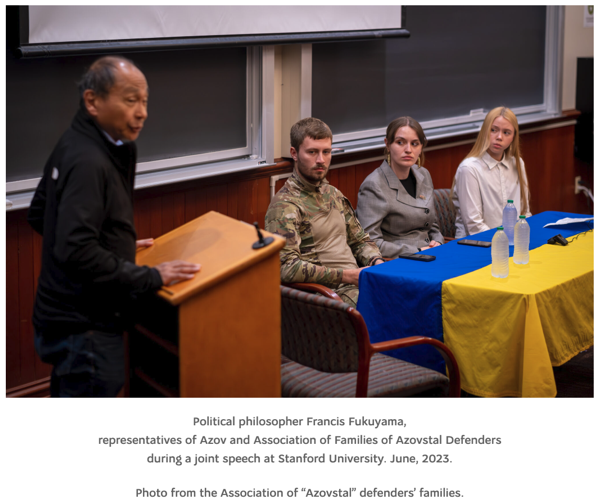
Und vor­ges­tern also im Juli 2023 - lässt Fuku­ya­ma auf Ein­la­dung sei­ner­seits das Asow Batal­li­on an der Stanford-Universität reüssieren.

Aut­hor Fran­cis Fuku­ya­ma, a Stan­ford fel­low, backs far-right Azov group after school visit

Fuckyou
src: click

Die von den US auch bereits seit Juni 2024 wie­der mit Waf­fen ver­sorgt wer­den dürfen:

On 10 June 2024, the United Sta­tes Depart­ment of Sta­te announ­ced the lif­ting of a ban which pre­vious­ly pre­ven­ted the Azov Bri­ga­de from using wea­pons sup­plied by the US, wri­ting in a state­ment that “Ukraine’s 12th Spe­cial For­ces Azov Bri­ga­de pas­sed Lea­hy vet­ting” and that the depart­ment found no evi­dence of human rights vio­la­ti­ons com­mit­ted by the unit. This poli­cy shift allows the Azov Bri­ga­de to use the same US mili­ta­ry equip­ment as any other unit in the Ukrai­ni­an Natio­nal Guard.[169]

In August 2024, the bri­ga­de was repor­ted­ly diver­ted from Lyman to assist in the ongo­ing figh­t­ing around Niu-York.[170]

src: click

Und nur Mona­te, ja Jah­re danach - weiß Fran­cis Fuku­ya­ma bei Aman­pour, hier geht es ganz klar um einen Kampf Aut­ho­ri­ta­ria­nism vs Democracy!

Sie wis­sen schon, bei Aman­pour, wo UvdL geschol­ten wur­de, als sie noch nicht Krieg zum Krieg sagen woll­te (Tag 2), 

und Aman­pour, die als ers­tes Kas­parow als Exper­ten zum Ukrai­ne Krieg befragt haben. Also als ers­ten Exper­ten überhaupt.

Gar­ri Kas­parow, what is Putins endgame?

Aman­pour found someo­ne else to talk to

Der Wer­te­wes­ten hat ja alles. Vor allem Wis­sen­schafts­frei­heit, dar­um befragt man ja auch als ers­tes Gar­ri Kimo­witsch Kas­parow, den Ukrai­ne Krieg Exper­ten schlechthin.

Es wär doch wirk­lich grau­sam, wenn bei uns im Wer­te­wes­ten Wis­sen­schaft von Poli­tik ver­ein­nahmt wer­den würde.

Mode­ra­tor: “Fran­cis Fuku­ya­ma, you were just in Ukrai­ne, and we reached a mile­stone, just this week, with 1 Mio. casul­ties after two and a half years of war, what are they tal­king about in Ukrai­ne about how this could end.”

Fran­cis Fuku­ya­ma: “The­re is not a clear con­cep­ti­on, except that ever­yo­ne feels, that the war will not end until they can put more mili­ta­ry pres­su­re on rus­sia. And the Ukrai­ni­ans are very frus­tra­ted at the Biden Admi­nis­tra­ti­on for having put restric­tions on the way that some of their long ran­ge wea­pons par­ti­cu­lar­ly the ATA­CAMs, and lon­ger ran­ge mis­si­les are cons­trai­ned to wit­hin just a few kilo­me­ters off the bor­der. And they FEEL that rus­sia is able to attack them from a safe sanc­tua­ry they cant reach, and they are UPSET about that.”

Mode­ra­tor: “Would you agree with them, or do you think it would be dan­ge­rous for the US to allow and the UK to allow its mis­si­les into the rus­si­an homeland?

Fran­cis Fuku­ya­ma: “I dont think the­re is any choice the­re. The cons­traint has been dri­ven by a fear of esca­la­ti­on on rus­si­as part, espe­cial­ly on part of the pre­si­dent. And I think that as the Ukrai­ni­ans poin­ted out, they have cros­sed many red lines whe­re pre­vious­ly we thought, well thats real­ly gon­na get the rus­si­ans upset, and they havent reac­ted. The latest one the latest one was this incur­si­on into Rus­sia its­elf near Kursk uh and again the Rus­si­ans have not um reta­lia­ted, so uh you know I think the fee­ling is that that is we’­ve been intimi­da­ted unne­cessa­ri­ly by the­se Rus­si­an thre­ats, they’­re lar­ge­ly Bluffs and uh we real­ly don’t have a way of pres­su­ring them other than by um you know ope­ning up the the the ran­ge of the­se the­se weapons.”

Jetzt ist es aber auch gut, wenn einen Tag zuvor Ill­ner live im öffent­lich recht­li­chen Fern­se­hen erkennt, dass nicht der Wer­te­wes­ten eska­liert, son­dern Russland:

Pro­pa­gan­da hat wie­der nie­mand ent­deckt, was will man machen? Da kannst du genau­so gut auf das Ende der Geschich­te warten.

Großartig! Gestern sucht die Ukraine noch Finanziers gegen 10x multiple investment return

20. September 2024

(in terms of pro­duc­ti­vi­ty) siehe:

If you invest one Dol­laaaar in gre­at Ukrai­ni­an defen­se industry!

Which is gre­at news for inves­tors all around the world, becau­se the most suc­cess­ful hedge fund in the world cur­r­ent­ly has a 33% ROI per year. So we are tal­king Angel inves­tor num­bers here!

I dont know what they pro­du­ce the­re, but I bet they add a scratch ticket to every deli­very! So inves­tors can retain a chan­ce to see their 10x mul­ti­ple! (Being used up by Ukrai­ne - becau­se of cour­se, they will use up what they pro­du­ce as well, you dont even need to find customers!)

Invest now!

src: click

Heu­te ist bereits die Euro­päi­sche Uni­on mit 35 Mil­li­ar­den aus rus­si­schem Ver­mö­gen zur Stelle!

Bildschirmfoto 2024 09 20 um 14 23 39
src: click

Boah, was wir erst mit dem gan­zen Gewinn machen wer­den, wenn sich dadurch der Krieg zu Guns­ten der Ukrai­ne entscheidet!

OK, dar­an glaubt zwar noch immer nie­mand, aber zumin­dest haben wir mal 35 Mil­li­ar­den Euro in Kre­dit­form dafür aufgebracht.

Ich frag mich ja ob in sol­chen Situa­tio­nen über­haupt noch bera­ten wird.

Der Gewinn (die­ses 10x mul­ti­ple invest­ments) fließt dann wahr­schein­lich an Russ­land zurück, oder?

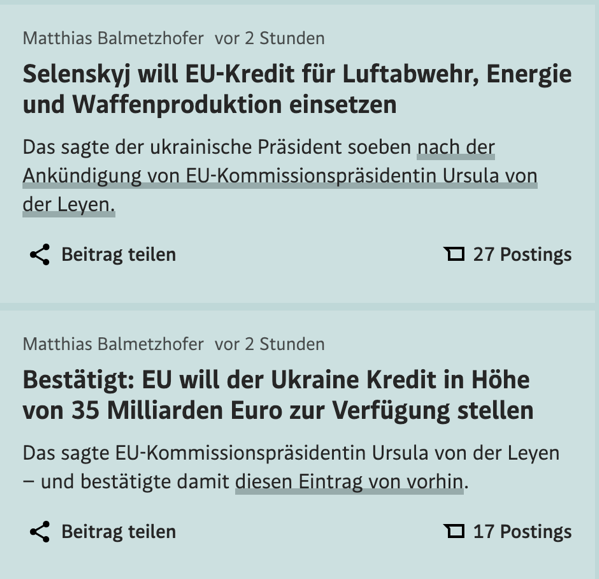
EU will der Ukrai­ne offen­bar 35 Mil­li­ar­den Euro Kre­dit gewähren

Das berich­tet die Finan­cial Times. Die Euro­päi­sche Kom­mis­si­on plant offen­bar, ein Dar­le­hen in Höhe von 35 Mil­li­ar­den Euro an die Ukrai­ne anzukündigen.

Der Plan soll mit den G7 abge­stimmt sein und mit­hil­fe von 50 Mil­li­ar­den Dol­lar finan­ziert wer­den, die als rus­si­schen Ver­mö­gens ein­ge­fro­ren wur­den, so die Finan­cial Times.

src: click

Boah, der Standard hat eine neue Rubrik namens “Energiehunger”

20. September 2024

unter der er fol­gen­des veröffentlicht.

Ener­gie­hun­ger

Poli­to­lo­ge Münk­ler: “Putin hat sich ver­kal­ku­liert, wir aber auch”

Poli­tik­wis­sen­schaf­ter Her­fried Münk­ler hält es für unwahr­schein­lich, dass Russ­land sei­ne frü­he­re Rol­le als Ener­gie­lie­fe­rant Euro­pas je wie­der ein­neh­men wird

src: click

Head­liner Arti­kel heu­te zu Mittag.

Hätt mir auch kei­nen pas­sen­de­ren Rubrik­ti­tel aus­den­ken können!

Naja, dann machts ja nichts, dass die Ukrai­ne inter­na­tio­na­le Pipe­lines hoch­ge­jagt hat. Gott sei dank.