Autorenarchiv

Illner lügt schon wieder die deutsche Bevölkerung zu

12. Juli 2024

Also genau genom­men der von ihrem Sen­de­formt gela­de­ne Par­tei­vor­sit­zen­de von Bünd­nis 90/Die Grünen.

Omid Nou­ripour (B’90/Die Grü­nen), Par­tei­vor­sit­zen­der, Ame­ri­can Cham­ber of Com­mer­ce in Ger­ma­ny e. V. (AmCham), Atlantik-Brücke e. V., …

Bei 25 min in:

https://www.youtube.com/watch?v=s23M5K8kaxs

Sarah Wagen­knecht: “Wer will dass dort die­ser furcht­ba­re Krieg endet und die­se furcht­ba­re, die­ses furcht­ba­re Leid endet und kei­ne Kin­der mehr ster­ben, der muss alles dafür tun dass es Ver­hand­lun­gen gibt, weil mili­tä­risch wird die­ser Krieg nicht been­det wer­den, er wird ja ewig wei­ter­ge­hen und der Nato­gip­fel war das Signal dass er wei­ter­ge­hen soll.

Omid Nou­ripour: “Jetzt - die Schweiz hat eine gro­ße Kon­fe­renz gemacht zig-mal den Kreml nach­ge­fragt ob sie kom­men wollen.”

Sarah Wagen­knecht: “Nein das stimmt über­haupt nicht.”

Omid Nou­ripour: “Doch das stimmt und die sind nicht gekom­men [Mit der Begrün­dung dass Bür­gen­stock so und so nur ein Unter­stüt­zer­gip­fel der Ukrai­ne wer­den soll­te - was man natür­lich im öffent­lich Recht­li­chen nicht erwäh­nen muss.].”

Sarah Wagen­knecht: “Ers­tens Chi­na ist des­we­gen nicht gekom­men weil Russ­land nicht ein­ge­la­den war.”

Omid Nou­ripour: “Russ­land hat zig-mal die Nach­fra­ge der Schweiz bekom­men und die Schweiz steht nicht im Ver­dacht dass sie irgend­ein NATO-Knechtland wäre [gut, in die­sem Kon­flikt neu­tral sind sie auch schon lan­ge nicht mehr, aber wer muss das schon in den öffent­lich Recht­li­chen erwäh­nen] und dem­entspre­chend sind die Rus­sen nicht gekom­men. Der Krieg hat 2014 ange­fan­gen und nicht vor zig Jah­ren und seit­dem gab es 200 Ver­hand­lungs­run­den dar­aus sind 20 Waf­fen­still­stän­de herauf- her­vor­ge­kom­men. Russ­land hat alle am Ende gebro­chen, jeden ein­zeln. [Ja, vor allem Minsk 2, nicht?] Die Geschich­te des Kremls ist die gan­ze Zeit unge­fähr so wie sie erzäh­len - na ja man kann es so sehen oder so sehen wer weiß wie es ist. Die Krim man kann sagen die Krim gehört der Ukrai­ne, man kann aber auch sagen die gehört uns, das ist ein­fach nicht wahr. Es gibt ein Völ­ker­recht es gibt ein­fach Fak­ten die auf dem Tisch lie­gen es gibt Leu­te die ein­fach lesen kön­nen wie die Rake­ten flie­gen, womit sie völ­lig Recht haben ist - wir müs­sen alles dafür tun damit der Frie­de kommt, aber man sieht an den besetz­ten Gebie­ten dass da kein Frie­de ist. Die UN und nicht die NATO, die ver­ein­ten Natio­nen sagen Ver­schlep­pung von Kin­dern, Ver­ge­wal­ti­gun­gen, gefol­tert ich weiß sie sagen sie wis­sen nicht -”

Sarah Wagen­knecht: “Die Ver­bre­chen die in einem Krieg geschehen.”

Omid Nou­ripour: “Ne gese­hen nicht nein die gesche­hen nicht ein­fach irgend­wo das sind die gebie­te die die Rus­sen längst unter Kon­trol­le haben und sie sagen sie wis­sen nicht wie es ist fah­ren Sie doch mal dahin! Sie sind glau­be ich nicht ein­mal dahin gefah­ren! Dann fah­ren Sie doch mal in die Ukrai­ne fah­ren Sie nach Irpin fah­ren Sie nach But­cha wo 400 Lei­chen gefol­ter­ter Kin­der und und Frau­en gefun­den wor­den sind und reden Sie mal den mit den Leu­ten schau­en Sie den ins Gesicht!”

Much emo­tio­na­li­sier­te Lügen um die Bevöl­ke­rung wei­ter zu ver­ar­schen MUUUUCH LÜGEN.

Ers­tens in Butscha wur­den 458 tote Zivi­lis­ten gefun­den. In Irpin 200-300.

Davon waren nicht wie behaup­tet MEHR ALS DIE HÄLFTE Frau­en und Kinder

Ukrai­ne: Rus­si­an For­ces’ Trail of Death in Bucha

[…]

Ano­t­her fun­e­ral home worker, Ser­hii Mati­uk, who hel­ped collect bodies, said that he had per­so­nal­ly collec­ted about 200 bodies from the streets sin­ce the Rus­si­an inva­si­on began on Febru­a­ry 24. Most of the vic­tims were men, he said, but some were women and children.

src: click (Human Rights Watch)

-- da die rus­si­schen Ein­hei­ten den Befehl hat­ten wahl­los auf Män­ner zu schie­ßen, und Män­nern in den Regio­nen “Aus­gangs­ver­bot” umge­hängt haben, die sie dann bei Nicht­be­fol­gung auf offe­ner Stras­se erschos­sen haben. Das in sich ist bereits ein Kriegs­ver­bre­chen, aber las­sen wir das mal bei Seite.

Am 03.04.2022 bestä­tig­te die ukrai­ni­sche Staats­an­walt­schaft mehr als 400 Tote im Groß­raum Kiew. (src: click) Das war bereits nach dem Butscha Massaker. 

Am 04. Mai wur­de die­se Zahl für den Groß­raum Kiew dann mit 1200 angegeben.

Zu ähn­li­chen Taten wie in Butscha kam es auch in ande­ren von Russ­land besetz­ten Orten in der Regi­on Kiew. Nach Anga­ben von Andrij Nje­bytow, dem Poli­zei­chef der Regi­on Kiew, wur­den bis zum 20. April 2022 über 1000 Lei­chen gebor­gen, von denen 75 Pro­zent mit auto­ma­ti­schen Waf­fen oder Scharf­schüt­zen­ge­weh­ren erschos­sen wor­den waren.[11][12] Bis zum 4. Mai 2022 wur­den in der Regi­on Kiew 1.235 getö­te­te Zivi­lis­ten iden­ti­fi­ziert. Die Iden­ti­tä­ten von 282 wei­te­ren Toten waren zu die­sem Zeit­punkt noch unklar.[13]

src: click

Las­sen wir mal weg, dass das ein aus­ge­mach­ter Schwach­sinn ist (sie­he UN assess­ment vom 07. Dezem­ber 2022, ver­glei­che: Quel­le für den Wiki­pe­dia­ein­trag von 1000 am 20. April), da in den Regio­nen Volks­mi­liz Ein­hei­ten der Ukrai­ne (teil­wei­se als ein­zi­ge regio­na­le Ver­tei­di­gung) aktiv waren (sie­he bei­spiels­wei­se BBC Doku­men­ta­ti­on über Butscha, oder auch dpa:
Bildschirmfoto 2024 07 13 um 08 05 55
src: click), die Arm­bin­den, und kei­ne offi­zi­el­len Mili­tär­uni­for­men tru­gen. Waren ja auch nur “unbe­deu­ten­de Dör­fer” und kei­ne Ver­tei­di­gungs­pos­ten der Ukrai­ne. Die sau­ber von den Zivi­lis­ten zu unter­schei­den, nach­dem die Staats­an­walt­schaft bereits ein­mal bei Schät­zun­gen auf 800 Zivi­lis­ten und dann ein Monat spä­ter dann doch auf 1200 Zivi­lis­ten gekom­men ist - wird der Ukrai­ne wie­der ein­mal unend­lich schwer gefal­len sein. Las­sen wir aber auch das beiseite -

denn damit ich als Omid Nou­ripour auf mei­ne FUCKING 400 Kin­der und Frau­en kom­me, muss ich dafür die 1200 getö­te­ten Zivi­lis­ten als Basis neh­men. Die wur­den aber nicht nur in Butscha und Irpin ent­deckt (um auf die 1200 zu kom­men) son­dern im gesam­ten Groß­raum Kiew. Wenn die 1200 als Grund­ge­samt­heit über­haupt aus­rei­chen. (sie­he: click)

Das ist Omid Nou­ripour - LÜGE 1.

Die wur­den dann auch DEFINITIV nicht alle gefoltert.

Das ist Omid Nou­ripour - LÜGE 2.

Und außer­dem las­sen wir in der Öffent­lich­keit immer noch die zwei Batal­lio­ne rus­si­sche Sol­da­ten weg, die die Ukrai­ne vor Butscha ALLEINE IN BUTSCHA mit Himars weg­ge­schos­sen hat (1000 Mann). DIE JA SO ZIELGENAU WAREN. (So ziel­ge­nau, dass laut ukrai­ni­scher Staats­an­walt­schaft 75% der Opfer durch Scharfschützen- oder Maschi­nen­ge­wehr­mu­ni­ti­on umka­men… Also, nach­dem erst­mal die zustän­di­ge Staats­an­wäl­tin gefeu­ert und getauscht wur­de. (vgl.: „Viel­leicht Zeit für ande­re Sicht­wei­sen“: Ukrai­ni­sche Ex-Generalstaatsanwältin äußert sich zu ihrer Ent­las­sung) “„Der Pos­ten der Gene­ral­staats­an­wäl­tin in der Ukrai­ne ist ein poli­ti­sches Amt“, begrün­de­te die 43-Jährige ihre Ent­las­sung weiter.”)

Laut Mar­kus Reis­ner (Nicht laut Mar­kus Reis­ner: Der Teil in der letz­ten Klammer.).

Wie man 1000 rus­si­sche Tote aus einer BBC Doku­men­ta­ti­on raushält

Dann wei­ter zu:

Russ­land hat zig-mal die Nach­fra­ge der Schweiz bekom­men und die Schweiz steht nicht im Ver­dacht dass sie irgend­ein NATO-Knechtland wäre und dem­entspre­chend sind die Rus­sen nicht gekommen.

Das ist Omid Nou­ripour - LÜGE 3.

Ver­glei­che:

VBS DDPS Pres­se­kon­fe­renz zum Frie­den in der Ukrai­ne: Stand der Vor­be­rei­tun­gen und Sicher­heits­vor­keh­run­gen (10th of June 2024)

At 34:40 min in:

PK Spre­cher: “Herr Binner”

David Bin­ner: “Ja, David Bin­ner, NZZ. Prä­si­dent Selenskjy hat eine Betei­li­gung Russ­lands von Beginn an eigent­lich impli­zit aus­ge­schlos­sen. Nach­dem er hier war, hat er ja gesagt, dass er nur Län­der dabei haben möch­te, die die Sou­ve­rä­ni­tät der Ukrai­ne auch respek­tie­ren. Mei­ne Fra­ge wäre -- haben sie das, also den Ein­be­zug Russ­lands auch über die mitt­le­re Frist, haben sie das mit ihm bespro­chen, als er - als er hier war - und wenn ja, was war da der Plan?

Igna­zio Cas­sis: “Ja, dan­ke. Der ers­te Regie­rungs­ver­tre­ter mit dem ich nach dem Besuch Prä­si­dent Selen­skyj in Bern gespro­chen habe, war der Außen­mi­nis­ter Russ­land Ser­gei Lav­rov am 19 Janu­ar in New York - und das war bewusst so gewollt von mir. Und ich habe dar­über natür­lich Prä­si­dent Selenskjy eine Woche vor­her hier in Bern infor­miert - und ich habe ihm auch ganz klar gesagt, dass ein Frie­dens­pro­zess nur unter Betei­li­gung der invol­vier­ten Par­tei­en geht. Das sieht er auch. Grund­sätz­lich ist die Posi­ti­on die ich in jenen Moment und das muss man gut beto­nen bekom­men habe war - es wird ein inklu­si­ver Pro­zess, aber nicht zur Stun­de Null [at that sta­ge] wir müs­sen es star­ten [as https://www.eurointegration.com.ua/eng/articles/2024/06/5/7187503/”>the fifth coun­try hol­ding a Selen­sky peace for­mu­la sum­mit?] und dann schau­en wir auf den Weg viel­leicht bei einer zwei­te Kon­fe­renz in einem ande­re Land, das mög­lich sei. Ich sage das in jenen Moment, weil auch die­se Posi­tio­nie­rung schwankt, über die Zeit, äh von allen Sei­ten. Des­halb ist die Nichtt­ein­la­dung Russ­land eine Kom­bi­na­ti­on von zwei Ele­men­ten. Auf die eine Sei­te die Kün­di­gung, die kla­re Stel­lung­nah­me Russ­land, bevor über­haupt die Ein­la­dun­gen aus­ge­sandt wor­den [Janu­a­ry 19th!] wir wer­den nicht teil­neh­men, wir sind nicht inter­es­siert - wir wol­len nicht ein­ge­la­den wer­den [more on that later, the­re was a rea­son given…] und auf die ande­re Sei­te die Posi­tio­nie­rung Ukrai­ne wir sind nicht bereit zur Stun­de Null Russ­land am Bord zu haben. ähm, in die­sem Span­nungs­feld fand unse­res Reaching Out Akti­on und wir haben selbst­ver­ständ­lich nicht allei­ne und eigen­stän­dig ver­sucht Ein­fluss zu haben, auf die zwei Par­tei­en, son­dern durch die Mit­hil­fe und Unter­stüt­zung wich­ti­ger und mäch­ti­ger Län­dern der Welt - und trotz­dem ist für die Stun­de Null die Rech­nung nicht auf­ge­gan­gen. Noch nicht. Wir haben gesagt wir kämp­fen bis am Vor­abend der Kon­fe­renz, aber heu­te ist - sieht es so aus, dass, dass es so sein wird.”

At 47min in:

PK Spre­cher: “Herr Ste­fan Lanz, 20 Minu­ten [Sen­de­for­mat heißt so].”

Ste­fan Lanz: “Viel­leicht wur­de ein Teil mei­ner Fra­ge schon in Fran­zö­sisch oder Ita­lie­nisch beant­wor­tet dar­um viel­leicht noch mal für dum­mies, hät­te nicht die Schweiz ein­fach Russ­land ein­la­den müs­sen, damit dann Russ­land in der Ver­ant­wor­tung gewe­sen wäre abzu­leh­nen und nicht zu kom­men. Wäre das diplo­ma­tisch nicht geschick­ter gewe­sen, vielleicht? 

Igna­zio Cas­sis: “Ja dan­ke für die Fra­ge, tat­säch­lich, die die die die [thats a four­count of “die”] Gemü­ter natür­lich bewegt und ich ver­ste­he es auch. Es hat auch unse­re bewegt für für für wochen­lang bis wir einen Ent­scheid getrof­fen haben. Ja das wäre eine Mög­lich­keit natür­lich - nur das Pro­blem ist, dass die Ableh­nung Russ­land bereits im Vor­feld bereits die bevor die Ein­la­dun­gen aus­ge­sandt wur­den und das man­gel­ne Inter­es­se das der Außen­mi­nis­ter Lav­rov mir sel­ber sag­te, in Janu­ar, in dem er er mein­te, es sei ohne­hin eine pro-ukrainische Ver­an­stal­tung und nicht einen äh genui­nen Ver­such einen Frie­dens­pro­zess auf­zu­glei­sen [ Dazu viel­leicht noch Kurz der Stan­dard vom 10.06.20024: https://www.derstandard.at/jetzt/livebericht/3000000223592/1000343216/kiew-weiteres-unterstuetzungsabkommen-mit-deutschland-geplant”>“Es ist zwar das ers­te der­ar­tig hoch­ran­gi­ge inter­na­tio­na­le Tref­fen zum The­ma Frie­den in der Ukrai­ne, aber es geht nicht um Frie­dens­ver­hand­lun­gen.”] das hät­ten wir dann natür­lich eine Ableh­nung Russ­land erwar­ten kön­nen. Oder? Das Pro­blem ist, wäre kei­ne Ableh­nung gekom­men, son­dern eine Annah­me, das wäre inkom­pa­ti­bel gewe­sen mit mit der Ukrai­ne - mit der Posi­ti­on der Ukrai­ne in dem Moment und aus aus die­sem Dilem­ma konn­ten wir nicht raus­neh­men [sic! raus­kom­men]. Wir haben natür­lich ande­re Wege, das ist die ers­te äh vol die ers­te Voll­zug den man sich vor­stel­len kann [not the first Peace For­mu­la sum­mit, but https://www.eurointegration.com.ua/eng/articles/2024/06/5/7187503/”>the fifth, nice save!] aber die Diplo­ma­tie ist krea­tiv und man hat vie­le ande­re Wege gesucht, aber lei­der bis jetzt ist es uns nicht gelun­gen die Tür etwas [auf] zu machen, so dass es bei­de Sei­ten es ertra­gen können.”

PK Spre­cher: “Frau Rin.” 

Frau Rin: “Die Schweiz hat­te ja von Anfang an eben gesagt eigent­lich sei es das Ziel Russ­land an Bord zu holen. Jetzt wenn ich sie rich­tig ver­ste­he hat die Ukrai­ne so ein biss­chen gedroht sich zurück­zu­zie­hen, wenn Russ­land dabei wäre - wäre das nicht ein Punkt gewe­sen den man vor der Annah­me die­ser Orga­ni­sa­ti­on mit der Ukrai­ne hät­te klä­ren müs­sen, dass sie sich eben bereit erklärt auch zu kom­men, wenn Russ­land dabei ist?”

Igna­zio Cas­sis: “Nein, nein - wir haben das glei­che zu Beginn gesagt wie jetzt. Das Ziel ist Russ­land am Bord zu holen. Wir haben für den Frie­dens­pro­zess gesagt - die Kon­fe­renz ist der Start­punkt eines Frie­dens­pro­zess [aber kei­ne Frie­dens­kon­fe­renz]. Russ­land muss im Frie­dens­pro­zess an Bord sein, ob sie das war unser Wunsch, idea­ler­wei­se auch am Start - an der Eröff­nung die­ses Frie­dens­pro­zess wir wün­schen uns, wir haben das Ziel in Bür­gen­stock einen Frie­dens­pro­zess zu eröffnen.

Das wird dann Wochen Mona­te dau­ern ob über­haupt Erfolg sein wird - wird die Zukunft zei­gen, aber es ist klar, dass in die­sem Pro­zess Russ­land am Bord sein muss. Dar­über sind alle ein­ver­stan­den, die Fra­ge ist ab wel­chem Zeit­punkt ab welch Moment darf sie dabei sein - äh und hier diver­gie­ren die Meinungen.”

Und zu guter letzt haben wir dann noch:

Omid Nou­ripour (B’90/Die Grü­nen), Par­tei­vor­sit­zen­der, Ame­ri­can Cham­ber of Com­mer­ce in Ger­ma­ny e. V. (AmCham), Atlantik-Brücke e. V.:

Aber man sieht an den besetz­ten Gebie­ten dass da kein Frie­de ist. Die UN und nicht die NATO, die ver­ein­ten Natio­nen sagen Ver­schlep­pung von Kin­dern, Ver­ge­wal­ti­gun­gen, gefol­tert ich weiß sie sagen sie wis­sen nicht 

Im Bezug auf sys­te­ma­ti­sche Folter- und Ver­ge­wal­ti­gung, hat sich die UN im März tat­säch­lich geäu­ßert, aller­dings als Teil von “Gefan­gen­schafts­er­fah­run­gen”.

UN-Bericht sieht Fol­ter mit “kla­rer Sys­te­ma­tik” in der Ukraine

Erwei­te­rung: “Das Ziel sol­cher Miss­hand­lun­gen laut Møse, egal ob es sich um Kriegs­ge­fan­ge­ne oder Zivi­lis­ten han­delt, die ver­däch­tigt wür­den, “Ukraine-Sympathisanten” zu sein: “Infor­ma­ti­ons­ge­win­nung und Erniedrigung.””

(

Poli­ti­cal Pri­so­ners and Detainees

Accord­ing to the Minis­try of Reinte­gra­ti­on of Tem­pora­ry Occu­p­ied Ter­ri­to­ries, as of late Sep­tem­ber the­re were 6,670 detai­ned mili­ta­ry per­son­nel and more than 25,000 civi­li­ans detai­ned in various pla­ces of detenti­on by Russia’s for­ces or its proxies.

)
src: click

Kon­text:

Luhansk: 2.1 Mil­lio­nen Einwohner
Donezk: 4.1 Mil­lio­nen Einwohner
Krim: 2.3 Mil­lio­nen Einwohner

Dh die 25.000 Häft­lin­ge sind 0.3 Prozent.

Zum Ver­gleich: 2019 saßen in gesamt Russ­land 0.37% der Bevöl­ke­rung im Gefäng­nis. (see: 1|2)

Die Anzahl der poli­ti­schen Gefan­ge­nen in Russ­land wird von Medu­za auf 1000 (out of rough­ly 500.000) geschätzt. (see: click)

Ein 500stel von 25.000 ist 50. Geben wir den Ukrai­nern einen Fak­tor 100, ein­fach weil sie immer so lieb lügen und wir das bis­her immer über­aus sym­pa­thisch gefun­den haben, dann sit­zen in den besetz­ten Regio­nen 5000 Per­so­nen als poli­ti­sche Gefan­ge­ne ein.

Ein “Abfär­ben” der Pra­xis (Fol­ter und Ver­ge­wal­ti­gun­gen in Gefäng­nis­sen) auf die loka­le Bevöl­ke­rung darf den­noch ange­nom­men wer­den, da sys­te­ma­ti­sche Ver­ge­wal­ti­gun­gen u.a. auch die Trau­ma­ti­sie­rung von eth­ni­schen oder ideo­lo­gi­schen Min­der­hei­ten als Ziel haben können.

Wol­len wir das jetzt mal mit den zu erwar­ten­den Kriegs­to­ten in den von der NATO gecheer­lea­de­ten kom­men­den 4 Jah­ren Ukrai­ne Krieg kon­tras­tie­ren? Und dabei her­aus­ar­bei­ten was wohl das grö­ße­re Pro­blem ist? Der Krieg, oder sys­te­ma­ti­sche Ver­ge­wal­ti­gun­gen von Demo­kra­tie Ideo­lo­gen in rus­si­schen Gefängnissen?

Nein?

Komisch.

Den Rest sagen nur die von den US als Teil von Bel­ling­cat über Jah­re aus­fi­nan­zier­ten “open source Ana­lys­ten” (Beling­cat hat in den ver­gan­gen Jah­ren zum Teil die Hälf­te ihres Fun­dings vom US Natio­nal Endow­ment for Demo­cra­cy (NED) bekom­men), die Kriegs­ver­bre­chen in der Ukrai­ne iden­ti­fi­zie­ren soll­ten, die das für die UN “vordoku­men­tiert haben”.

Was jetzt nicht bedeu­tet, dass die­se Ver­bre­chen nicht statt­fin­den - wir soll­ten nur in der Argu­men­ta­ti­on sau­ber bleiben.

Wei­ters ist in die­sem Fall nicht die UN rele­vant, son­dern der IStGH, und der sagt aktu­ell folgendes:

Der Inter­na­tio­na­ler Straf­ge­richts­hof (IStGH) hat Haft­be­feh­le gegen den frü­he­ren rus­si­schen Ver­tei­di­gungs­mi­nis­ter Ser­gej Schoi­gu und gegen den Armee­chef Wale­ri Geras­si­mow erlas­sen. Dabei geht es um mög­li­che Kriegs­ver­bre­chen und Ver­bre­chen gegen die Mensch­lich­keit im Krieg gegen die Ukraine. 

Den bei­den Beschul­dig­ten wird die Ver­ant­wor­tung für zahl­rei­che Kriegs­ver­bre­chen zur Last gelegt. Dazu gehö­ren vor­sätz­li­che Angrif­fe auf zivi­le Objek­te, die Ver­ur­sa­chung von über­mä­ßi­gem Scha­den an Zivil­per­so­nen, die Beschä­di­gung zivi­ler Objek­te sowie das Ver­bre­chen gegen die Mensch­lich­keit der “unmensch­li­chen Handlungen”.

src: click (Amnes­ty International)

Dar­über hin­aus hat die Ukrai­ne vor dem EGMR noch Russ­land verklagt --

Der Euro­päi­sche Gerichts-Hof für Menschen-Rechte hat geur­teilt: Russ­land ver­letzt die Menschen-Rechte auf der besetz­ten Halb-Insel Krim. Das rus­si­sche Mili­tär hat die Krim im Jahr 2014 besetzt. Vor­her haben auf der Krim über­wie­gend Men­schen aus der Ukrai­ne gelebt.

Die Ukrai­ne hat Russ­land ver­klagt. Die Ukrai­ne sagt: Russ­land ver­haf­tet auf der Krim Men­schen ohne Grund. Und: Russ­land nimmt Men­schen ihr Land oder ihr Eigen­tum weg. Und die Ukrai­ne sagt: Russ­land unter­drückt Jour­na­lis­ten auf der Krim. Russ­land erkennt die Urtei­le von dem Euro­päi­schen Gerichts-Hof nicht an.

src: click (Lus­ti­ge Quel­le übri­gens, schau­en sie sich die mal an…)

Aber da sind halt die behaup­te­ten sys­te­ma­ti­schen Ver­ge­wal­ti­gun­gen und Kin­des­ent­füh­run­gen wie­der nicht dabei - son­dern wie­der lei­der nur Ver­bre­chen, die bei/in den USA vom “Ame­ri­can Service-Members’ Pro­tec­tion Act” (‚Schutz­ge­setz für ame­ri­ka­ni­sche Dienst­an­ge­hö­ri­ge‘) gedeckt und damit nicht belang­bar sind.

Der Ame­ri­can Service-Members’ Pro­tec­tion Act (ASPA; deutsch ‚Schutz­ge­setz für ame­ri­ka­ni­sche Dienst­an­ge­hö­ri­ge‘) ist ein US-amerikanisches Gesetz zum Schutz der US-Regierung, des US-Militärs und ande­ren offi­zi­el­len US-Vertretern vor Straf­ver­fol­gung durch den Inter­na­tio­na­len Straf­ge­richts­hof im nie­der­län­di­schen Den Haag.

src: click

Dont worry - Our best 85 IQ artists are on the job!

12. Juli 2024

Fin­nish For­eign Minis­ter, Eli­na Valtonen.

Mrs. For­eign Minis­ter, what can Ukrai­ne learn from Finn­land as the newest NATO members?

Val­to­nen: Non corruption.

Mrs. For­eign Minis­ter, have the hybrid rus­si­an attacks on Fin­land increased?

Val­to­nen: Weeeeeeeeeeeell, it is important.

Mrs. For­eign Minis­ter, how will this war end?

Val­to­nen: Rus­sia will implo­de like in the cold war.

In other words, the soa­ring defen­se and social spen­ding in the [rus­si­an] bud­get will be lar­ge­ly finan­ced through the gra­du­al deva­lua­ti­on of the ruble, a pro­cess that is alrea­dy well under way. A mode­ra­te bud­get defi­cit may, inde­ed, help restrain inflation.

Defen­se spen­ding in 2024 will almost dou­ble com­pa­red to this year. While that is less than the 12–17 per­cent of GDP that the Soviet Uni­on was spen­ding on defen­se at the height of the Cold War, it is com­pa­ra­ble to U.S. mili­ta­ry expen­dit­u­re in the 1980s. [5-7% of GDP see world bank data: click]

src: click (carnegieendowment.org)

Mrs. For­eign Minis­ter, why should NATO eco­no­mies inte­gra­te more?

Val­to­nen: Well look at the others like Chi­na and rus­sia, It seems to me thats what we should do. Some­thing has to finan­ce what we spend on weapons!

Bloom­berg Mode­ra­tor: “So are you cal­ling for a free tra­de agree­ment wit­hin NATO?!”

Val­to­nen: “Well I know this sounds like, eh he he, … very biz­za­re at a time whe­re peop­le are --”

Bildschirmfoto 2024 07 12 um 07 21 56

Bloom­berg Mode­ra­tor “Put­ting up the wall!”

Val­to­nen: “Exact­ly!”

Val­to­nen: “Well, look at fin­land for examp­le! Now that we joi­ned NATO we bring in both Nokia and Erics­son! The most secure…”

Thank you for the inter­view Mrs. For­eign Minis­ter Eli­na Val­to­nen, you valu­able ehm mem­ber of the Nato alliance.

Bildschirmfoto 2024 07 12 um 07 33 58

Bildschirmfoto 2024 07 12 um 07 32 51

Die­se Gesell­schaft ist das abso­lut gro­tesk und abar­tigst Allerletzte.

Ok, you say - but at least there is the international peace summit every six months

11. Juli 2024

Nato sum­mit panel from the 10th of Juli 2024, at about 1 hour 13min in:

Fox Mode­ra­tor: “Is the goal still to take back all of Ukrai­ne, to the 1991 bor­ders. Is that still the goal today, or could you see a nego­tia­ted sett­le­ment that ends this war for you and your people?”

Selen­skyj: “The best way the best way of cour­se uh after the first Peace Sum­mit to orga­ni­ze and pre­pa­re the plan and to orga­ni­ze during some mon­ths the second Sum­mit and have this docu­ment and to put in by majo­ri­ty of the world to put him and to push him to stop the war this -- is the best way and when we speak about ter­ri­to­ries you have to to know that first of all, of cour­se we need to save peop­le, Nati­ons and and that’s fine and and of cour­se we are not -- need mem­bers we don’t have such you know umbrel­la and that’s why we need Putin to lose, we don’t want him to be on our ter­ri­to­ry, becau­se any­way it’s a fro­zen con­flict and it will depends on years when he will pre­pa­re and come back, come back again with Inva­si­on. He will do it to you.”

Mode­ra­tor: “So yeah of cour­se, the the Munich agree­ment did­n’t work, uh 1938 -- a poten­ti­al agree­ment you’­re say­ing with Putin may not work”

Selen­skyj: “The docu­ment with Hit­ler did­n’t work why it has to work second time? I don’t know. I think he loves the pro­cess but the pro­blem he loves the pro­cess it does­n’t mat­ter what occu­py he love the pro­cess and pro­cess and this is his his his histo­ry and he will do it to one coun­try or ano­t­her to uh occup­a­ti­on with mili­ta­ry occup­a­ti­on or poli­ti­cal occup­a­ti­on of Bela­rus like he did it alrea­dy to divi­de Geor­gia and for today to begin and he real­ly began to chan­ge their Direc­tion from EU direc­tion again back to Rus­sia. Now he’s doing we love Geor­gia peop­le very much and I hope that it will not be this way it will not finish this way but he he loves this pro­cess. So it does­n’t mat­ter when when the the ques­ti­on is who can stop him.”

So here you have it.

Selen­skyj lets Switz­er­land and short­ly “some coun­try in the glo­bal south” orga­ni­ze his peace sum­mits to:

The best way the best way of cour­se uh after the first Peace Sum­mit to orga­ni­ze and pre­pa­re the plan and to orga­ni­ze during some mon­ths the second Sum­mit and have this docu­ment and to put in by majo­ri­ty of the world to put him and to push him to stop the war this -- is the best way.”

But so sad Selen­skyj only got 78 signa­tures (out of 193 UN mem­ber sta­tes) under the end comu­ni­quee in Bür­gen­stock, after chan­ging it to repre­sent the Selen­skyj peace for­mu­la more bet­ter, on the NINETH of June 2024 (final day of Bür­gen­stock was the 16th of June 2024, first draft by Switz­er­land was sent out on May 28), striking out every and all advan­ces toward a real peace con­fe­rence that Switz­er­land had made (as well as making sure that food secu­ri­ty now also inclu­ded metals), see: 

Food secu­ri­ty now also inclu­des metals

Which Selen­skyj in the video abo­ve actual­ly recognizes:

of cour­se we need to save peop­le, nati­ons and - and that’s fine and and of cour­se we are not -- need mem­bers we don’t have such you know umbrel­la and that’s why we need Putin to lose, we don’t want him to be on our territory”

Becau­se, accord­ing to Selen­skyj, Putin will do it to you:

becau­se any­way it’s a fro­zen con­flict and it will depends on years when he will pre­pa­re and come back, come back again with Inva­si­on. He will do it to you.”

Gre­at achie­ve­ments to be reached at the next Selen­skyj glo­bal peace summit!

Es wird kein ein­zi­ges deutsch­spra­chi­ges Medi­um dar­über berichten.

Sie wer­den die Bevöl­ke­rung alle wei­ter verarschen.

Als Teil der gro­tes­kes­ten aller mög­li­chen Gesell­schaf­ten, die das abso­lut abgrund­tief Abar­tigs­te ist was man sich nur aus­den­ken kann.

Die­se Gesell­schaft ist das abso­lut gro­tesk und abar­tigst Allerletzte.

edit: Es gibt aber natür­lich auch wie­der gute Nachrichten -

Head­lineer Arti­kel gera­de eben bei der NZZ:

Bildschirmfoto 2024 07 11 um 16 52 45
src: click

Ok, you say - but donor class, thats a bit harsh…

11. Juli 2024

Einem Bericht zufol­ge soll sich unter­des­sen der demo­kra­ti­sche Mehr­heits­füh­rer im US-Senat, Chuck Schu­mer, gegen­über Spen­dern offen gezeigt haben, Biden aus­zu­tau­schen. Das berich­te­te das Por­tal Axi­os unter Beru­fung auf zwei nicht nament­lich genann­te Quel­len. In einer Stel­lung­nah­me nach der Ver­öf­fent­li­chung des Axios-Berichts bekräf­tig­te Schu­mer jedoch sei­ne Unter­stüt­zung für Biden. “Wie ich wie­der­holt öffent­lich und pri­vat erklärt habe, unter­stüt­ze ich Prä­si­dent Biden und set­ze mich wei­ter­hin dafür ein, dass Donald Trump im Novem­ber besiegt wird”, sag­te Schu­mer in einer von sei­nem Büro ver­öf­fent­lich­ten Erklärung.

src: click

Aus­tau­schen? Na sicher, geht doch - immer offen für sowas, mei­ne Her­ren. Wie aus­tau­schen, nein - also Biden sicher nicht, der hat mei­ne volls­te Unterstützung.

Gut, aber was wis­sen die schon frü­her als die Pres­se, ich meine…

Ein ein­fluss­rei­cher Par­tei­spen­der berich­te­te von Plä­nen füh­ren­der Demo­kra­ten, nach dem Nato-Gipfel besorg­te Erklä­run­gen abzu­ge­ben, ohne Schu­mer direkt zu erwäh­nen. “Es wird ein Blut­bad geben”, warn­te der Insi­der ange­sichts des wach­sen­den Drucks auf Kan­di­da­ten selbst in US-Staaten, die bis­her als sicher gal­ten. Die Abge­ord­ne­ten und Sena­to­ren, die zur Wie­der­wahl ste­hen, befürch­ten, dass Bidens Pro­ble­me auch ihre eige­nen Wahl­chan­cen nega­tiv beein­flus­sen könnten.

Sie mer­ken sich: Donor class.

Sind natür­lich nicht die Plä­ne der Donors, neiiin.

Shi­ning city on the hill.

All the news thats fit to print.

France 24 Moderator risks a double take on “Orban is peace trolling”

10. Juli 2024

Is that what he is doing?!”

As soon as he does, expert goes babb­ling. For three minutes.

*con­cer­non­mo­de­ra­tors­face­in­ten­si­fies*

Narendra Modi hat gegenüber Putin erwähnt, dass er kleine Kinder nicht gerne sterben sieht -

09. Juli 2024

da hat ihm der Stan­dard einen öffent­li­chen Ver­eh­rungs­brief geschrie­ben.

Dies­mal muss ich nicht mal mehr kom­men­tie­ren - die Gro­tes­ke wur­de auch von Ande­ren erkannt.

Bildschirmfoto 2024 07 09 um 18 36 12

See also: India invo­kes emer­gen­cy laws to ban BBC Modi documentary

Die­se Gesell­schaft ist das abso­lut gro­tesk und abar­tigst Allerletzte.

When your election system gaming works too well - Part 2

09. Juli 2024

Amb. Gérard Araud: In the French sys­tem par­ties are allo­wed to run for the second round, if the can­di­da­tes are -- real­ly allo­wed to run for the second round if they got more than 12.5% of the votes in the first round. Which means that usual­ly in our second rounds we have three at the very maxi­mum four can­di­da­tes, but we usual­ly three can­di­da­tes - and in the­se cases on the basis of the first round you we could expect hund­reds of what the French cal­led tri­an­gu­la­res which means real­ly a second rounds with three can­di­da­tes. A Cen­trist, a far right and a lef­tist and the basis of the - of the first round, the con­se­quence was clear­ly that the far right was going to win a lot of con­sti­tu­en­ci­es and what hap­pen­ed was real­ly, that a lot of actual­ly of can­di­da­tes - lef­tist or Cen­trist deci­ded to step out uh from the race and to call their voters to vote for eit­her the cen­trist or the lef­tist, to pre­vent uh the far right from win­ning the con­sti­tu­en­cy. And it was real­ly a a gene­ral move­ment, a very gene­ral move­ment so we went from with some­thing like near­ly 400 tri­an­gu­la­re second rounds to uh more or less only more or less 95-100 and in the­se cases of this 100 actual­ly uh the cen­trists and the lef­tists remai­ned in the race most of the time, becau­se the­re was no dan­ger of a vic­to­ry of the far right.

HOLY MOTHER OF JEBUS!

Fran­ce is divi­ded into 577 con­sti­tu­en­ci­es (cir­con­scrip­ti­ons) for the elec­tion of depu­ties to the lower legis­la­ti­ve House

src: click

Thats effec­ti­ve elec­tion fixing in 53% of french elec­tion districts.

Fuck me…

Oh, and btw here is how this works in the US. So - at the demo­cra­tic can­di­da­te selec­tion, you as the donor class buy out the elec­to­ral cam­pai­gns of four or five, les­ser via­ble can­di­da­tes, making sure they all cam­pai­gn like cra­zy (real per­cen­ta­ge of cam­pai­gn money inves­ted) in the most loo­ked at “indi­ca­tor” sta­te (Iowa), then if that doesnt grant you your actu­al hor­se in the race (the second most popu­lar can­di­da­te - you actual­ly prep­ped up as the one with a real chan­ce) to win the trend deci­ding Iowa - which to your chag­rin Ber­nie San­ders won, then - in the same week, while your other can­di­da­tes still have media pull (ever­y­bo­dy knows them due to the insa­ne amount of cam­pai­gn money spent around Iowa), but not much else is going on - you let three les­ser via­ble can­di­da­tes drop out from the race, coor­di­na­te­ly, in exact­ly the same week and pledge their sup­port to the desi­gna­ted can­di­da­te of the donor class.

Then you get pro­ba­bi­li­ty dis­tri­bu­ti­ons like these:

Bildschirmfoto 2024 07 09 um 08 11 19

src: click

Back, when I actual­ly rea­li­zed how that works - I actual­ly still ope­ned deba­te threads with the tit­le “So ame­ri­cas poli­tics are fixed by let­ting can­di­da­tes drop out at spe­ci­fic spots?”, but then was cal­med down by the noti­on, that in Euro­pe can­di­da­tes are actual­ly most­ly “desi­gna­ted” into their num­ber one posi­ti­on of their respec­ti­ve par­ties by a much less trans­pa­rent decisi­on pro­cess -- so I was wil­ling to let it slide.

Now, in 2024 - the actu­al frech elec­tion got “fixed” this way…

Fun.

Again - com­pa­re and contrast:

Num­ber of votes in the 2024 french elections:
1st round > 2nd round

Natio­nal Ral­ly Alli­an­ce (RN): 33.3% > 37.1%
New Popu­lar Front (NFP): 28.6% > 26.3%
Esem­ble (ENS): 20.9% > 24.7%
Other: 10.6% > 5.6%
Les Répu­blic­cains (LR): 6.6% > 6.2%

src: click

So you know, that the public vote wont play out in your favor, so you start the elec­tion fixing process.

And that pro­cess is so effec­ti­ve, that the second place can­di­da­te (based on votes) now “wins” the elec­tion, and the first place can­di­da­te comes in third. Sim­ply becau­se you fixed 53% of voting districts, by let­ting the “unli­kely win­ners” drop out in a coor­di­na­ted fashion.

Lets look at this more clo­ses­ly why dont we. So this was the Pro­ject FiveThir­ty­Eight (FiveThir­ty­Eight, is an Ame­ri­can web­site that focu­sed on opi­ni­on poll ana­ly­sis, poli­tics, eco­no­mics, and sports blog­ging in the United States.[2] Foun­der Nate Sil­ver left in April 2023. On Sep­tem­ber 18, 2023, the ori­gi­nal web­site domain at fivethirtyeight.com was clo­sed, and web traf­fic beca­me redi­rec­ted to ABC News pages.[2]) “Chan­ces of win­ning a plu­ra­li­ty of pled­ged dele­ga­tes” fore­cast for the 2020 US pri­ma­ries, on the day mid febru­a­ry - short­ly after IOWA - when the three can­di­da­tes with less hope to attain the necessa­ry dele­ga­tes drop­ped out of the race in the same week - coor­di­na­te­ly - ALL OF THEM endor­sing Biden:

Bildschirmfoto 2024 07 09 um 08 15 29

This ladies and gen­tle­men is what you call elec­tion fixing.

Boah super! Diese Gesellschaft gibt fallengelassenen Leuten noch echte Chancen!

08. Juli 2024

So ist der Aus­leuch­ter des­sen Auf­ga­be es bis­her war Gre­gor Gysi bei Spie­gel TV ins Halb­dun­kel zu set­zen, wenn er über sei­ne Mei­nung und sei­nen Besuch in der Ukrai­ne spricht

Set­dres­sing vom Lucas’schen Todesstern

Bildschirmfoto 2024 07 08 um 17 47 48

(Das Licht­de­sign ändert sich in dem Talk For­mat natür­lich zwei Wochen dar­auf… Ich mei­ne, war­um nicht, mal was ausprobieren…)

- unlängst wohl von Spie­gel TV gefeu­ert wor­den, durf­te aber jetzt dank einem Stage-Hand Reha­bi­li­ta­ti­ons­pro­gramm bereits gleich wie­der bei Bild TV reüs­sie­ren, und dann gleich noch Vic­tor Orban ausleuchten!

Was für ein Karriere-Leben!

Am Geils­ten ist ja das Key light, das hin­ter Orban vor­bei unmo­ti­viert von den Büchern in die Kame­ra reflek­tiert. Ich mein, klar - die Bücher müs­sen so sehr im Licht ste­hen, dass sie im Frame nur noch ein Licht­fleck sind. Orban hingegen…

Bildschirmfoto 2024 07 08 um 17 45 56

Geni­al!

Gut, Orban - alter Medi­en­pro­fi, rückt etwas nach rechts.

Bildschirmfoto 2024 07 08 um 17 44 55

nein - immer noch kein Licht. Und nach links:

Bildschirmfoto 2024 07 08 um 17 44 48

Nein - auch da noch kein Licht.

Aber beim Zuse­her kommt der sicher zau­ber­haft an!

Pro­pa­gan­da hat natür­lich wie­der nie­mand entdeckt.

Am Aller­we­nigs­ten die Aufnahmeleitung.

edit: Es gibt aber natür­lich auch wie­der gute Nachrichten:

EU klagt EU-Datenschützer, um wei­ter Microsoft-Software nut­zen zu können

Die Kom­mis­si­on will, dass die Daten­schutz­be­hör­de ihren Beschluss aus dem März revi­diert, der Micro­soft 365 kein gutes Zeug­nis aus­ge­stellt hat

src: click

TIME Magazine editor Ian Bremmer hat Propaganda entdeckt

08. Juli 2024

Mode­ra­tor (Intro): “Which side will back down first, the US and its Euro­pean allies are pro­vi­ding Ukrai­ne with money with wea­pons mili­ta­ry trai­ning and intel­li­gence sup­port, on the other side Rus­sia is insis­ting on a buf­fer zone along eas­tern Ukrai­ne and wants Kiev to aban­don aspi­ra­ti­ons of mem­bers­hip in the NATO alli­an­ce - so what does all this mean for Ukrai­ne and its future and how many more mon­ths or years of figh­t­ing befo­re both sides will sit down at a nego­tia­ting table? Today we’­re tal­king with Ian Brem­mer, pre­si­dent of the glo­bal poli­ti­cal risk firm Eura­sia group and edi­tor at lar­ge at Time Maga­zi­ne. Ian thank you so much for joi­ning us.”

[…]

Ian Brem­mer: “I think that the Rus­si­ans cer­tain­ly they’­re occu­p­y­ing a lot of Ukrai­ni­an ter­ri­to­ry ille­gal­ly. They have no right to occu­py it uh but uh the ukrai­ni­ans don’t have the capa­ci­ty to remo­ve them, so I if you’­re just loo­king at Ukrai­ne its­elf uh you would say that the Rus­si­ans are quo­te unquo­te win­ning, or cer­tain­ly the ukrai­ni­ans are losing more uh if you look at the world uh and you look at the fact that Putin just made his trip to North Korea becau­se Kim Jong-un and the Ira­ni­an supre­me lea­der are the only coun­tries in the world that are wil­ling to pro­vi­de direct mili­ta­ry assi­s­tance um to the Rus­si­ans uh and you see the hund­reds of bil­li­ons of Rus­si­an assets that have been fro­zen and now incre­a­singly func­tio­n­al­ly sei­zed uh and you see the impact of a stron­ger expan­ded NATO you would cer­tain­ly say the Rus­si­ans are losing glo­bal­ly. I mean they they are in a much worse posi­ti­on as a coun­try as a mili­ta­ry as an eco­no­my today than they were on Febru­a­ry 22nd uh you know befo­re they star­ted uh this uh mas­si­ve inva­si­on of Ukrai­ne um so I mean it’s a com­pli­ca­ted ques­ti­on uh but thus far you know it’s the ukrai­ni­ans who who have of cour­se the most chal­len­ging posi­ti­on uh in the war.”

Mode­ra­tor: “Given the steps that we were taking by way of sanc­tions and what­not befo­re, given the iso­la­ti­on we thought we were crea­ting for Rus­sia has­n’t it real­ly out­per­for­med most of our uh Wes­tern pes­si­mistic um pre­scrip­ti­ons or ana­ly­sis of Rus­si­an decline?”

Brem­mer: “Not real­ly uh I mean look I I I take your point Ste­ve, I think you’­re right that um in the west uh peop­le want to see Rus­sia fail and the­re­fo­re they por­tray Rus­sia as fai­ling and of cour­se it should be almost defi­ni­tio­nal that if your ana­ly­sis neat­ly uh lines up with what you want to see hap­pe­ning you should throw your ana­ly­sis in the bin becau­se it’s pro­pa­gan­da right, I mean that’s that’s never the case uh life is always more com­pli­ca­ted now uh it is the real issue um the Rus­si­an Rus­sia right now has a war eco­no­my and they’­ve lost you know rough­ly a mil­li­on able-bodied men uh sca­red of the draft uh who have been tra­ve­ling to coun­tries like the Emi­ra­tes and Arme­nia and Geor­gia and any­whe­re they can go which of cour­se real­ly hurts the Rus­si­an eco­no­my long term this is if you look under the hood of the Rus­si­an eco­no­my uh this this is a coun­try that is not doing well but but the wil­ling­ness of the United Sta­tes and Euro­pe to take eco­no­mic pain to hurt the Rus­si­ans is mini­mal, it’s mini­mal. So I mean you’­ve got sanc­tions but tho­se sanc­tions are not stop­ping the Rus­si­ans from expor­ting um oil um and gas to most of the world uh at a dis­count becau­se the West knows, that if they were to try to stop the Rus­si­ans from expor­ting to India and Chi­na and and cer­tain­ly the Ame­ri­cans and Euro­peans have the capa­ci­ty to put the secon­da­ry sanc­tions on to make that hap­pen, but it would lead to a glo­bal reces­si­on which the US and the Euro­peans don’t want. If you cut off the ura­ni­um then who’s going to fuel the nuclear reac­tors in the west the Ame­ri­cans are still buy­ing ura­ni­um from Rus­sia if you cut off the food and the fer­ti­li­zer then you’­re going to see a lot more star­va­ti­on in the glo­bal South, which the Ame­ri­cans and the Euro­peans don’t want, so the rea­li­ty is - the wil­ling­ness of the Ame­ri­cans and Euro­peans to punish the Rus­si­ans eco­no­mi­c­al­ly is sur­pri­sin­gly limi­ted, given the rhe­to­ric. It’s under­stand­a­ble but it’s limi­ted and in that con­text the Rus­si­ans of cour­se have a much lon­ger leash on being able to con­ti­nue to pro­se­cu­te this war against a much smal­ler much wea­ker Ukrai­ne. I mean the sur­pri­se has been that the ukrai­ni­ans have been able to get a bunch of their land back and fight the Rus­si­ans to a standstill. Some of that is Ukrai­ni­an um you know sort of uh wil­ling­ness, mora­le, becau­se they’­re figh­t­ing for their land and the Rus­si­ans aren’t, I mean the Rus­si­ans are essen­ti­al­ly figh­t­ing as mer­ce­n­a­ries right and part of it has been the wil­ling­ness of the West to con­ti­nue to pro­vi­de a sur­pri­sing amount of money, Aid and Mili­ta­ry Sup­port direct­ly for Ukrai­ne um and and that of cour­se we’­ve seen the the grea­ter wil­ling­ness over time of of NATO to do things that they would have con­si­de­red red lines even mon­ths ago.”

Mode­ra­tor: “Is the­re a wob­b­li­ness right now both insi­de Euro­pe and also in the United Sta­tes frank­ly that makes the sus­taina­bi­li­ty of this posi­ti­on uh some­thing that might play into Putin’s hands gene­ral­ly speaking?”

Brem­mer: “The far­t­her you are from Rus­sia the less you care right, I think that that’s not sur­pri­sing uh and the lon­ger the war goes on the more other things like the US elec­tion, like the war in the Midd­le East uh go to the head­lines and cer­tain­ly if you talk to the Biden Admi­nis­tra­ti­on they’­ve been spen­ding more time in the last eight mon­ths on the Midd­le East, the seni­or most offi­cials across the board than they have on Russia/Ukraine so I mean that that that of cour­se also plays a role now the Euro­peans it may sur­pri­se you uh Ste­ve the Euro­peans over­all are pro­vi­ding more money they’­re spen­ding more on Ukrai­ne than the Ame­ri­cans are um and again you know that stands to rea­son they have much more to lose uh but it is true that it took some six mon­ths for the Ame­ri­cans to get that $61 bil­li­on packa­ge through it did have very strong bipar­ti­san sup­port from The Ame­ri­cans on the Demo­cra­tic and Repu­bli­can side but no gua­ran­tees that would con­ti­nue cer­tain­ly not under a Trump Admi­nis­tra­ti­on and poten­ti­al­ly not even under a Biden Admi­nis­tra­ti­on. It’s also get­ting a lot har­der for the ukrai­ni­ans to con­ti­nue to rai­se young men to be able and wil­ling to fight and to train them uh to be on the front lines Ukrai­ne is a much smal­ler popu­la­ti­on than Rus­sia it’s also a demo­cra­cy. Russia’s an aut­ho­ri­ta­ri­an regime it’s much easier for Rus­sia to enga­ge in for­ced uh human traf­fi­cking um and to take eth­nic mino­ri­ties from the midd­le Vol­ga Sibe­ri­an for­ce them to fight much easier for them to take peop­le from pri­son, for­ce them to fight, ukrai­ni­ans have a har­der time doing that and it’s a much smal­ler coun­try so for many rea­sons if you look over 2025, you would say pro­bab­ly the ukrai­ni­ans are going to have a har­der time main­tai­ning the pre­sent front lines, than the Rus­si­ans are going to have uh the Rus­si­ans are going to have an easier time taking more land. I think peop­le are worried about that and you also see with the­se the most recent so-called peace uh mee­ting in Switz­er­land that you know the­re were fewer coun­tries that atten­ded um and the glo­bal South, a num­ber of core coun­tries like India for examp­le like Chi­na did­n’t sign on or did­n’t show up um to the even­tu­al memo­ran­dum of agree­ment. As the war per­sists, you know, ukrai­ni­ans are get­ting more skit­tish about figh­t­ing it and the rest of the world is moving more towards “we need a cease­fire” so of cour­se if you’­re Putin you you under­stand that play­ing the long game is an advan­ta­ge for you uh which which means that the desi­re of the West to make Ukrai­ne appe­ar stron­ger and and able to dama­ge Rus­sia, but at some point move towards nego­tia­ti­ons um I think is is in their inte­rest you know.”

Mode­ra­tor: “NATO’s Secreta­ry Gene­ral Jens Stol­ten­berg recent­ly said, the­se efforts, the­se recent efforts do not make NATO a par­ty to the con­flict, but they will enhan­ce our sup­port to Ukrai­ne to uphold its right to self-defense. So the­re seems to be a lot of thea­ter around whe­ther NATO is par­ty to the con­flict, not par­ty to the con­flict, even though many EU mem­ber sta­tes that are mem­bers of NATO are pro­vi­ding the­se wea­pons and sup­port and even though Ukrai­ne is going to be a very hot topic right at the cen­ter of the NATO uh Sum­mit here in Washing­ton, I’m just inte­res­ted par­ti­cu­lar­ly as we’­ve seen new arma­ments going into Ukrai­ne that can be used for long-term hits insi­de Rus­sia, how long that fic­tion is going to last.”

Brem­mer: “Um you know it’s true that the­re are no boots on the ground um that you know NATO is not firing the­se wea­pons direct­ly, but they’­re pro­vi­ding the wea­pons, they’­re allowing the ukrai­ni­ans to use them uh on Rus­sia direct­ly in respon­se to Rus­si­an inva­si­on of Ukrai­ne, so I mean I think it’s clear that it’s beco­m­ing a pro­xy war um and it’s also clear that NATO is hea­vi­ly and direct­ly inves­ted in Ukrai­ne being able to defend them­sel­ves and take their land back so is it a fic­tion that NATO is not invol­ved? Yeah! That’s a fic­tion. Having said that is it a legi­ti­ma­te war for Rus­sia? No. I mean when Rus­sia says how dare you attack Cri­mea and we’­re going to bla­me you United Sta­tes for pro­vi­ding the attacks that that you know allo­wed the ukrai­ni­ans to hit Cri­mea… Cri­mea is Ukrai­ni­an ter­ri­to­ry it was it was anne­xed ille­gal­ly by the Rus­si­ans so I mean, you know the fact that the Rus­si­ans are making you know the for­eign minis­ter Ser­gey Lav­rov is making that argu­ment you know just shows how much in bre­ach of inter­na­tio­nal law the the Rus­si­ans con­ti­nue to be, I mean the fact is that the North Kore­ans and Ira­ni­ans are two of the only coun­tries in the world that actual­ly sup­port Russia’s posi­ti­on in the war of Ukrai­ne. Chi­na does not. Chi­na tra­des with Rus­sia. China’s one of Russia’s best friends and yet the Chi­ne­se have con­sist­ent­ly said that they ful­ly respect Ukrai­ni­an ter­ri­to­ri­al Inte­gri­ty. The for­eign minis­ter has said that inclu­des Cri­mea, so I mean the fact is that the Rus­si­ans are figh­t­ing an ille­gi­ti­ma­te, ille­gal War and the fact that Ukrai­ne is not a mem­ber of NATO and has no way to get into nato in the near term makes them wea­ker, but but NATO is pro­vi­ding direct sup­port for Ukrai­ne in much the way that the Ame­ri­cans under Bush Seni­or were pro­vi­ding sup­port to Kuwait when Sad­dam Hussein’s Iraq ille­gal­ly inva­ded -- the big dif­fe­rence of cour­se is that Sad­dam Hussein’s Iraq was­n’t a nuclear power and was a hell of a lot mili­ta­ri­ly wea­ker so it was easy to push them out and over­run them that is not the case with Putin’s Russia.”

Mode­ra­tor “Is the­re any equa­ti­on that you’­re awa­re of that would allow NATO mem­bers to bring in a Ukrai­ne without defi­ned Bor­ders or without you know inter­na­tio­nal­ly accept bor­ders in what is still kind of poten­ti­al­ly a high con­flict zone?”

Brem­mer: “Look my my point here, Ste­ve, is is that I belie­ve that Ukrai­ne will be par­ti­tio­ned uh I don’t think the ukrai­ni­ans will will agree to that. I don’t think that you know the Inter­na­tio­nal Com­mu­ni­ty is going to sud­den­ly respect Rus­si­an sov­er­eig­n­ty over Ukrai­ni­an land but the rea­li­ty is they’­re not going to get their land back um there’s no way to do it uh the­re isn’t the will and I -- that that sad­dens me, I think it’s wrong but it’s rea­li­ty, it’s ana­ly­sis right, so if Ukrai­ne is going to be par­ti­tio­ned how do you give the ukrai­ni­ans a future that is both sta­ble and pro­duc­ti­ve for their peop­le, for their coun­try and you need to give them the money to rebuild num­ber one um after the dest­ruc­tion that has occur­red and the fact that Rus­si­an assets that have been fro­zen uh that are being sei­zed will be used for that recon­struc­tion is whol­ly appro­pria­te in my mind. You need to inte­gra­te Ukrai­ne ful­ly into the Euro­pean Uni­on, which will help them beco­me more a demo­cra­cy which will help them beco­me a stron­ger eco­no­my uh with rules rule of law um that and less cor­rup­ti­on uh that the rest of the world can do busi­ness with and you need some form of hard gua­ran­tees, hard gua­ran­tees that in the part of Ukrai­ne that Rus­sia has not occu­p­ied that that the West will defend the ukrai­ni­ans um as an ally and I don’t know exact­ly what part of Ukrai­ni­an ter­ri­to­ry that will be, will that be the who­le 80% that Rus­sia does­n’t occu­py right now, will it be some dimi­nis­hed pie­ce - but the­re has to be some abi­li­ty that ukrai­ni­ans know that going for­ward the Ame­ri­cans and the Allies real­ly have their back in a way that in 2014 and in 2022 they cer­tain­ly did not. NATO mem­bers­hip is the best way to even­tual­ly affect that in my view um but that can pro­bab­ly only occur when we have a cease­fire bet­ween Rus­sia and Ukrai­ne, that is not con­tin­gent but it none­theless is a rea­li­ty, so that that’s what I’m tal­king about Ste­ve. It can’t just be you know like the The Buda­pest memo­ran­dum, when the Ame­ri­cans and the Brits and the the Rus­si­ans all said oh if you give up your nuclear wea­pons we’ll make sure we defend you, but the there’s no gua­ran­tees the­re they gave up their nukes and then the Rus­si­ans inva­ded and the West was like oh well oh well right, I mean that real­ly under­mi­nes what a com­mit­ment from the United Sta­tes means I mean not Rus­sia becau­se no one takes their com­mit­ment serious­ly, but in princip­le an Ame­ri­can com­mit­ment should mean some­thing and to Ukrai­ne over the last cou­p­le deca­des it has not.”

Mode­ra­tor: “Ian if Donald Trump wins the pre­si­den­ti­al elec­tion in the United Sta­tes in Novem­ber, what does that mean for Ukrai­ne? In this equa­ti­on, well Donald Trump wants to end the war in Ukrai­ne and that means he will tell Selen­skyj: “You’­ve got to accept the pre­sent ter­ri­to­ri­al line or I’m not going to give you any more sup­port.”. So cease­fire, start nego­tia­ti­ons uh no more figh­t­ing and if the Rus­si­ans -- he will say the same thing uh you’­ve got to accept a cease­fire uh no move­ment of the ter­ri­to­ry um or or there’s going to be much tougher sanc­tions against you, real sanc­tions on the Cen­tral Bank uh, take them out of Swift uh for finan­cial tran­sac­tions the oil export we tal­ked about befo­re Robert O’Bri­en uh who was of cour­se Trump’s Natio­nal Secu­ri­ty advi­ser has been recent­ly opi­ning on that publicly but Trump and and team have been say­ing this pri­va­te­ly for mon­ths now. Now the the dif­fe­rence is that the ukrai­ni­ans are going to be deeply uncom­for­ta­ble with that rea­li­ty uh as will many Euro­peans, while Putin is much more likely to say - gre­at yeah I can, I’m wil­ling to have that con­ver­sa­ti­on so it it does essen­ti­al­ly uh give the the whe­re the Rus­si­ans have got­ten to more legi­ti­ma­cy than any other Ame­ri­can pre­si­dent demo­crat or repu­bli­can would accept.”

Mode­ra­tor: “You know rough­ly I mean I don’t want to missta­te you, but you know actual­ly - what you just defi­ned Trump is doing, seems to appro­xi­ma­te what you think will hap­pen in the end any­way, I mean it’s sort of - am I get­ting that wrong?”

Brem­mer: “Uh you’­re get­ting it wrong, becau­se um I think what Trump will do, will not be coor­di­na­ted with America’s allies uh Trump is a uni­la­te­ra­list, he does­n’t like a strong Euro­pe, he cer­tain­ly does­n’t want to work clo­se­ly with the EU, he lik­ed Bre­x­it, he -- when he speaks with Macron he’s like “when are you going to do a bre­x­it” - right? So Biden’s approach has been very much a mul­ti­la­te­ral approach that makes NATO stron­ger becau­se it coor­di­na­tes with all NATO allies, NATO allies are not con­vin­ced that Trump wants NATO to exist and he would make tho­se decisi­ons on Ukrai­ne by hims­elf without the align­ment um in fact with oppo­si­ti­on from the poles, from the balts and the rest. So I worry that even if the out­co­me visa Ukrai­ne loo­ks simi­lar, the rea­li­ty is that the Ukrai­ne war isn’t just about Ukrai­ne, if it was we would­n’t spend any time on it. It’s much more about the West the trans­at­lan­tic rela­ti­ons­hip NATO and Rus­sia and in this regard uh Trump is much more of a thre­at to the per­sis­tence of that rela­ti­ons­hip of that rea­li­ty, than a second Biden term.

Mode­ra­tor: “Let me ask you quick­ly about Russia’s Fro­zen Cen­tral Bank assets the majo­ri­ty of which I under­stand are in Bel­gi­um there’s been dis­cus­sion over the­re of you know taking the growth and gains as oppo­sed to the princip­le of tho­se, and using them to sup­port Ukrai­ne others want to take who­le­sa­le Rus­si­an assets and deploy them to Ukrai­ne and there’s a big split in the kind of glo­bal finan­cial sec­tor, I would say - you know we have some for­mer secreta­ry of Tre­a­su­ry in the US Like Lar­ry Sum­mers who are wil­ling to basi­cal­ly take tho­se Rus­si­an assets you have others like his for­mer boss secreta­ry Bob Rubin who think that opens up a Pandora’s Box and real­ly crea­tes ano­t­her desta­bi­liz­a­ti­on, essen­ti­al­ly the com­mons of the Glo­bal Finan­cial archi­tec­tu­re -- I’d love to get your take on that.”

Brem­mer: “Well it’s it’s alrea­dy hap­pen­ed uh we saw at the G7 uh mee­ting in the past weeks that the­re is an agree­ment um to basi­cal­ly col­la­te­ra­li­ze uh the Rus­si­an assets uh and give a loan of some 50 bil­li­on to Ukrai­ne that will be paid off with the inte­rest of tho­se assets that will be gua­ran­te­ed not paid back to the Rus­si­ans, the princi­pal for at least 30 years uh when you’­re when you’­re free­zing the princip­le of someone’s assets for 30 years and you’­re using the inte­rest, you’­re sei­z­ing the assets. So the­re isn’t actual­ly, I mean this is a it’s a nice - you know sort of a hand waving kind of legal fix um to the dis­agree­ment that you spo­ke of, the rea­li­ty is that the­re is grea­ter con­cern slash urgen­cy from the Euro­peans than the Ame­ri­cans that what hap­pens if you don’t have long-term sup­port for Ukrai­ne, this is one way to get around that -- that even if Trump says I’m not going to pro­vi­de more sup­port, you’­re going to see long-term sup­port that is paid out on the back of the Rus­si­an assets, that have been fro­zen slash sei­zed and yes that is a pre­ce­dent it’s a pre­ce­dent that could wea­ken the Euro over time, it’s a pre­ce­dent that could lead the Rus­si­ans to sei­ze Euro­pean assets and other assets in Rus­sia that here to for they have not taken, tho­se steps and it also could lead other coun­tries around the world to say, well if you just sei­zed Russia’s assets in con­tra­ven­ti­on to inter­na­tio­nal law, why would­n’t you sei­ze mine going for­ward, may­be I’m not as safe as I had been um in your coun­try or coun­tries now the fact that Chi­na uh is an aut­ho­ri­ta­ri­an sys­tem um that does­n’t have a a con­ver­ti­ble cur­ren­cy and that Rus­sia breaks inter­na­tio­nal law all the time does­n’t necessa­ri­ly make you feel more com­for­ta­ble about sud­den­ly put­ting your assets in tho­se coun­tries, but cer­tain­ly uh you know this is the kind of thing that could make you think that cryp­to could see a spike uh you know, things like a Sin­g­a­po­re­an cur­ren­cy other smal­ler safe havens, but the­re just the­re isn’t a lar­ge alter­na­ti­ve to the dol­lar and the euro in a in a rule of law and Demo­cra­tic space.”

Mode­ra­tor: “Let me just ask you final­ly about the NATO Sum­mit in Washing­ton Ian, and I’m inte­res­ted in how you see this play­ing out poli­ti­cal­ly insi­de the United Sta­tes does NATO beco­me a grea­ter poli­ti­cal­ly divi­si­ve uh item in Ame­ri­can poli­tics or does uh the White House somehow win by having this Sum­mit in Washing­ton during a pre­si­den­ti­al elec­tion race?”

Brem­mer: “Uh I think the fact that the Ame­ri­cans got the money and the arms to Ukrai­ne and that the front lines are pret­ty sta­ble, makes this a litt­le bit less urgent, than the Midd­le East war is right now I think that the Netan­ja­hu, the Israe­li Prime Minister’s trip, to the United Sta­tes to speak to Con­gress on July 24th will have more impact on the race uh than the NATO Sum­mit uh I think the NATO Sum­mit is more important long-term and struc­tu­ral­ly, but you were asking me spe­ci­fi­cal­ly about the elec­tions, also keep in mind uh NATO is not only lar­ger now with two new coun­tries in the nor­dics that have joi­ned uh but also NATO coun­tries are spen­ding a lot more in defen­se. A big pie­ce of that is becau­se of the Rus­si­an inva­si­on but some of that is becau­se of Ame­ri­can pres­su­re and if Trump beco­mes pre­si­dent you know one of the things he can say is yeah NATO is stron­ger now becau­se of me, he can take credit so it’s not clear to me that a second Trump term will be say­ing NATO’s no good they’­re not spen­ding any money if Trump wants to take credit for some of NATO’s suc­ces­ses, he can.

Mode­ra­tor: Well, we’ll end it here. Thank you so much foun­der and pre­si­dent of the Eura­sia group Ian Brem­mer, real­ly appre­cia­te you joi­ning us today always.”

Brem­mer: “Good to see you Steve.”

Mode­ra­tor: “So what’s the bot­tom line, the war in Ukrai­ne is about much more than a Rus­si­an inva­si­on or Ukraine’s inte­rest in tying its­elf into Euro­pe and NATO. Ukrai­ne is now the batt­le­ground of a clas­sic pro­xy con­flict bet­ween the United Sta­tes and Rus­sia. Yes other allies are invol­ved, but this is fun­da­ment­al­ly about the sphe­res of influ­ence of the US and Rus­sia and we’­ve seen this play out over and over again in the past. Sure the Soviet Uni­on lost mas­si­ve ter­ri­to­ry and glo­bal pres­ti­ge when its Empi­re final­ly col­lap­sed in exhaus­ti­on after deca­des of com­pe­ti­ti­on with the West, but the end­ga­me is rare­ly a clear vic­to­ry for one side or the other. Ever­y­bo­dy says they want peace but nobo­dy wants to sur­ren­der so they keep going. Neit­her side is likely to get all at once. This con­flict ends with nego­tia­ti­ons with both sides kee­ping some­thing and both sides losing some­thing that’s what neit­her side will admit yet and that’s the bot­tom line.

Bleibt noch eine Fra­ge - wird der Krieg von den Freun­den des Wer­te­wes­tens pro­lon­giert um der Ukrai­ne die Mög­lich­keit einer bes­se­ren Ver­hand­lungs­op­ti­on in die Hand zu geben, wenn doch Russ­land long term ver­hand­lungs­tech­nisch in eine bes­se­re Posi­ti­on kom­men könn­te, oder pro­lon­giert man den Krieg um die Rate der rus­si­schen Abnut­zung zu erhö­hen und damit das Risi­ko noch ein­mal einem Angriff aus­ge­setzt zu sein zu redu­zie­ren. Die Ant­wort ist mei­ner Mei­nung voll­kom­men ein­deu­tig, wenn man sich ein­mal Kalas oder Sikorsky ange­se­hen hat.

Grüs­se an sei­ne Frau bitte.

Dont look…

08. Juli 2024

at the votes.

When your elec­tion sys­tem gaming works too well… 🙂

Second round (Seats, Chan­ge, Votes)

First round (Votes)
Natio­nal Ral­ly Alli­an­ce (RN): 33.3%
New Popu­lar Front (NFP): 28.6%
Esem­ble (ENS): 20.9%
Other: 10.6%
Les Répu­blic­cains (LR): 6.6%

src: click (Poli­ti­co)

Ver­damm­ter hoher Wäh­ler­tur­nout, damit konn­te ja bei einer Ent­schei­dungs­wahl nie­mand rechnen. 🙂

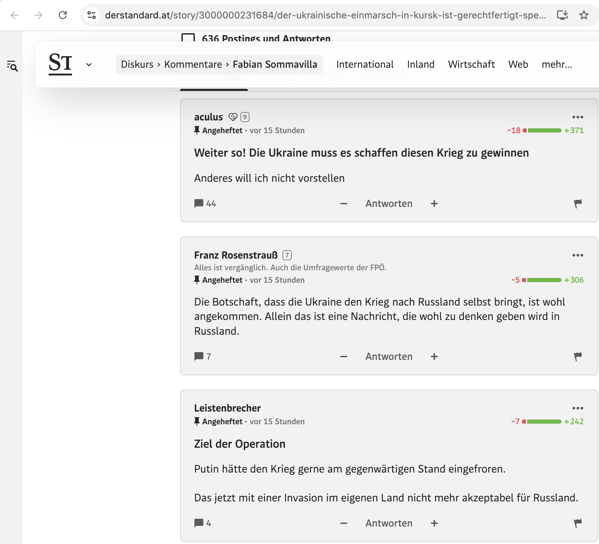
edit: Ach­ja, der Stan­dard lügt natür­lich schon wie­der:
Das fran­zö­si­sche Modell taugt für Öster­reich nicht Zuerst extrem rechts wäh­len, dann kor­ri­gie­ren, geht im fran­zö­si­schen Wahl­recht, nicht bei uns Eins­er­kastl Hans Rau­scher 8. Juli 2024, 11:34 401 Postings Das fran­zö­si­sche Mehr­heits­wahl­recht mit sei­nen zwei Durch­gän­gen bie­tet den Wäh­le­rin­nen und Wäh­lern die Mög­lich­keit, es sich noch ein­mal zu über­le­gen: Zuerst lässt man sei­nen Frust über die Situa­ti­on mit einer Stim­me für die extre­me Rech­te (Mari­ne Le Pens Ras­sem­ble­ment Natio­nal) raus, dann ist einem die Aus­sicht auf eine rechts­ex­tre­me Regie­rung doch zu viel und man wählt links oder doch noch ein­mal gemä­ßigt traditionell.
src: click

Gehört beim Stan­dard zum Beruf, ne zur Berufung.