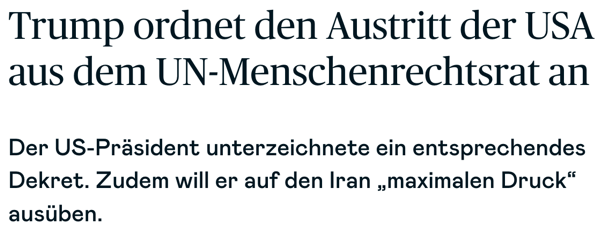
In Ukraine, USAID aids US hegemony, The gutting of USAID will hurt people in need worldwide. Yet as the case of Ukraine shows, the agency has also been used to spread conflict and propaganda. by @aaronjmatehttps://t.co/xOqdlCZwTR
Yet, Musk is not officially part of the new democratic US government, so --- thats --- something.
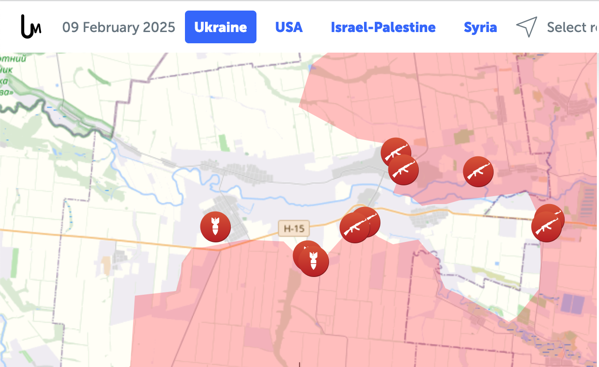
edit: Es gibt aber natürlich auch wieder gute Nachrichten, zum Beispiel falls sie mal nicht die Autobahn (H-15) nehmen wollten um aus Konstiantynopil zu kommen - der Seeweg ist zu dieser Jahreszeit ja auch viel schöner…
Eh schon seit Weihnachten letzten Jahres, ich hatte das bisher nur übersehen.
Oder das hier - von heute:
Generalstab - Gefechte in der Ostukraine werden wieder heftiger
Die Angriffe russischer Truppen in der Ostukraine werden nach Angaben des ukrainischen Militärs nach einigen Tagen Pause wieder heftiger. Der Generalstab in Kiew verzeichnete für Samstag 125 russische Sturmangriffe, nachdem die Zahl in den Tagen zuvor bei etwa 80 Angriffen gelegen hatte. Schwerpunkt der Angriffe mit mehr als 50 einzelnen Attacken waren die Stadt Pokrowsk im Gebiet Donezk und die umliegenden Ortschaften. Der Generalstab sprach von hohen Verlusten der russischen Angreifer.
I compel you to never read Schopenhauers “Die Kunst Recht zu behalten”, because after you do, you will henceforth follow arguments, deconstructing purely emotional engagement fluff lines for the audience into what they are, instead of letting them become the most hard hitting applause lines for that audience, each and every time.
You’ll see the direct impact, and the “argumentative value” of those in debates so often, you’ll simpy become outraged, over how well they work.
As in - put “Reason” and “Logic” on your debate societies banner -- then see an audience fill your events, that will eat every emotional gambit thats in the book, hookline and sinker.
So if you see that happening in motion, the correct thing to do is not to attack the person that is literally fingerpuppeting the audience into an emotional release ad hominem, because the audience enjoys that just too much - to be told at that moment that that is whats happening, it is to do what Scott Horton does here:
Of course then you’ll still be fucked over by the organizers of the events narrative structure, on who gets the last argument, and a “moderator” that distinctly embedds in his hour long questions that the Monroe doctrine in the US would be basically a thing of the past.
Now to the lies of the pro government debater:
- You dont count on “we are at war” speeches filled to the brim with propaganda targeting domestically as your most important historical marvels of your main arguments. Thank you. (“But Bush said, he invaded Irak for God!”)
- You dont know how Putin thinks.
- Your “imperialistic takeover of Ukraine” was planned with 200.000 solderes, as a Shock and awe strategy, with a contingency plan to capture and hold the east. Till this day you have no fucking general mobilization in russia
- This coup in Ukraine coincidentally was organized by CIA enablers USAID, and the National endowment for democracy - even though you tried to weasel your way to an argument, by arguing that other orange revolutions werent.
- Selenskyj and his 60IQ posse of “country managers” are no fucking Vaclav Havel or Lech Wałęsa. They are the product of this initiative: https://euromaidanpress.com/2019/05/23/ukrainian-civil-society-outlines-red-lines-president-zelenskyi-cant-cross/
- Russias attempts at “proactively managing its borders” before a MASSIVE demographic contraction, was seen as that in all of European media with russian military operations in
- Dagestan,
- Chechnya,
- Georgia
- and Belarus,
its just, that when Crimea was captured - WHICHCOINCIDENTALYHELD A HARBORTHATRUSSIAREQUIREDTOUSEFOR (see: Alina Frolova, Former Deputy Minister of Defence of Ukraine ) 40% OFITSEXPORTS, ANDALLITSPOWERPROJECTIONINTOTHEBLACKSEA, THEMEDITERRANEAN, ANDALLOFAFRICA - under the noses of the ONE country, that was in that “cover war of the US” (see debate, to get a source for the quote) already, while getting its revolution payed for by the “National Endowment for Democracy”, that suddenly, this was “read” as IMPERIALISTIC and NEOCOLONIAL, and a threat for the countries of the balkan, the baltics, poland, and why not - then EU -- because no general military mobilization, and 200.000 soldiers in Ukraine, was just too much of a threat for the EU not to cry out “russian Hitler” I guess. So of course europe had to do, what europe had to do, because Russia couldnt escalate, and then Russia escalated, and launched voluntary recruitment drives, so those 200.000 became 700.000. But that would be great, you told each oder - because it would ruin russias economy faster - so it really could disintegrate, which never was the goal of the US, as it turns out. Tough luck? Not to a moron like you.
- No the US did not do oh so MUCH to help russia in the 90s, like a fucking “IMF credit”, to enlarge dependency on the US, in fact -- the record of the US congressional meeting where the decision Jeffrey Sachs was on the receiving end on shows that they “wanted to do the least possible to help russia - so the Gorbatschow government wouldnt collapse” - and thats on fucking record - which it then subsequently did (collapse), which the US found just great, because they could finally negotiate with someone they always wanted in that position instead of Gorbatschow, a FUCKINGDRUNKARD.
- No, Putin, Putin, Putin, Putin - isnt an argument. Its just repeating the propaganda line, so your audience starts to recollect it from memory, and thereby, by the fucking process of repeat recollection starts believing it. I mean, the idiot peoples synapses fire faster after five activations, so it must be true! Right idiot people? (The more correct equivalent would always read: “The entire russian political elite, the entire russian political elite, the entire russian political elite, the entire russian political elite.” But I have to admit “Putin, Putin, Putin, Putin” is catchier.)
Fickt euch ihr fucking Schweine.
Also fuck Nuland, fuck McCain, and fuck american democracy right now.
But also fuck the embedded government shills that put forward purely emotionally acting arguing at intellectual events like the SoHo forum. Take your fucking 40k salaries and fuck yourselves. Moderator (although cheaper) included.
“… und ab März dann SENIORVICEPRESIDENT, GERMANMARSHALFUND.”
Niemand hat bisher wirklich so konsequent die bisherigen Studien ihres Instituts verschwiegen, und das anstatt dessen das US Narrativ nacherzählt.
Niemand außer Claudia Major war Manns genug, die Salami Taktik der US die die Situation in der Ukraine erst zu einem langanhaltenden Aufreibungskrieg werden hat lassen bei einem öfentlichen Vortrag als “Lernkurve” umzudeuten.
Das ruft geradezu nach einem Vorstandsgehalt in der Pension.
Die Phoenix Berichterstattung ist wieder mal außerordentlich, denn laut Moderatoren Intro sagt uns die Claudia Minor heute “was denn noch alles zur Zeitenwende dazu gehört”.
Wo sich dann wieder der Hund in den Schwanz beißt - denn der gesamte deutschsprachige Mediensektor war dazu bisher nicht im Stande, und hat um den Begriff einfach nur die strategische Ambiguität der Bundesregierung verlängert…
Aber am Tag zwei nach der Rede (1. März 2022), hat nicht die Deutsche Bevölkerung, nicht der Phoenix Zuschauer, nicht die Oma vor der Mattscheibe der öffentlich-rechtlichen, nein -- der German Marshal Fund, ein VOLLES Debriefing erhalten, was “Zeitenwende” jetzt eigentlich für die Transatlantische Freundschaft bedeutet.
Hint - die damalige Bedeutung war “den Arsch voll strategische Ambiguität”.
Jetzt raten sie mal, ob ihnen das die Claudia Major auch so mitteilt. Auf Phoenix. Wo sich der Universitätsprofessor Abends angetrunken passiv informiert.
Stellt sich raus -- nein.
Sowas.
Da fällt mir ein was macht zur Zeit eigentlich der @Euroresillience Dr. Gustav Gressel. Der hatte es ja vom Experten zum Aktivisten geschafft - und war plötzlich in den proukrainischen talking circles von Chathamhouse zu sehen wo er der Welt erklärt hat, wie die EU mit stark ansteigender Rüstungsproduktion den Ukrainekrieg drehen und weltweit Demokratie stärken solle. Oder so…
— Ostausschuss der Salonkolumnisten (@OstausschussSK) January 31, 2025
“Wann bricht Russlands Wirtschaft jetzt eigentlich zusammen, es kann sich nur um Stunden handeln.”
Schaut mir sehr nach “in der zweiten Riege festgefahren” aus, aber der mausert sich schon noch.
Die Leute die es im Krieg weit bringen, erkennt man im letzten Drittel eines Konflikts immer daran, dass es die sind, die sich selbst gegenüber nicht treu geblieben sind, sondern in den US den Eindruck erweckt haben, die könnten doch fürs öffentliche Narrativ als Erzähler eigentlich ganz hilfreich sein.
Paff, und hast dus nicht gesehen, schon hast du ein Vorstandsgehalt.
So, und wie bekomm ich jetzt die zur Gipsstatue versteinerte Mine von Claudia Major aus dem Kopf als der Moderator einleitend erwähnt -- “und ab März dann auch Senior Vice President German Marshall Fund”?
Naja, wenigstens kann man sicher sein, dass Phoenix, Maischberger, und Lanz sie weiterhin als “unabhängige Experten” laden und der Öffentlichkeit vorstellen werden.
Der Zuschauer hat sich ja bereits so an sie gewöhnt…
Und die deutsche Bevölkerung wirds weiterhin nicht raffen. So läuft das. Seit jeher.
Warum sollte sich unter einer trumpschen außenpolitischen Administration daran auch was ändern.
Die Ukraine verfügt über große unterirdische Gasspeicher, insbesondere im Westen des Landes. Nach Ende des Gastransits aus Russland könnten diese Hohlräume genutzt werden, um verflüssigtes Erdgas (LNG) aus den USA zu lagern, sagte Außenminister Andrii Sybiha auf einer gemeinsamen Pressekonferenz mit seinem britischen Amtskollegen David Lammy.
Das wird die OMV aber freuen, ich glaube sie war bisher einfach zu kompetitív auf dem Sektor.
Ich hoffe die Ukraine hat genügend Air Defense um diese Pipelines zu bewachen, man brauchts ja für sonst nichts.
Und umsonst gabs die bisher auch…
Auch super Tourismus Slogan eigentlich.
Komm in die Ukraine, dein Amerikagas ist schon dort.
(Nur echt mit dem Frackingsiegel, und Methan++ Atmosphäre Zertifikat. Für Probleme mit dem Export aus unseren Speichern wird keine Haftung übernommen. Dass am Ende des Winters 20% weniger drin lagert ist auf Sonder-Evaporation im ukrainischen Klima zurückzuführen. Der Russe hat die Speicher porös geschossen.)
PS: Wir haben ja so riesige Angst um Odessa, der Russe könnte das ja jederzeit einnnehmen. Gut, die amerikanischen LNG Tanker für unser neues Geschäftsmodell löschen wir dort schon… Sie kaufen das Gas und bezahlen die Versicherung, und den Transport. Wir speichern.
Diese Webseite verwendet Cookies um die Nutzungserfahrung für seine Besucher zu verbessern. Bitte informiere dich bei Gelegenheit darüber wie sich Cookies auf deine Privatsphäre im Web auswirken.