Autorenarchiv

Die europäischen Recherchenetzwerke schlagen zurück

04. Dezember 2024

Teil 1:

Jan Mar­sa­lek soll Ent­füh­rung oder Tötung von Jour­na­list Gro­zev über­legt haben

Ein Pro­zess gegen Mar­sa­leks mut­maß­li­che Hand­lan­ger lie­fert tie­fe Ein­bli­cke, wie der öster­rei­chi­sche Ex-Spitzenmanager als rus­si­scher Spi­on agiert haben soll

src: click

Nach der Über­le­gung wur­de die­se ver­wor­fen. Gut, brau­chen wir ja weder im Titel, noch im Untertitel.

Absatz 11 reicht.

Chats zei­gen, wie gefähr­lich die Situa­ti­on für Gro­zev war: So sol­len Mar­sa­lek und Rous­sev, der Anfüh­rer der Grup­pe, nicht nur die Über­wa­chung von Gro­zev bespro­chen haben, son­dern sogar Plä­ne gehegt haben, ihn zu ent­füh­ren und nach Russ­land zu ver­brin­gen – oder ihn zu töten. Das sei dann aber ver­wor­fen wor­den, heißt es in der Anklageschrift.

Im Som­mer 2022 nahm die Akti­on wie­der an Fahrt auf: Die­ses Mal wur­de ein Ein­bruch in Gro­zevs Apart­ment geplant.

Quel­le: Eine Ankla­ge­schrift (!), die sich auf Chat­pro­to­kol­le bezieht. Die nicht ver­öf­fent­licht wer­den. In denen ersicht­lich sei, dass die Plä­ne ver­wor­fen wur­den. Ver­schär­fend käme jedoch hin­zu, dass ein Ein­bruch geplant wor­den sei.

Unfass­bar! Dazu auch ger­ne Spie­gel: Jagt die CIA Ass­an­ges Unter­stüt­zer? - “Ein­brü­che, Obser­va­tio­nen, Abhör­ak­tio­nen: In der Unter­stüt­zer­sze­ne des WikiLeaks-Gründers Juli­an Assan­ge häu­fen sich seit Jah­ren Merk­wür­dig­kei­ten. Wer dahin­ter­steckt, ist unklar – aber die Betrof­fe­nen haben Vermutungen.”

Der Haus­meis­ter! Das war sicher der Hausmeister.

Teil 2

https://www.youtube.com/watch?v=LDw8RFjMeKA

Als Kata­lo­ni­en sei­ne Unab­hän­gig­keits­be­stre­bun­gen ver­folgt, nimmt die kata­lo­ni­sche Sei­te Kon­takt mit Russ­land auf. So auf dem Level “wir wären dann für die Unab­hän­gig­keit der Krim, tut was für uns”. Der Kreml lotet aus was geht. Es exis­tiert ein Tele­fon­mit­schnitt auf dem die rus­si­sche Kon­takt­per­son dar­über spricht, nach­ge­hakt zu haben, ob sie denn den Sepa­ra­tis­ten 10.000 Sol­da­ten schi­cken soll­ten - die Kon­takt­per­son um das poli­tisch zu ermög­li­chen wäre wohl in der Flug­ha­fen­lo­gis­tik zu suchen - sowas kön­ne man pla­nen. Die Sepe­ra­tis­ten­füh­rung bekommts mit der Angst zu tun (Was Unab­hän­gig­keits­be­stre­bun­gen mit Ein­hei­ten des Mili­tärs eines ande­ren Staa­tes? Wo gibts denn sowas! (Gut, war Euro­pa, ist jetzt ein biss­chen hei­kel, weil Wer­te­wes­ten.)) und bricht den Kon­takt ab.

Teil 3

https://www.youtube.com/watch?v=LDw8RFjMeKA

Die Recher­chenetz­wer­ke ver­ges­sen die Ver­ein­ba­rung von Mer­kel, dass sobald Nord­stream 2 für poli­ti­sche Zwe­cke miss­braucht wer­den wür­de, Deutsch­land ihre Nut­zung ein­stel­len wür­de zu erwähnen.

Machen aber einen 30 Minü­ter aus - Putin hat nach den Sank­tio­nen der Unter­neh­men die Nord­stream 2 fer­tig­stel­len soll­ten, den Lei­ter des Nord­stream 2 Pro­jekts ins zustän­di­ge Lan­des­par­la­ment geschickt! (Ein ehe­ma­li­ger Sta­si Agent.) Nein! Und der Land­tag hät­te dann beschlos­sen, dass eine Initia­ti­ve des deut­schen Staa­tes die Pipe­line­an­bin­dung fer­tig­stel­len wür­de (Kli­ma­stif­tung). Unter dem Schirm eine Natur­schutz­in­itia­ti­ve zu sein, was sie zu einer Ver­ei­ni­gung mit Ver­bin­dung zu einer EU Insti­tu­ti­on gemacht hät­te, die laut US Gesetz­ge­bung nicht sank­tio­nier­bar war.

ARTE spricht mit einer Umwelt­ak­ti­vis­tin die den Methan­fuss­ab­druck von Flüs­sig­gas Tan­kern nicht kennt, und mit einem Grü­nen Abge­ord­ne­ten, der mit dem Kame­ra­team durch die Hei­de geht, und dann den Zuse­hern öffent­lich mit­teilt, dass die Roh­re im Boden eine Schan­de wären, weil sie ja nach Russ­land füh­ren soll­ten. Der sich für die Auf­klä­rung der Ange­le­gen­heit ein­setzt und immer geschwärz­te Doku­men­te bekommt.

Dann noch mit einem Anwalt der Jour­na­lis­ten gegen das Land Mecklenburg-Vorpommern ver­tritt (Infor­ma­ti­ons­frei­heits­ge­setz).

Die Steue­rung der Ope­ra­ti­on durch Gas­prom, um die US Sank­tio­nen durch eine deut­sche Stif­tung zu umge­hen ist wahrscheinlich.

Der Kli­ma­schutz sei hier nur vor­ge­scho­ben wor­den! Mit der Fer­tig­stel­lung der Pipe­line wäre mehr Geld her­ein­ge­kom­men, als die Kli­ma­stif­tung, ehm durch ande­re Akti­vi­tä­ten, ehm, …

Unglaub­lich!

Die­ser Rus­se schon wie­der. Nie hält er sich an US Dro­hun­gen an Deutsch­land! Um am Ende die Ukrai­ne zu schwächen.

Trotz der poli­ti­schen Ver­ein­ba­rung von Mer­kel Nord­stream 2 nicht mehr zu nut­zen, sobald Russ­land sie poli­tisch nut­zen wür­de. Die nicht erwähnt wird.

Aber die Sicher­heits­in­ter­es­sen der Ukrai­ne sei­en unter­gra­ben wor­den, da die Ukrai­ne für die Gas­lie­fe­rung nicht mehr not­wen­dig gewe­sen wäre. Stimmt. Aber da gabs dann ande­re Ver­trä­ge die der Ukrai­ne eine Aus­las­tung in einem bestimm­ten Bereich zuge­sagt haben (über NS2 wäre mehr Gas nach Deutsch­land gekom­men). Die auch mal aus­lau­fen kön­nen. Da hat­te die Ukrai­ne nicht viel Zeit sich was zu überlegen.

Nix ist pas­siert, aber Russ­land hat schon mal ange­fragt, ob sie Kata­lo­ni­en 10.000 Sol­da­ten schi­cken sol­len. Russ­land hat­te ein Inter­es­se Nord­stream 2 fer­tig zu stel­len. Mecklenburg-Vorpommern hat dafür eine Stif­tung gegrün­det. Und man habe über eine mög­li­che Ermor­dung eines Jour­na­lis­ten gespro­chen, sich aber dage­gen ent­schie­den, zei­gen Chat­pro­to­kol­le, die Teil einer Ankla­ge­schrift sind.

Bit­te mehr von sol­chen umwer­fen­den inves­ti­ga­ti­ven Enthüllungen.

Ich kann Teil 2 der ARTE Repor­ta­ge kaum abwarten.

Die­se Rus­se schon wie­der, nie macht der ein­fach geheim­dienst­lich mal nichts! Und die Netz­wer­ke Putins erst!

Die Nord­stream 2 Gesellschaft.

Und der Kata­la­ne der in Spa­ni­en nach Rus­sen gefragt hat die Putin kennen!

Und, und dem Jan Mar­sa­lek sei­ne Chats!

Mor­gen hat Russ­land kei­nen FSB mehr, wenn das so wei­ter­geht… Und das nur dank unse­ren Recherchenetzwerken.

edit: Es gibt aber natür­lich auch wie­der gute Nach­rich­ten - Münch­ner Sicher­heits­un­ter­neh­men stellt pri­vat tau­sen­de Lan­cet Equi­va­lent Droh­nen (12kg Nutz­last) mit auto­no­mem Ter­rain map­ping her, die dop­pelt so schnell wie Lan­cets flie­gen und zwei­ein­halb mal so viel Reich­wei­te haben, um sie dem­nächst an die Ukrai­ne zu verkaufen:

https://www.derstandard.at/story/3000000247767/muenchner-firma-liefert-tausende-kamikazedrohnen-in-die-ukraine

Was für ein Glück, dass sowas in Deutsch­land ohne staat­li­ches Mit­wis­sen mög­lich ist.

Denn die hel­fen der Ukrai­ne aktu­ell sehr wahr­schein­lich mehr als Tau­rus ihnen gehol­fen hätte.

Fiona cares to interject

04. Dezember 2024

Panel Inter­view of the his­to­ri­ans that have eaten the con­text by the spoon­fulls society.

Luci­an Kim, Kennan Insti­tu­te pres­ents his new book.

Fio­na Hill, intro­du­ces him to the public, as one of her main sources, then wat­ches over his statements.

Luci­an Kim, then starts to give a his­to­ri­cal rundown, of how the war came to be.

Here is the struc­tu­re of his argument:

I remind you, not my words, his.

- Ever­ything was swell the bor­der was open, peop­le went back and forth bet­ween rus­sia and ukrai­ne, peop­le had a jol­ly good time.
- Then Selen­skyj was voted into power. At first, he was seen as a rus­si­an tool, becau­se he wan­ted to make a deal with rus­sia, but then his views chan­ged. [No rea­son named, why his views chan­ged, well some ULTRANATIONALIST pro­tests out­si­des of some government buil­dings may­be - I’ve heard tho­se can, on occa­si­on, ruin your day! On Fran­ce 24. By a docu­men­ta­ry filmma­ker. *cough* (link not at hand, but it was one of tho­se 4 pun­dits and a mode­ra­tor deba­te panels they do, with the only intel­li­gent mode­ra­tor, go and find it for me, plea­se - it was this year, only a few weeks, may­be mon­ths ago)]
- Then of cour­se Selen­skyj HAD to reneg on Misnk II he sim­ply had to ren­ego­tia­te the agreement.
- But Putin didnt want to ren­ego­tia­te Minsk II, part­ly becau­se of Sevas­to­pol whe­re the rus­si­an fleet was sta­tio­ned, which was of stra­te­gi­cal impor­t­ance in his thinking.
- So Ukrai­ne didnt want to fol­low the Minsk II agree­ments, while rus­sia was in vio­la­ti­on [chan­ge of argu­ment, pre­vious­ly Selen­skyj wan­ted to reneg Minsk II], the­re was no rea­son for Ukrai­ne to ful­fill Minsk II.
- Then Putin used the troop move­ments as a pres­su­re tactic
- Then Selen­skyj put Wik­tor Med­wedt­schuk under House arrest, so rus­sia lost all of its remai­ning soft power.
- Also about 5 minu­tes ear­lier: Putins decisi­on to attack was made at some point in 2021, Putin didnt want this war to go on for over 3 years, thats why he cal­led it a spe­cial mili­ta­ry ope­ra­ti­on [again not my words, Luci­an Kim]

AT THAT POINT FIONA CARES TO INTERJECT.

Yes, you see - the­re are many things peop­le see as rea­sons for why various deve­lo­p­ments hap­pen­ed sin­ce 2014 [we were in the years 2021-2022 in the retel­ling of the sto­ry, mind you], and Putins rea­so­ning shifted [names them, then dis­re­gards them as not important], but the­re also is some­thing evo­lu­tio­na­ry, not devo­lu­tio­na­ry about Putin, becau­se look at what Putin said about the histo­ry, how do you think his idea of histo­ry was shifted!?!=?!?! Are the­re peop­le who shaped that?

And now quote:

Luci­an Kim: “Thats a gre­at ques­ti­on! Of cour­se ever­yo­ne is always try­ing to get into Putins mind. [no, not ever­yo­ne - just Fio­na], but if you think about whe­re Putin was when he star­ted his term in office and whe­re his mind was in 2022, when he star­ted, Putin was thought of as a prag­ma­tic lea­der, insi­de of rus­sia, but also, cer­tain­ly in Ukrai­ne, he was actual­ly a very popu­lar poli­ti­ci­an in Ukrai­ne, and cer­tain­ly in the West peop­le thought of him as someo­ne you could make deals with, mutual­ly bene­fi­cial deals with, and it appears that Putin was inte­res­ted in some sort of natio­nal revi­val […] and what I try to descri­be in my book, one of the cha­rac­ters that came into play here was Igor Gir­kin, for­mer FSB offi­cer, that play­ed a key role in the take­over of Cri­mea, and in forming the ins­er­gen­cy in the Don­bas, and I descri­be him as - ahm, an ULTRANATIONALIST, someo­ne belie­ving in rus­si­an auto­cra­cy, in rus­si­an empi­re, .. and even at that time, he was a freak, and he was used by the Krem­lin, he was used as a use­full figu­re by the Krem­lin, and even beca­me the defen­se minis­ter of the socal­led Donezk Repu­blic [WOOW! LOOK AT THIS THOUGHT LEADER! (Krem­lin pup­pet)] and when the Krem­lin didnt need him, they dro­ped him, they made clear, that he was doing his own thing, and the sepe­ra­tists in the Don­bas nee­ded their own sepa­ra­tist lea­ders… And at that time Gir­kin was a freak on the frin­ges (2014) […] and at the end of that peo­ri­od he would actual­ly say a lot of things, that Ale­xej Nawal­ny would say, natio­nal revi­val of rus­sia, … I descri­be Putin going across the spec­trum. We are all in this spec­trum of rus­si­an natio­na­lism. But going from Ale­xej Nawal­ny who had a euro­pean visi­on over to Gir­kin, who had the visi­on of empi­re … […] Thats how I would descri­be his [Putins] path.

REASON GIVEN: NONE WHATSOEVER

Let me inter­ject for a moment here, in Octo­ber of 2021 Ukrai­ne was using US deli­ve­r­ed Jave­lins in the Don­bas, and gave US Mili­ta­ry jour­nals inter­views, that they were high­ly effec­ti­ve at figh­t­ing the sepa­ra­tists there.

Which Chom­sky made sur­face as an argu­ment in the inter­na­tio­nal debate.

22. 11. 2021: the-drive.com (some mili­ta­ry news web­site): Ukrai­ni­an Tro­ops Have Been Firing American-Made Jave­lin Mis­si­les At Russian-Backed Forces
Ukrai­ni­an Bri­ga­dier Gene­ral Kyry­lo Buda­nov tal­ked about the ope­ra­tio­nal use of Jave­lins as part of a recent inter­view with Mili­ta­ry Times, which he con­duc­ted through an inter­pre­ter. Buda­nov, who runs the Chief Direc­to­ra­te of Intel­li­gence of the Minis­try of Defence of Ukrai­ne, also known by its Ukrai­ni­an acro­nym GUR MOU, used the oppor­tu­ni­ty to call for more help from the U.S. government as he sound­ed like the alarm about the Kremlin’s unusu­al deploy­ments of lar­ge num­bers of mili­ta­ry units to are­as oppo­si­te Russia’s bor­ders with Ukrai­ne in recent weeks.

src: click

That enough of a rea­son? I mean, losing all soft pres­su­re tools, having the mili­ta­ry pres­su­re of units at the bor­der not work, and fore­see­ab­ly losing the Don­bas to Ukrai­ni­an tro­ops, becau­se they used US made Jave­lins for the first time? In the Don­bas. Whe­re Gir­kin form­er­ly was the rus­si­an instal­led “defen­se minis­ter”? Becau­se of yeah, that thing, that stra­te­gic impor­t­ance of Sevas­to­pol you men­tio­ned ear­lier.… (Cri­mea can not be secu­red, when Ukrai­ne holds the Don­bas -- Sluice Gates, all water nee­ded for irri­ga­ti­on (grain, corn, ..) are in the Don­bas.) And Ukrai­ne didnt want to stop after regai­ning the Don­bas. Kin­da obviously.

Yeah just lets not men­ti­on that the mili­ta­ry power balan­ce was over­tur­ned (rus­si­an backed sepe­ra­tists, not the full rus­si­an Army against the Ukrai­ni­an Army, now with Jave­lins, no big­gy… It was just the for­mer Ukrai­ni­an Defen­se minis­ter who said the fol­lowing on 24.11.2019

The aid, inclu­ding counter-artillery bat­te­ry radar, night-vision gear and patrol boats, has sin­ce [in the later parts of the Trump admi­nis­tra­ti­on] been unf­ro­zen and is making a real dif­fe­rence to Ukrai­ni­an for­ces figh­t­ing Russian-backed sepa­ra­tists in eas­tern districts.

But it is the Jave­lin which appears to be a game-changer, Ukraine’s defence minis­ter told CBC News.

In cer­tain are­as, they can make a cri­ti­cal dif­fe­rence,” said Andriy Zagorodnyuk.

src: click)

-- oh and by the way - they werent allo­wed to use tho­se Jave­lins until the US clea­red them for use insi­de of Ukrai­ne, even when rus­sia hadnt inva­ded (“offi­cial­ly”) in Decem­ber of 2021. Yeah, I have no Idea, why Gur­kin could sud­den­ly con­vin­ce Putin, that the Krem­lin should chan­ge strategy, …

No idea, whatsoever.…

That fac­to­id, just slip­ped my mind.

And Luci­an Kims, for that matter.

During a pho­ne con­ver­sa­ti­on on 2 Janu­a­ry 2022 bet­ween the US and Ukrai­ni­an pre­si­dents, Pre­si­dent Biden decla­red that the US and its allies ‘will respond decisi­ve­ly if Rus­sia fur­ther inva­des Ukrai­ne’. Alrea­dy during his can­di­da­cy, Joe Biden was outs­po­ken about Ukraine’s role in US for­eign poli­cy and ack­now­led­ged the pos­si­bi­li­ty of pro­vi­ding secu­ri­ty assi­s­tance and wea­pons. Pre­si­dent Zelen­skyy visi­ted Washing­ton in Sep­tem­ber 2021 and met Pre­si­dent Biden. The Joint State­ment on the US-Ukraine Stra­te­gic Part­ners­hip reaf­fir­med US sup­port for ‘Ukraine’s right to deci­de its own future for­eign poli­cy cour­se free from out­side inter­fe­rence, inclu­ding with respect to Ukraine’s aspi­ra­ti­ons to join NATO’. Moreo­ver, Pre­si­dent Biden announ­ced a US$60 mil­li­on secu­ri­ty assi­s­tance packa­ge, inclu­ding addi­tio­nal Jave­lin anti-armour sys­tems and forth­co­m­ing joint hard­ware pro­duc­tion through Ukro­boron­prom. Washing­ton reco­gni­s­es Ukrai­ne as ‘cen­tral to the glo­bal strugg­le bet­ween demo­cra­cy and auto­cra­cy’. In late Decem­ber 2021, defen­si­ve mili­ta­ry aid worth US$200 mil­li­on was appro­ved, with deli­ve­ries alrea­dy arri­ving. In Janu­a­ry 2022, the US appro­ved the sen­ding of American-made anti-tank and anti-aircraft mis­si­les to Ukrai­ne by the Bal­tic States.

src: EU Par­lia­ment Brie­fing “EU-Ukraine rela­ti­ons and the security
situa­ti­on in the coun­try” 02.02.2022

edit: On the point, that Putins goal with the mili­ta­ry inva­si­on was to install a pup­pet can­di­da­te in Kiew, I agree. Might likely still be his goal (sabo­ta­ge the inde­pen­dence of Ukrai­ne). But. Ukrai­ne with Odes­sa and the Donau har­bors can pos­si­b­ly retain inde­pen­dence eco­no­mi­c­al­ly. Issue then beco­mes, mili­ta­ry pres­su­re, mili­ta­ry con­trol over black sea tra­de, and soft power influ­ence over a “for­ced neu­tral” Ukrai­ne. All but the last one can be sol­ved by secu­ri­ty gua­ran­ties. Last one could be sol­ved by “par­ti­al Ukrai­ne” beco­m­ing a mem­ber of NATO and the EU, but not if Selen­skyj keeps insis­ting, only the ent­i­re Ukrai­ne can beco­me part of NATO.

edit: Ers­te Publi­kums­fra­ge von Nata­li­ya Gume­nyuk (1|2)! Mei­ne güte Zufäl­le gibts! Ich glau­be das wur­de von Russ­land sicher posi­tiv gelesen!

edit2: Atlan­tic Coun­cil BLEH from June 20 2024, on why Ukrai­ne REALLY needs the Don­bas. If you havent gues­sed it by now, its becau­se of Hilter…

Of cour­se, the­re is an oce­an of sus­pi­ci­on bet­ween Moscow and Kyiv. Ukrai­ne deeply distrusts Rus­sia, as Russia’s 2014 sei­zu­re of Cri­mea, sup­port for the Don­bas insur­gen­cy, and 2022 full-scale inva­si­on of Ukrai­ne vio­la­te the 1994 Buda­pest Memo­ran­dum, in which Rus­sia agreed to respect Ukraine’s bor­ders and sovereignty. 

Worse, some pos­si­ble peace terms, such as gran­ting Rus­sia per­ma­nent con­trol of the eco­no­mi­c­al­ly valu­able and mili­ta­ri­ly important Don­bas regi­on, would shift the balan­ce of power in Russia’s favor. Ukrai­ne would be espe­cial­ly unli­kely to accept this kind of deal, becau­se it would expand a streng­t­he­ned Russia’s incen­ti­ves to break the deal down the line. This was one rea­son why Chur­chill refu­sed to nego­tia­te, as he fea­red that Nazi lea­der Adolf Hit­ler would demand Bri­tish colo­nies and naval dis­ar­ma­ment in any peace deal, lea­ving Bri­tain hel­pless to resist even­tu­al Ger­man deman­ds for total Bri­tish capitulation.

src: click

Amanpour hat Merkel auf Büchertour zu einem ausgiebigen 3min 30 Interview geladen

04. Dezember 2024

das heu­te als Sen­sa­ti­on im Ticker von vier öster­rei­chi­schen Medi­en auftaucht.

Ein­stiegs­fra­ge: Die Flücht­lin­ge, was haben sie ver­sagt, nicht? Was wür­den sie sagen, wie genau sie ver­sagt haben?

(Von den öster­rei­chi­schen Medi­en berich­te­ter Inhalt: Als Putins klei­ne grü­ne Männ­chen auf der Krim ein­mar­schiert sind, da wuss­te Mer­kel sofort, dass Putin lügt, und dass sie von jetzt an sehr vor­sich­tig sein müs­se, denn in ihren ers­ten Amts­zei­ten habe Putin noch nicht gelo­gen. [edit: Which is a clear mis­re­pres­si­on of what was said in tone.])

Das let­ze Mal, dass Aman­pour einen Clip (aus­ge­nom­men Aman­pour Wer­be­tea­ser (einer)) von 3min30 auf you­tube ein­ge­stellt hat war - ehm am 23. Febru­ar 2023, damals ein Inter­viewaus­schnitt (eine Fra­ge, weil mehr braucht man ja nicht, mit Polens Prä­si­den­ten “on the strugg­le against Rus­sia”).

Aman­pour ist ein wöchent­li­ches Format.

Das muss man ver­ste­hen, Mer­kel war ja auch nur seit 29.04.2023 für Inter­view­fra­gen über die Ukrai­ne nicht zu haben, erschien eine Minu­te zu spät im Stu­dio, und dann war auch noch ihr Per­so­nen­schüt­zer müde!

Äuße­re Umstände.

Da hat Aman­pour alles raus­ge­holt, was als Zeit­do­ku­ment für die Nach­welt mög­lich war.

Drei Minu­ten dreißig.

Mehr brau­chen die US wirk­lich nicht zu hören. (Auch vom gemein­sa­men Sit­down (Boo­ke­vent) mit Oba­ma gibt es nur ein einen 4 Minu­ten Clip von For­bes und kei­nen Mit­schnitt in vol­ler Länge.)

Hier viel­leicht zum Aus­gleich ein 18 Minu­ten Inter­view mit Fran­cis Fuku­ya­ma. Das hilft sicher irgend­wem weiter…

Oder ein 18 Minu­ten Video mit His­to­ri­an Timo­thy Sny­der über VP Har­ris’ “Free­dom” Kampagne.

Jaja, sowas kann man schon brauchen…

Viel­leicht noch­mal die 17 Minu­ten mit Kas­parow als ers­tem (!) Russland/Ukraine Krieg Exper­ten, der den Krieg für das US Publi­kum bei Aman­pour kon­tex­tua­li­sie­ren durfte?

Gar­ri Kas­parow, what is Putins endgame?

edit: CNN hat zumin­dest das vol­le Tran­skript online ver­öf­fent­licht: click

Wenn ich mir das Tran­script von einer TTS engi­ne vor­le­sen las­se, hat­te das initia­le Inter­view eine Län­ge von 24 Minuten.

Ich habe es als Audio­da­tei hochgeladen:

Text to speech audio file (aac)


Copy/paste:

(BEGIN VIDEOTAPE)

AMANPOUR: Chan­cellor Mer­kel, wel­co­me to the program.

When I last inter­view­ed you just befo­re your reti­re­ment, it was the heyday. It was libe­ral demo­cra­cy. It was doing pret­ty well. You had invi­ted or accep­ted about a mil­li­on refu­gees. That was still, you know, con­si­de­red some­thing incredi­b­ly com­pas­sio­na­te and prag­ma­tic. You had a very boo­m­ing tra­de. It’s almost -- the three years sin­ce you’­ve left office, all of this is in ques­ti­on. The refu­gees have made, you know, a big, big power to the far-right in your coun­try, to the far-right in this coun­try, and around Euro­pe. Tra­de is very dif­fi­cult now. You had yoked your tra­de to China.

That’s a big issue right now. Your ener­gy to Rus­sia. That’s a big issue right now.

You said you wan­ted to talk about what you did well and some of your mis­judgments. What would you say the mis­judgments you made were in that group of things that I just said?

ANGELA MERKEL, AUTHOR, “FREEDOMAND FORMER GERMAN CHANCELLOR (through trans­la­tor): I think, and I’m try­ing to do that in this book, we always have to look at mat­ters as in under the con­di­ti­ons that we were in then. I don’t think it makes a who­le lot of sen­se to say from today’s van­ta­ge points in hind­sight what would one have done then, becau­se that was not the rea­li­ty of the day.

[13:10:00]

So, the first thing I’d like to say is that for me it was a very good expe­ri­ence when this mass of. Syri­an refu­gees came to our coun­try, that the­re was a gre­at rea­di­ness by the peop­le, by the Ger­man peop­le to wel­co­me that. But also, obvious­ly, we have to redu­ce ille­gal migra­ti­on. That’s a pro­blem that you have here in the United Sta­tes as well.

At the time, I came to this agree­ment with Tur­key, which worked very well. Ille­gal migra­ti­on was redu­ced by 95 per­cent due to this. And then, in the mean­ti­me, we accep­ted about a mil­li­on Ukrai­ni­an refu­gees, which was a gre­at achie­ve­ment. And the­re was broad -- it was broad­ly wel­co­med. But the right-wing par­ties, that is true, the AFD, was streng­t­he­ned due to this.

But I need to point out that when I left office, they hove­r­ed around 11 per­cent now, 18 per­cent. So, a lot of other things pro­bab­ly hap­pen­ed sin­ce to make them that strong.

And as to Rus­sia, which you men­tio­ned as well, that is sort of sepa­ra­te chap­ter. 2008, at the very latest. Once we had -- after the Bucha­rest NATO Sum­mit, we knew that the­re were gre­at ten­si­ons. And my approach at the time was to try to bring about a pre­ven­ti­on of that sort of war that we have now through diplo­ma­tic means. I think the COVID pan­de­mic in a way real­ly was the nail to this cof­fin -- to the cof­fin of the­se diplo­ma­tic attempts becau­se Putin was very -- had a pho­bia. He did­n’t want to get infec­ted by COVID. So, he did­n’t want to enter into diplo­ma­tic talks, did­n’t want to meet anyo­ne then.

This -- due to the war of aggres­si­on against Ukrai­ne, a new ter­ri­ble chap­ter ope­ned and some­thing that brought all of us clo­ser to gre­at glo­bal confrontation.

AMANPOUR: I’m going to dig deeper into Putin becau­se it’s fasci­na­ting, your insights, your mee­tings, and the things you wri­te about him. I mean, you’­re not shy about say­ing qui­te a lot of real­ly inte­res­ting things that you never would have said in office.

But also, we’­re in the United Sta­tes. There’s a new pre­si­dent of the United Sta­tes who will take office in Janu­a­ry, Donald Trump. You worked with him once. I want to start sort of at the begin­ning, and there’s been a lot made and you’­ve writ­ten about it, when you were one of the first world lea­ders to meet him. You came to Washington.

And out of sight of the came­ras, you shook hands. You did your thing, et cete­ra. In sight of the came­ras, in the famous Oval Office with the fire­place bet­ween you, he did­n’t want to shake hands with you. And even though you asked him kind of dis­creet­ly, he just refu­sed point blank and kept loo­king at the came­ras. And I thought it was real­ly inte­res­ting becau­se you said, he wan­ted to crea­te con­ver­sa­ti­on fod­der through his beha­vi­or, while I thought I was having a dis­cus­sion with some­bo­dy com­ple­te­ly normal.

Is he not com­ple­te­ly nor­mal in your view?

MERKEL (through trans­la­tor): I think Pre­si­dent Trump lives off actual­ly acting uncon­ven­tio­nal­ly, and in this way draws the atten­ti­on of peop­le to hims­elf. Eit­her he shook the hands of some of my col­leagues three times lon­ger than you usual­ly do, or with me, he did­n’t do it at all. At this point in time, I had for­got­ten and nor­mal­ly he would say, well, you shake hands and that’s it. But when you’­re in this situa­ti­on, you don’t -- and you don’t even think about it. But with him, all of the­se exter­nal things, the­se ges­tu­res, all was -- were part of a state­ment becau­se he wan­ted to very clear­ly show that out­side of poli­ti­cal talks, in the­se situa­tions, he puts down a mar­ker, wha­te­ver he means with it.

AMANPOUR: You also descri­bed him as I dealt in facts, he dealt with emo­ti­ons. How did that affect some of the key issu­es that you were try­ing to deal with, his emo­tio­nal view of politics?

MERKEL (through trans­la­tor): I would say loo­king back, we, and I’m also spea­king here of NATO mem­bers and E.U. mem­bers, we were actual­ly able to get to sen­si­ble agree­ments with him. But when you think about tariffs on steel, for examp­le, at first, they were only tal­king about Chi­na and he was tal­king about the sub­si­dies that Chi­na injects into the steel indus­try. And then, all of a sud­den, we were also cove­r­ed by tariffs. And the­se tariffs are still in place today, unfor­tu­n­a­te­ly. But then, he wan­ted to put down a mar­ker, make a state­ment on this.

But in spi­te of all adver­si­ty, we were cove­r­ed by tariffs. NATO mem­bers able to pur­sue NATO in a sen­si­ble way, and I would hope and wish that this hap­pens also in the next four years to come.

AMANPOUR: I remem­ber very dis­tinct­ly when Donald Trump was first elec­ted, you did one of -- you were the only one to actual­ly wel­co­me his elec­tion con­di­tio­nal­ly, in other words, based on the respect and the adhe­rence to mutu­al values, demo­cra­cy, free­dom, diver­si­ty, rule of law, human rights, et cete­ra. And I just, you know, won­der whe­ther you thought he did act in that way, and espe­cial­ly becau­se you said, he was clear­ly fasci­na­ted by the Rus­si­an pre­si­dent. In the years that fol­lo­wed, I recei­ved the dis­tinct impres­si­on that he was cap­ti­va­ted by poli­ti­ci­ans with auto­cra­tic and dic­ta­to­ri­al traits. How did that mani­fest its­elf to you?

[13:15:00]

MERKEL (through trans­la­tor): Well, in the way that he spo­ke about Putin, the way that he spo­ke about the North Kore­an pre­si­dent, obvious­ly, apart from cri­ti­cal remarks he made, the­re was always a kind of fasci­na­ti­on at the sheer power of what the­se peop­le could do.

So, my impres­si­on always was that he dreamt of actual­ly over­ri­ding may­be all tho­se par­lia­men­ta­ry bodies that he felt were in a way an encum­bran­ce upon him and that he wan­ted to deci­de mat­ters on his own and in a demo­cra­cy, well, you can­not recon­ci­le that with demo­cra­tic values.

AMANPOUR: Can I ask you, it just pop­ped into my head, his for­mer chief of staff, John Kel­ly, who was a mari­ne gene­ral, he actual­ly said that Donald Trump had expres­sed inte­rest appro­val of Nazi gene­rals. I wish mine -- my, you know, poli­ti­ci­ans, my mili­ta­ry were like the Ger­man gene­rals. Does that sur­pri­se you that he would say some­thing like that?

MERKEL (through trans­la­tor): Honest­ly spea­king, I never heard this and I would­n’t want to make any com­ment on this. I said that he was fasci­na­ted, not too much co-determination as it were, or too many other peop­le having a say. He wan­ted to be the per­son who makes the judgment and the call.

But I think if you approach -- once you approa­ched him without any fear and with clear -- a clear cut stra­te­gy, he lis­tened. And I think he smells when peop­le are a litt­le bit afraid of him. And when you’­re not, then you can enter into good talks with him.

AMANPOUR: And you were not?

MERKEL (through trans­la­tor): No. I was the elec­ted chan­cellor of the Federal Repu­blic of Ger­ma­ny. I mean, we’­re not a negli­gi­ble coun­try. We

have our own inte­rests, our own ves­ted inte­rests, and I was always gui­ded by the­se natio­nal inte­rests. I think the United Sta­tes of Ame­ri­ca are such an important power, a superpower.

But we in Euro­pe are also important. The United Sta­tes of Ame­ri­ca can­not do things on their own com­ple­te­ly. We have an alli­an­ce. We have NATO together.

So, this is not just some­thing whe­re we owe some­thing to the Ame­ri­cans, as Donald Trump qui­te often said, but the United Sta­tes of Ame­ri­ca, too, must have a ves­ted inte­rest or should have a ves­ted inte­rest. At least that would be my advice, becau­se when we stand tog­e­ther, we’­re sim­ply stron­ger, and the­re are so many in the world who do not want demo­cra­cy. So, strength is important in this -- against this background.

AMANPOUR: You and Pre­si­dent Oba­ma did wri­te an op-ed say­ing when we stand tog­e­ther, we’­re stron­ger. But you also have writ­ten in your book about what it was like to nego­tia­te with Donald Trump. And all of this is important, not just to look back, but to look for­ward. Becau­se you’­ve tal­ked about tariffs. Well, he has threa­tened alrea­dy, not even in office yet, to slap huge tariffs on many, many dif­fe­rent coun­tries, inclu­ding pos­si­b­ly Europe.

And you’­ve descri­bed him as a nego­tia­tor who did­n’t see a win-win situa­ti­on. Tell me how he came across as a negotiator.

MERKEL (through trans­la­tor): Well, for me, it was clear that with him the­re will not be a free tra­de agree­ment, for examp­le, bet­ween the Euro­pean Uni­on and the United Sta­tes of Ame­ri­ca. With Pre­si­dent Oba­ma, we had tried to come to this Trans­at­lan­tic Tra­de Agree­ment. We nego­tia­ted that. And I did­n’t think that this was pos­si­ble Donald Trump.

I think at the end of the day, Donald Trump would always weigh what his actions mean for the Ame­ri­can voter and for the Ame­ri­can citi­zen and weigh that in the balan­ce. And one of the issu­es here are high pri­ces. So, if I were to impo­se tariffs on coun­tries whe­re I might be able to buy things chea­ply and due to the ter­ro­rist pri­ces will rise, then it will be dif­fi­cult for some­bo­dy such as Pre­si­dent Trump, and he did­n’t want pri­ces to rise, at least not for been years ago.

So, the­re will be big dis­cus­sions over tariffs and the impact of that. That’s very clear. But Pre­si­dent Trump always said to his voters, also during his first term in office, that he will have a bet­ter life due to him if they vote for him. So, the­re are very good rea­sons to look at the world being sort of lin­ked by all of the­se dif­fe­rent bonds, and the United Sta­tes does­n’t have all of the­se raw mate­ri­als and raw resour­ces that they need for pro­duc­tion on their own. They need the rest of the world for this.

AMANPOUR: You have said that he has a natio­na­listic tone, and that a lot of his nego­tia­ti­ons invol­ve a zero-sum game, that for him to win, the other per­son had to lose, peri­od, end of sto­ry. Is that con­struc­ti­ve in diplo­ma­cy or tra­de negotiations?

[13:20:00]

MERKEL (through trans­la­tor): It’s not my con­vic­tion. I am con­vin­ced that through wise com­pro­mi­ses, you can bring about win-win situa­tions, situa­tions whe­re the who­le world bene­fits and when self also bene­fits from that.

I am someo­ne who actual­ly great­ly respects inter­na­tio­nal orga­niz­a­ti­ons, the United Nati­ons, the World Tra­de Orga­niz­a­ti­ons and others. I think they’­re very, very important. I would like to remind all of us, which has some­bo­dy rece­ded into the back­ground that the big­gest chal­len­ges are cli­ma­te chan­ge and the loss of bio­di­ver­si­ty. A human being gets much more vul­nerable due to this.

And Chi­na, the big­gest emit­ter, we have to have them in on this becau­se other­wi­se we will not be able to make pro­gress on cli­ma­te chan­ge. It may be -- you may, in the short run win, but in the long run, human­kind will not be the bet­ter for it, will not survive.

AMANPOUR: Can I just ask you two quick ques­ti­ons? Do you think he will pull out of the cli­ma­te deal? Do you think he will pull out of NATO? Do you think he will say more and more of the defen­se spen­ding and that we won’t defend you unless you pay more?

MARTIN: Well, I’m not the Ora­cle of Del­phi, so to speak, in this inter­view. What I wit­nessed was that the results of the Paris Cli­ma­te Con­fe­rence, that was some­thing that he with­drew from and the G20 mee­ting in Ham­burg. We then had to adopt a 19 to one state­ment due to this, whe­ther United Sta­tes stay­ed out of it.

I hope and trust, at least, this was the case last time that NATO will pre­vail, but the request that the Euro­peans too or the demand that the Euro­peans pay more, will still be out the­re. Ger­ma­ny is now paying the 2 per­cent that we agreed on in Wales, but the Ame­ri­can defen­se bud­get is way hig­her. And the chal­len­ge for Euro­pe, also with regard to Rus­sia in order to deve­lop a credi­ble deter­rence, will be to also incre­a­se defen­se expenditure.

So, I assu­me that, I have to say, that 2 per­cent will pro­bab­ly not be the end of it. And that’s what I wri­te in my book too. That’s my prediction.

AMANPOUR: Let’s talk about the secu­ri­ty of Euro­pe and Putin and Ukrai­ne. That’s the big issue out the­re right now. In your book, you wri­te about Trump’s nego­tia­ti­on to get U.S. tro­ops out of Afgha­ni­stan, and you essen­ti­al­ly say that the way it was done, with no com­mu­ni­ca­ti­on with the Afghan government, only with the Tali­ban, the fate of Afgha­ni­stan was sea­led, that essen­ti­al­ly, Afgha­ni­stan was given back to the Taliban.

So, everybody’s try­ing to figu­re out what is Trump going to do when he says, I can end the war in Ukrai­ne in 24 hours or wha­te­ver. What do you think, knowing what you know about this par­ti­cu­lar indi­vi­du­al and knowing what you know about Putin, how do you think, under the­se two pre­si­dents, that war is going to be ended?

MERKEL (through trans­la­tor): This war is such an incredi­ble suf­fe­ring for the Ukrai­ni­an popu­la­ti­on and Pre­si­dent Zelen­skyy pro­ved to be so cou­ra­ge­ous when on the day of the aggres­si­on hap­pen­ed, did­n’t lea­ve the coun­try, did­n’t flee, but stay­ed in the coun­try and is figh­t­ing ever sin­ce for a sov­er­eign Ukraine.

I don’t want to spe­cu­la­te. I don’t want to say I can com­pa­re this with Afgha­ni­stan. I can only say the result of Afgha­ni­stan was a disaster.

Becau­se once you have an elec­ted government, such as the Afghan government, and not inclu­de them into such nego­tia­ti­ons. So, basi­cal­ly, give to tho­se who actual­ly vio­la­te human rights every day, and give them the power of attor­ney, so to speak, then later on they have all the pos­si­bi­li­ties at their dis­po­sal to set the conditions.

The­re was no inter­nal peace pro­cess in Afgha­ni­stan due to this, and Pre­si­dent Biden actual­ly accep­ted that and that result of the nego­tia­ti­ons, and we saw that this did­n’t mean anything good for the Afghan peop­le, even until today. But in Ukrai­ne, well, it will depend on how Euro­pe will sort of -- and this is -- it’s sort of due to my suc­ces­sor, how Euro­pe will posi­ti­on its­elf. I can’t say anything on this now.

AMANPOUR: OK. Do you think, as peop­le have said, that had you accep­ted in 2007 or ’06, I can’t remem­ber when, but the­re was that spe­ci­fic NATO sum­mit, Ukrai­ne and Geor­gia into NATO, this war would not have happened?

MERKEL (through trans­la­tor): No. No, that’s exact­ly what I not don’t think. I also descri­bed this. And it was 2008 in Bucha­rest. Actual­ly, this was not about NATO mem­bers­hip, but it was the sort of pre­cur­sor to that mem­bers­hip action plan. And we knew from the acces­si­on of the Bal­tic coun­tries and from the acces­si­on of other coun­tries that this usual­ly takes three to five years.

[13:25:00]

And during tho­se years they’­re not pro­tec­ted by the NATO umbrel­la. I was firm­ly con­vin­ced that Putin would not sort of allow this to hap­pen without taking action. So, I thought it was wrong to actual­ly put this on the agen­da at the time, par­ti­cu­lar­ly sin­ce the Ukrai­ni­an peop­le were split right down the midd­le sin­ce the Rus­si­an fleet was actual­ly loca­ted in the Black Sea, and the­re was a nego­tia­ti­on we had and a con­tract we had with Rus­sia. So, so it was not the right point in time.

I was actual­ly not the only one who thought that this was wrong and that the point in time was wrong, the cen­tral and eas­tern Euro­peans wan­ted to be pro­tec­ted and the­re­fo­re, sup­por­ting Ukrai­ne. But we, at the time, that would have led Ukrai­ne into a vul­nerable expo­sure. I would have loved to have a road taken by them that now is has been taken by Fin­land and Swe­den, and that they would then later on start to acce­de to NATO.

AMANPOUR: Even in nego­tia­ti­ons, the Ukrai­ni­an poli­ti­ci­ans, whe­ther it’s Pre­si­dent Zelen­skyy or others, say, well, how can we nego­tia­te with a liar?

He says one thing and does ano­t­her thing. In your book, you wri­te point blank that Putin told you a bra­zen lie when you con­fron­ted him about Rus­si­an tro­ops insi­de Cri­mea and Eas­tern Ukrai­ne in 2014. And he also, at one point told you, look at what’s hap­pe­ning in Ukrai­ne, this is the 2004 revo­lu­ti­on, the oran­ge revo­lu­ti­on, I will never allow that to happen.

How can any­bo­dy nego­tia­te with some­bo­dy who you yourself, who knew Putin pret­ty well, calls a bra­zen liar?

MERKEL (through trans­la­tor): Well, at the begin­ning of my work as federal chan­cellor, that was not what he did. He did not say the­se bra­zen lies, but later on in Cri­mea, he did admit that, that he had lied. And that was a tur­ning point in our rela­ti­ons­hip, qui­te clear­ly, that I had to be extre­me­ly cau­tious in my approach towards him.

So, you can­not only trust in an agree­ment with him, that’s abso­lute­ly cor­rect. So, we have to give to Ukrai­ne, in which form whatsoever, secu­ri­ty gua­ran­tees, very clear and abso­lute­ly reli­able gua­ran­tees as we did gave them when they said we’­re going to dis­pen­se with our nuclear power at the time. But Ukrai­ne can­not be left without any secu­ri­ty gua­ran­tee in what may­be we think is a peace.

In my book, I wri­te qui­te clear­ly that apart from the mili­ta­ry sup­port for Ukrai­ne, it is very important to also think now of how a diplo­ma­tic solu­ti­on can look like after the end of the war.

AMANPOUR: I’m struck in your book, you as the first fema­le chan­cellor of Ger­ma­ny, you seem to have been hea­vi­ly chal­len­ged by two macho men. I mean, Donald Trump spent his first cam­pai­gn, as you wri­te, you know, attacking you, and you were sur­pri­sed, you say, that he would spend his pre­si­den­ti­al cam­pai­gn attacking a Ger­man chan­cellor. Putin kept try­ing to test you as well, and there’s the famous sto­ry about the dog, right? And now, he’s say­ing that he never knew that you were afraid of the dog when he brought the dog into the mee­ting the second time that he had that meeting.

So, he said, plea­se, Ange­la, plea­se know that I did­n’t do this to frigh­ten you. I’m para­phra­sing him. But you thought he knew exact­ly what he was doing.

MERKEL (through trans­la­tor): Well look into that par­ti­cu­lar chap­ter in my book. When I made my first visit, my for­eign poli­ti­cal advi­ser, Chris­toph Heus­gen, at the time, said to his inter­lo­cu­tor, his coun­ter­part, that I had been bit­ten by a dog. So, it would be very kind not to have a dog present.

I did­n’t like them all that much. And then he gave to me a stuf­fed ani­mal, a dog and said, this one is not going to bite you.

So, may­be he for­got­ten -- he’s for­got­ten it. But if you read this who­le sto­ry, then it’s not very pro­bable that he did­n’t know anything about it.

I’m wri­ting in my memoir how the situa­ti­on actual­ly was in Sochi. I adop­ted a bra­ve face and said, well, never as the Bri­tish roy­al fami­ly says, never exp­lain, never com­p­lain. I sur­vi­ved. The dog did­n’t bite me. So, let’s lea­ve it at that.

But, I mean, there’s no other explana­ti­on for it. It’s a litt­le -- a small attempt to test the waters, you know, how resi­li­ent a per­son is, how strong. It’s power play, basically.

[13:30:00]

AMANPOUR: And it appears you met that power and more. You were asked once at a G20 Sum­mit, whe­ther you are a femi­nist and you just kind of frea­ked out. You said no, you did­n’t know how to ans­wer it.

MERKEL (through trans­la­tor): Well, you see, that was a stran­ge situa­ti­on somehow becau­se in pre­pa­ring for G20, the­re was a mee­ting of women and they all said say it, say it, and I just could­n’t come out with it that way. I thought about it later on, and I think I’ve grown into a femi­nist, if you like, over time in my very own way, becau­se the­re were two dif­fe­ren­ces. I think I was never out the­re on the front figh­t­ing for femi­nist issue other women did that and I did­n’t want to as it were sort of say that I did that.

And in the west, it was always said, for examp­le, that in the GDR, we had actual­ly par­ti­ci­pa­ti­on women. The­re was equal oppor­tu­ni­ty, but we never actual­ly had equal par­ti­ci­pa­ti­on in power. The­re had never been a fema­le mem­ber in the Polit­bu­ro. So, I must say that pro­mo­ting women’s issue is important. And if we want to have equal oppor­tu­ni­ty, gen­der pari­ty for men and women, we have to fight for it. And this is what I did over time.

I am a femi­nist in my very own way, but I never saw it in a way that we need to push men asi­de. Men have to chan­ge, yes, of cour­se, if we actual­ly want to have a tru­ly a world whe­re the­re is true pari­ty. They will have to take over jobs that women have done so far.

AMANPOUR: Some­ti­mes I won­de­red whe­ther being a woman infor­med your decisi­on, the com­pas­si­on you show­ed to so many women, refu­gees, and child­ren, as well as the men who you allo­wed in 2015. In the book, again, you say, the­re was my care­er befo­re 2015 and the refu­gees and after, when you said, we can do this. You said, I never knew that I would be blud­geo­ned over the head or such four simp­le words would be so con­tro­ver­si­al. Talk to me about that. Reflect on that.

MARTIN: Well, if I go through my spee­ches, through ever­ything that I said during my poli­ti­cal life, I very, very often, a hund­red times, I said, we’ll mana­ge, we can do this. So, I thought this was some­thing qui­te ordi­na­ry, but it does deno­te that I do see this as a very dif­fi­cult task. I mean, you don’t usual­ly say I get out of bed today and that’s a big task, so I will be able to mana­ge. But I thought that this was inde­ed a huge task for us, but I was con­vin­ced that we can do this.

And I was, as you say, blud­geo­ned over the head becau­se of that. And I don’t think right­ly so, becau­se the­re was, in a way, crea­ted this impres­si­on as if I did­n’t do anything in order to redu­ce ille­gal migra­ti­on. But I ent­e­red into nego­tia­ti­ons with Tur­key, for examp­le, it was sim­ply uni­ma­gin­ab­le for me that peop­le who are in need, in dis­tress, indi­vi­du­als stand at the very sort of bor­der of our coun­try, and we send water can­nons to get rid of them, to keep them away from the Ger­man bor­der. And next Sunday, I give a Sunday speech say­ing, we hold the­se values of human digni­ty and so on. And the­se peop­le have, after all, been by human traf­fi­ckers under their -- thre­at to their lives been smug­gled to Germany.

And when we nego­tia­ted the E.U. asyl­um sys­tem and also nego­tia­ted this agree­ment with Tur­key, peop­le cri­ti­ci­zed me. They said, how can you nego­tia­te some­thing like this with Pre­si­dent Erdo­gan? But well, we will have to. Also, in try­ing to com­bat this inflow of refu­gees and deal with it poli­ti­cal­ly by nego­tia­ting with peop­le who are not died in the war -- Demo­crats, as we see them, it’s in the inte­rest of the peop­le becau­se the­se days, the­se par­ti­cu­lar refu­gees are clo­ser to their home coun­try. We sup­por­ted them by money in order to get trai­ning, in order to get also schoo­ling for their child­ren and many other things.

AMANPOUR: You do see the situa­ti­on ever­y­whe­re now, which is very anti- immi­grant. It just is. It’s just very anti-immigrant. Do you think that’s a pha­se, or is this here to stay, this very, you know, right-wing hard­ness against immi­grants? It affec­ted the U.S. elec­tion. It affects elec­tions in Europe.

MERKEL (through trans­la­tor): Well, that is a phe­no­me­non of glo­ba­liz­a­ti­on in a way. We have cli­ma­te chan­ge. Peop­le from Afri­ca, and this will par­ti­cu­lar­ly affect Euro­pe, will migra­te. And the­re will be a flow of migrants becau­se the­se peop­le no lon­ger have any kind of life, any kind of basis for exis­tence in their own country.

[13:35:00]

And I hear you have migrants not only from Vene­zue­la, from Latin Ame­ri­ca, from Mexi­co, but through very dif­fe­rent roots from other coun­tries. And if we are not try­ing to help the­se coun­tries of ori­gin through deve­lo­p­ment aid or wha­te­ver, through gran­ting them aid, to give the­se peop­le a chan­ce, then we will suf­fer too. We will have to spend a lot of money to clo­se our­sel­ves off against this.

So, we need to sol­ve this issue with the coun­tries of ori­gin. And of cour­se, ille­gal migra­ti­on needs to be com­bat, needs to be fought against, the­se human traf­fi­ckers need to be fought against. But the har­s­her we are in try­ing to shut our­sel­ves off against the rest of the world, the big­ger this issue will beco­me. I’m firm­ly con­vin­ced of this.

AMANPOUR: I was also struck by some­thing that Putin told you at one of the­se mee­tings whe­re he said, and I’m going to para­phra­se, the col­lap­se of the Soviet Uni­on was the grea­test poli­ti­cal -- geo­po­li­ti­cal dis­as­ter of the 20th cen­tu­ry. And it clear­ly seems like he means it, and I won­der, becau­se you said once, in one of your spee­ches, that you did sort of a com­pro­mi­se. One day the­se two coun­tries will join NATO. And he basi­cal­ly tal­king about Ukrai­ne and Geor­gia. And you said, that he said, I will never let that hap­pen. You may lea­ve, but I will still be com­ing back. I’ll still stay as pre­si­dent and I won’t let it hap­pen. Do you think that he will never let that happen?

MERKEL (through trans­la­tor): At the time, what he said, he did­n’t say, I will still be the­re, but he said some­thing simi­lar to that. I said, you will not always be pre­si­dent eit­her, which is total­ly clear. But what’s true is that this was actual­ly -- he had a point the­re. For me, the col­lap­se of the Soviet Uni­on meant that I was final­ly able to have free­dom as a GDR citi­zen, but I think Brze­zinski did wri­te a book about the Grand Chess Board, and he wro­te that it’s going to be inte­res­ting to see whe­ther one day Ukrai­ne beco­mes a mem­ber of NATO, and he said that it was, actual­ly, in America’s ves­ted inte­rest. And once Ukrai­ne is in NATO, Rus­sia is no lon­ger a gre­at glo­bal power anymore.

And I think that’s some­thing that Putin would sign off to, that then Rus­sia will no lon­ger be a gre­at glo­bal power. That’s exact­ly what he’s aiming at.

And that is a view of the world, which does­n’t ask the Ukrai­ni­ans what they want. I want the Ukrai­ni­ans, at some point in time, to deter­mi­ne their own fate. And that must be our goal. And we alrea­dy paid a very hea­vy pri­ce, and they paid a very hea­vy pri­ce in particular.

So, there’s a huge amount of work for tho­se who will then have poli­ti­cal respon­si­bi­li­ty on the one hand, deter­rence vis-a-vis Rus­sia, he will not be allo­wed to attack us, and at the same time uphold sov­er­eig­n­ty for Ukrai­ne, which -- and Ukrai­ne gets cer­tain secu­ri­ty gua­ran­tees, how they will then what shape and form they will take is some­thing that I obvious­ly, at this point in time, will not be able to say.

AMANPOUR: And final­ly, back to your life behind the Iron Curtain the GDR. You said that your mother and your fami­ly allo­wed you some safe space to let off steam. What were the kind of things you did that got you into trou­ble, or how did she know that you nee­ded a place to be able to come and, you know, talk free­ly becau­se you were so con­trol­led throughout your life?

MERKEL (through trans­la­tor): Well, this went very quick­ly. My par­ents, for examp­le, did­n’t allow me, when I was in school, to beco­me a mem­ber of the youth orga­niz­a­ti­on of the Socia­list Par­ty, to beco­me a pioneer. I was then able to choo­se, after my first gra­de. And if I did­n’t, it would have meant you’­re not allo­wed -- if you’­re not a pioneer, you’­re not allo­wed to orga­ni­ze a Christ­mas par­ty, you’­re not allo­wed to be with the others. And I said, I want to be a pioneer to my par­ents, and they allo­wed me this.

But then, it was very clear that I would never beco­me a chair­per­son, let’s say of my pioneer group becau­se my father was a par­son. And I was able to dis­cuss this with my par­ents. So, I always had this safe haven, if you like, whe­re we could dis­cuss all of the­se things and actual­ly, were an exact con­tra­ven­ti­on to com­mon sen­se whe­re you were able to address the­se issu­es and feel free in school, you could not do this.

Even if you had sort of, let’s say, a ball­point pen from the west, becau­se my grand­mo­ther from Ham­burg had sent me one, and peop­le were loo­king at that and we’­re tal­king about this, you could­n’t talk free­ly about loo­king on West Ger­man tele­vi­si­on, for examp­le. What kind of book you were reading?

I lear­ned this step by step. And at home, I could address all the­se issu­es freely.

AMANPOUR: What are you prou­dest of? And what is your big­gest regret?

[13:40:00]

MERKEL (through trans­la­tor): Proud? That’s dif­fi­cult to say. But I’m satis­fied that I was able to steer Ger­ma­ny through a num­ber of storms during four terms. We had the glo­bal finan­cial cri­sis that had dra­ma­tic con­se­quen­ces for the world. Just think of the BRICS coun­tries, for examp­le, and that I was able to navi­ga­te the dif­fi­cult euro cri­sis waters. The -- actual­ly, I would say also the migra­ti­on cri­sis, we did mana­ge, alt­hough a lot remains still to be done. And the COVID pan­de­mic, less peop­le died in Ger­ma­ny than other coun­tries. That, too, I think was good.

I’m not satis­fied with cli­ma­te, with what we -- our achie­ve­ments the­re. You know, we did not real­ly take the necessa­ry pro­vi­si­ons for the future.

Some­ti­mes we did may­be more than other coun­tries, but it was not suf­fi­ci­ent. I must admit that.

AMANPOUR: Chan­cellor Mer­kel, thank you very much inde­ed. You’­re welcome.

(END VIDEOTAPE)

Falls sich wer gefragt hat…

03. Dezember 2024

ob die wun­der­sa­me sta­tis­ti­sche Häu­fung von drei unter­schied­li­chen “du glaubst ja nicht wie sich der rus­si­sche Geheim­dienst in Regio­nen Afri­kas auf­führt” Inves­ti­ga­ti­var­ti­keln bin­nen zwei Wochen - zur Stüt­ze der Moral für einen län­ge­ren Auf­rei­bungs­krieg, durch west­li­che Gesell­schaf­ten, lan­ciert durch die Recher­che­ver­bun­de der deutsch­spra­chi­gen Qua­li­täts­me­di­en Zufall war…

Ehm, eher nein.

Ich hat­te das damals bereits kor­rekt angesprochen.

Moment, war­um woll­te Selen­skyj den Krieg 2025 noch­mal durch Diplo­ma­tie beenden?

Fefe hat über den Hin­ter­grund heu­te mehr Details im Blog.

Ori­gi­nal­quel­le: click

[l] Habt ihr vom OCCRP gehört?
Das ist im Wesent­li­chen wie wenn ein Geheim­dienst einen Wikileaks-Klon baut, der dann nur “unse­re Feun­de” angreift, und schön dafür sorgt, dass das Quell­ma­te­ri­al unver­öf­fent­licht bleibt und nur von eta­blier­ten “Jour­na­lis­ten” bear­bei­tet wird.

With an annu­al bud­get of 20 mil­li­on euros, and a staff of 200 spread over every con­ti­nent, the NGO has both initia­ted and con­tri­bu­t­ed to the lar­gest inter­na­tio­nal pro­jects of inves­ti­ga­ti­ve jour­na­lism of recent years, often based on mas­si­ve data leaks. The­se inclu­de The Pana­ma Papers, Pan­do­ra Papers, Suis­se Secrets, Nar­co Files, Pega­sus Pro­ject, Cyprus Con­fi­den­ti­al, and the Laund­ro­mat seri­es which reve­a­led the money laun­de­ring sche­mes of ruling eli­tes in Azer­bai­jan and Russia.

Ach, na sowas! Alles groß von der Süd­deut­schen und co auf­ge­bla­se­ne Pseudo-Skandale, wo wir mona­te­lang mit “ver­trau­en Sie uns, wir haben Doku­men­te gese­hen” abge­speist hat. Und völ­lig über­ra­schend betraf kei­ner davon US-amerikanische Interessen.

Zufall? Nicht wirk­lich, wie sich herausstellt.

Our inves­ti­ga­ti­on reve­als that the OCCRP was crea­ted thanks to the finan­cial sup­port of the US Bureau of Inter­na­tio­nal Nar­co­tics and Law Enfor­ce­ment Affairs. Still today, Washing­ton pro­vi­des around half of the bud­get of the OCCRP, and has the power to veto the nomi­na­ti­on of “key per­son­nel” in the NGO, inclu­ding Drew Sullivan.

Drew Sul­li­van ist der Chef da.

In 2021, Saman­tha Power, Admi­nis­tra­tor (head) of USAID, descri­bed the OCCRP as a “part­ner” of the US government. Her agen­cy has even fun­ded a pro­gram­me which wea­po­ni­zes OCCRP inves­ti­ga­ti­ons by attemp­t­ing to prompt judi­cial pro­bes or sanc­tion pro­ce­du­res based on the reve­la­ti­ons of OCCRP reporting.

Ach. Ach was. Wenn die Ame­ri­ka­ner mal Pana­ma zei­gen wol­len, wo der Ham­mer hängt, dann “fin­det” OCCRP die Pana­ma Papers, ja?

Ja gut, aber ist ja nicht so wich­tig, sagt OCCRP, weil die Amis ja kei­ne inhalt­li­che Kon­trol­le aus­üben. Aber ist das wirk­lich so?

Not only is the US government lar­ge­ly untar­ge­ted by OCCRP repor­ting, but it also mana­ges to ori­en­ta­te the NGO’s coverage by pro­vi­ding funds which the OCCRP has an obli­ga­ti­on to use on reports that focus on desi­gna­ted coun­tries. The­se inclu­de Rus­sia and Vene­zue­la, gover­ned by auto­crats who Washing­ton regards as enemies.

Sieht nicht wirk­lich danach aus.

Aber gut. Das ist ja bei allen sol­chen Orga­ni­sa­tio­nen erst­mal Standard-Annahme, auch Bel­ling­cat ver­brei­tet ja aus­schließ­lich die Tal­king Points der US-Geheimdienstszene. Wie­so blog­ge ich das? Weil es da einen Win­kel gibt, der Deutsch­land betrifft. Einer der Los­tre­ter die­ser Recher­chen war … der NDR. Aber als klar wur­de, was am Ende raus­kom­men wür­de, zog sich der NDR schnell zurück. Nichts nega­ti­ves über unse­re Ame­ri­ka­ni­schen Freun­de sagen und so.

This inves­ti­ga­ti­on into the OCCRP was led by Media­part, Drop Site News (US), Il Fat­to Quo­ti­dia­no (Ita­ly) and Repor­ters United (Greece), in col­la­bo­ra­ti­on with Ger­man public broad­cas­ter NDR.
After having initia­ted the pro­ject in Janu­a­ry 2023, and then, at the end of August 2024, invi­t­ing us to join it, NDR deci­ded not to broad­cast their report of the inves­ti­ga­ti­on fol­lowing pres­su­re exer­ted by the OCCRP (see more here). Media­part and its three other media part­ners deci­ded to pur­sue the inves­ti­ga­ti­on and publish the results.

Und das, mei­ne Damen und Her­ren, ist ja wohl mal ein veri­ta­bler Medi­en­skan­dal. Eine nahe­lie­gen­de Ver­mu­tung wäre, dass es um den Recher­che­ver­bund von NDR und der Süd­deut­schen geht, die Groß­pro­fi­teu­re von OCCRP-Leaks waren.
Da bin ich ja mal sehr gespannt, wie der “Fak­ten­fin­der” das zurecht­lü­gen wird.

src: click

edit: Trans­pa­ren­cy Inter­na­tio­nal, ey? (Its essen­ti­al to read the full report lin­ked up top (Ori­gi­nal­quel­le).)

France 24 Moderator cant take the propaganda anymore.

02. Dezember 2024

So when he starts asking the hand­pi­cked by the pro­grams pro­du­cers french guest, if what the ukrai­ni­an PR pun­dit, and the chi­na is bad PR pun­dit are tel­ling him, the french guest in his six­ties is star­ting too stammer a “well, yes fran­ce does the same, but Xi and Putin though!”. Answer…

Lovely.

Thats why you put idi­ots into public mode­ra­ti­on roles on TV. Bad Fran­ce 24. Bad. Dont help the public judge PR state­ments. Bad.

Con­text:

Russia’s depen­dence on the Chi­ne­se yuan incre­a­sed hea­vi­ly after its inva­si­on of Ukrai­ne in 2022. The share of Rus­si­an exports paid in yuan rose to 16% by Decem­ber 2022, com­pa­red to 0.4% befo­re the inva­si­on, while share of imports paid in yuan incre­a­sed to 23%, up from 4% before.

src: click

So schnell kanns gehen

01. Dezember 2024

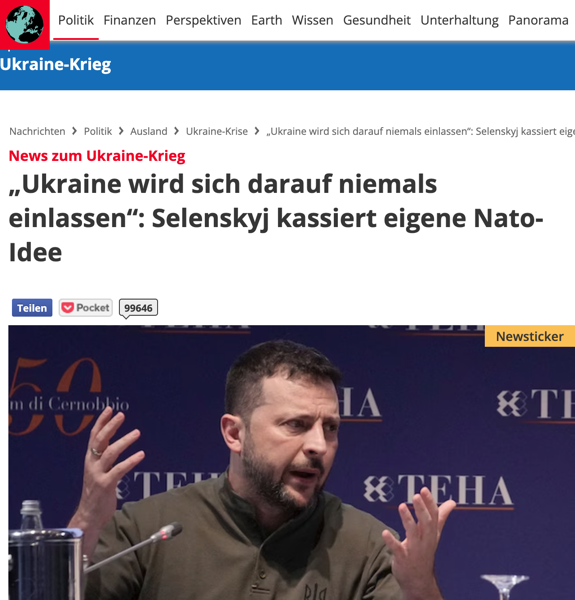
Da baust du um 16 Uhr noch wei­te­re Soll­bruch­stel­len, die es dir ver­un­mög­li­chen jeg­li­ches Land bei Ver­hand­lun­gen abzu­tre­ten, da die Ukrai­ne ja nur GESAMT DER NATO BEITRETEN KANN, UND DIR EIN BEITRITT IN AUSSICHT GESTELLT WURDE - und kaum ists 18:17…

Bildschirmfoto 2024 12 01 um 19 27 36
src: click

Hast du auch schon wie­der ver­ges­sen, dass du ges­tern Abtre­tun­gen von Gebie­ten als mög­lich in Aus­sicht gestellt hast.

Mei­ne Güte, zum Glück leben wir in Demo­kra­tien, wo das Volk sei­ne Reprä­sen­tan­ten wählt (eh nicht im Krieg, ich mein nur so - der Selen­skyj ist da sicher selbst draufgekommen.……)

Hin­ter­grund.

Für Euro­pa solls der frü­he­re HR Mana­ger von Uni­le­ver der OTAN wie sei­ne Wes­ten­ta­sche Ken­ner in den US raus­reis­sen um Trump zu mehr invest­ments zu bewe­gen, und das, so kol­por­tiert, mit dem Argu­ment, also wenn der Trump jetzt nicht die Nato auf­rüs­tet, also dann, also dann beisst ihn das in zwei Jah­ren aber sowas von in den Hin­tern, wenn Russ­land in zwei Jah­ren noch viel stär­ker angreift -- siehe:

Wobei man dazu sagen muss, dass nach dem bis­he­ri­gen Nato Nar­ra­tiv Russ­land in zwei Jah­ren genau gar­nicht noch­mal ange­grif­fen hät­te, da da die Ukrai­ner dann wie­der die Ober­hand gehabt hät­ten (Mili­tär­pro­duk­ti­on, Recruit­ment), gut - für einen Trump wirds reichen…

Aber wenn der Uni­le­ver Boy in den US auf­taucht und dem Trump ver­rät, dass er das auch kos­ten­güns­ti­ger haben könnte…

Schön das mal so live zu sehen. Sieht man ja sonst eher mit zwei Wochen Ver­spä­tung. Da hat­te man wohl Bam­mel dass das die Troll PR Russ­lands aufgreift…

Gott­sei­dank, ist ja noch­mal gut gegan­gen. Was wär Euro­pa auch ohne den Uni­le­ver HR-Manager…

Selenskyj Logik

30. November 2024

Rus­si­scher Bot­schaf­ter in Groß­bri­tan­ni­en am 21. Novem­ber 2024 gegen­über Sky News (bei 14min in):

Russ­land ist bereit zu ver­han­deln, wir haben mehr­fach gesagt dass wir zu Ver­hand­lun­gen bereits sind. Ver­hand­lun­gen könn­ten bereits mor­gen star­ten. Wenn fol­gen­de Vor­be­din­gung gege­ben ist:

Die Ukrai­ne zieht sich aus den vier von Russ­land beset­zen Oblas­ten zurück.

Für einen Frie­dens­ver­trag behar­re Russ­land auf fol­gen­den Punkten.

1. Ter­ri­to­ria­le Rea­li­tä­ten soll­ten aner­kannt werden
2. Ukrai­ne bleibt ein neu­tra­les Land
3. Ukrai­ne muss frei von Nukle­ar­waf­fen bleiben
4. Rus­si­sche Min­der­hei­ten­rech­te müs­sen in der Ukrai­ne wie­der ree­ta­bliert wer­den (Amts­spra­che, kei­ne Dis­kri­mi­nie­rung basie­rend auf Her­kunft, Lie­der nicht mehr verboten, …)
5. Auf­he­bung von Sanktionen.

Selen­skyj, 29. Novem­ber 2024 gegen­über Sky News, bei 34:34 in:

He [Putin] is not rea­dy, he doesnt want to stop the war. It doesnt mean, I mean this for him poli­ti­cal­ly is very good to speak. Its like with the chan­celor, or with a - some euro­pean lea­der, or with some lea­ders from Glo­bal south -- may­be some future talks with the pre­si­dent Trump, its very good for him, just to show his socie­ty, that he is not iso­la­ted [that was the tal­king point the west fea­tured in regards to the rus­si­an Brics Sum­mit in Kazan], that he’s not poli­ti­cal­ly iso­la­ted, he’s not ter­ro­rist. You see? He’s not ter­ro­rist, you see? A lot of peop­le speak with him. For him this important. That’s why I’m sure, that he’s rea­dy for dia­lo­gue with some lea­ders, inclu­ding Ukrai­ne. Yes. But to talk, just for talk, just for ambi­ti­ons of Putin - now I think its not smart. So we need to be in the Posi­ti­on of strong posi­ti­on and - if we will be in strong posi­ti­on he will hear us. Other­wi­se he will just speak. Yes, and this is the first, and to have the steps [means Selen­skyj Peace for­mu­la which is a PR con­struct to for­ce Rus­sia into total sur­ren­der using the sup­port of inter­na­tio­nal allies - see mar­ke­ting video here: click] this is the second. And the third point, WHERE to speak! On which line. On which line we have to speak. So if he’s on the line of full sca­le inva­si­on [mea­ning the line befo­re 24th of Febru­a­ry 2022, not the cur­rent con­ta­ct line], its under­stand­a­ble for me. So it means, that he under­stands, that he is iso­la­ted, that it’s a tra­ge­dy mista­ke, like some glo­bal south lea­ders said, it is his fatal mista­ke to begin full sca­le war. Even the­re are some scep­ti­cal lea­ders who never speak about his inva­si­on, occup­a­ti­on, ille­gal occup­a­ti­on of 2014. They try not to speak about it, but they all of them say, that his foo­lish mista­ke was the full sca­le war against Ukrai­ne, so Putin has to under­stand it.”

Sor­ry, aber Selen­skyj hat sei­ne For­de­rungs­lis­te gera­de natür­lich noch erweitert:

16.43 Uhr: Selen­skyj - Nato-Beitritt nur mit allen Gebieten
Der ukrai­ni­sche Prä­si­dent Wolo­dym­yr Selen­skyj hat einer Nato-Mitgliedschaft ohne rus­sisch besetz­te Gebie­te eine Absa­ge erteilt. “Es kann kei­ne Ein­la­dung von nur einem Teil (der Ukrai­ne) in die Nato geben”, sag­te der Staats­chef bei einer Pres­se­kon­fe­renz mit dem neu­en EU-Ratspräsidenten Antó­nio Cos­ta in Kiew. Das käme einer Aner­ken­nung des Ver­lus­tes der gera­de von Russ­land kon­trol­lier­ten Gebie­te gleich.

Zudem for­der­te Selen­skyj neue ener­gi­sche Hil­fen des Wes­tens, um sein Land in eine “star­ke” Posi­ti­on für mög­li­che Ver­hand­lun­gen mit Russ­land zu brin­gen. Dazu gehör­ten etwa die Lie­fe­rung einer “guten Zahl” wei­te­rer west­li­cher Waf­fen von grö­ße­rer Reich­wei­te für den Abwehr­krieg gegen Russ­land. Auch for­der­te Selen­skyj Sicher­heits­ga­ran­tien der Nato und einen “Schritt vor­wärts” in den Bemü­hun­gen sei­nes Lan­des um Auf­nah­me in die Militärallianz.

src: click

Ich muss zuge­ben, ich habs kom­men sehen.

Böse Vorahnungen

30. November 2024

Selen­skyj hat das alte “ich muss die Krim nicht mili­tä­risch gewin­nen, es reicht wenn ich sie in 20 Jah­ren auto­ma­tisch bekom­me” Gam­bit ausgegraben.

SPRINGER bezeich­net das sogar als Trick, fin­det das aber zur sel­ben Zeit sen­sa­tio­nell und neu, und ein sol­ches Zuge­ständ­nis! Viel­leicht, viel­leicht aber auch nur eine Fin­te - weil je nach For­mu­lie­rung wür­de ja Russ­land die Krim in 20 Jah­ren auto­ma­tisch ver­lie­ren - zB. wenn Selen­skyj nur erlau­ben wür­de sie unter Eigen­ver­wal­tung zu stel­len - die in 20 Jah­ren auto­ma­tisch endet, wor­auf sie wie­der durch die Ukrai­ne ver­wal­tet wer­den würde.

Rei­sen wir ein­fach in der Zeit zurück, und las­sen sie sich den Trick in einem NTV Inter­view vom 29. Juni 2022 noch­mal erklären:

Glau­ben sie dass die Ukrai­ner, obwohl sie ja mil­li­tä­risch mas­siv unter­le­gen ist, die­sen Krieg doch noch zu einem Gewinn, nen­nen wir es mal - Sieg möch­te ich nicht sagen, aber Gewinn füh­ren kann?”

Also, was die Ukrai­ne errei­chen möch­te, und eigent­lich aus ihrer Sicht muss [Anmer­kung: innen­po­li­ti­scher Druck], ist die ter­ri­to­ria­le Inte­gri­tät des Janu­ars, des Febru­ars 23 zurück­zu­ge­win­nen - ” “22 [… Ein­ha­ken des Mode­ra­tors]” - “Ja also bevor der Krieg ausbrach.”
“-- Und wenn sie das errei­chen könn­te, wenn wir sie so unter­stüt­zen, dass das funk­tio­niert und die Rus­sen mit ihrer Men­ge an Per­so­nal, an Muni­ti­on - auch zu irgend­ei­ner Pau­se kom­men - die man nut­zen könn­te …” [Anmer­kung: Wie­der­her­stel­lung der Gren­zen vom 23.2. als Vor­be­din­gung für eine Waf­fen­ru­he.] -- “Dann wäre auch die Chan­ce der Ver­hand­lungs­macht für die Ukrai­ne da - über alles zu reden, nicht nur über den Zustand vor dem 24., son­dern auch über die Fra­gen des Donezk gene­rell, und auch der Krim. Wie weit das dann führt und wie schnell das zu einem Ergeb­nis führt, im Sin­ne der Ukrai­ne [Anmer­kung: Die ja allei­ne ent­schei­den kön­nen muss - aktu­ell das gemein­sa­me Nar­ra­tiv aller G7 Staa­ten.], die ja ihre ursprüng­li­che ter­ri­to­ria­le Inte­gri­tät natür­lich im Auge hat, das wird sehr davon abhän­gen, dass die west­li­chen Staa­ten die jetzt die Ukrai­ne unter­stüt­zen, an ihrer Unter­stüt­zung die­ser ter­ri­to­ria­len Inte­gri­tät fest­hal­ten. Es gibt ja schon eine gan­ze Rei­he von Stim­men, die die­se Sou­ve­rä­ni­tät viel­leicht nicht, aber die ter­ri­to­ria­le Inte­gri­tät, ja durch­aus sagen, na also da müsst ihr Abstri­che machen. Also das wird man sehen müs­sen. Ich bin opti­mis­tisch in sofern, als dass wenn es zu einem Zustand kommt, wo ukrai­ni­sches Ter­rain besetzt ist von Rus­sen, dann wird es dort nicht ruhig werden.”

src: click

So viel so 2022 lässt grüßen.

Im pol­ni­schen TVP ist man da bereits viel wei­ter und verlautbart:

Die US Diens­te wür­den gera­de Trump bear­bei­ten, dass das (also die ange­kün­dig­te Reak­ti­on “hybrid actions” auf die Eska­la­ti­on­spi­ra­le die bei­de Sei­ten gefah­ren haben) bereits ein glo­ba­ler Krieg sei, und er auf die Diens­te hören müs­se -- nicht wie letz­tes Mal -- und wenn das gut geht, kommt Trump laut TVP Pun­dit hof­fent­lich nach den logi­scher­wei­se schei­tern­den (denn man darf Russ­land nicht nach­ge­ben, sagen die Diens­te, wir befin­den uns bereits im Krieg!) Ver­hand­lun­gen drauf, dass er mit Russ­land nicht ver­han­deln kann, und dass jetzt lei­der die Ukrai­ne mili­tä­risch gewin­nen muss.

Dafür hat ein ukrai­ni­scher MP Trump aber auch für den Frie­dens­no­bel­preis nomi­niert. Kein Scherz. Die Pun­dits fin­den - super Idee, das strei­chelt das Ego von Trump, nur das Nobel­preis­ko­mi­tee woll­te heu­te noch kei­ne Stel­lung dazu beziehen.

Wenn man bedenkt, dass von den Diens­ten gemein­sam mit der Ukrai­ne vor zwei Tagen sowas hier kam:

Ex MI6 chief admits Euro­pe is in an ‘actu­al war’ with Rus­sia and warns ‘things could go bad­ly wrong very quick­ly’ - days after for­mer Ukrai­ni­an gene­ral insis­ted ‘WW3 has begun’

src: click

Euro­pean and UK secu­ri­ty and intel­li­gence agen­ci­es are incre­a­singly open­ly bla­ming the Krem­lin. In a recent state­ment, Kestu­tis Budrys, the seni­or natio­nal secu­ri­ty advi­ser to Lit­hua­ni­an Pre­si­dent Gita­nas Nausė­da, accu­sed Rus­si­an intel­li­gence ser­vices of con­duc­ting ‘uncon­ven­tio­nal kine­tic ope­ra­ti­ons against NATO coun­tries.’ Bru­no Kahl, the head of Germany’s for­eign intel­li­gence ser­vice, sta­ted that Rus­si­an ope­ra­tio­nal acti­vi­ty in Euro­pe was now at an unpre­ce­den­ted level. In a joint arti­cle for the Finan­cial Times, the heads of the CIA and MI6 descri­bed Rus­si­an intel­li­gence acti­vi­ty as a ‘reck­less cam­pai­gn of sabo­ta­ge across Euro­pe’, noting that Russia’s use of tech­no­lo­gy to ‘spread lies and dis­in­for­ma­ti­on’ was desi­gned to sow division. 

But des­pi­te signi­fi­cant con­cern among NATO and Euro­pean governments, it is unclear how they will respond to the Kremlin’s acti­vi­ties bey­ond expan­ding counter-intelligence efforts, which have had some suc­cess in foi­ling Rus­si­an acti­vi­ty. Short of invo­king NATO’s Arti­cle 5, the West lacks a stra­te­gy and the abi­li­ty to act quick­ly in respon­se to Rus­si­an hybrid warfare.

src: click (IISS)

-- sind wir bereits in der “If Trump does lis­ten to the right advi­sers, we could set up nego­tia­ti­ons that could fail -- and this might actual­ly be bet­ter for us!” sta­ge - und das nicht nur auf dem ukrai­ni­schen, son­dern auf dem US advi­sery level (IISS)

Bring that tog­e­ther with:

Dr. Joa­chim Weber: “Also wenn man bereit ist in eine Ver­hand­lungs­si­tua­ti­on ein­zu­tre­ten, das ist ja bis­her ja nicht die Poli­tik des Wes­tens gewe­sen, bis­her hat man gesagt wir müs­sen unbe­dingt die­se Aggres­si­on der Rus­sen gegen die Ukrai­ne abweh­ren, wir müs­sen das mili­tä­risch sozu­sa­gen auf den Sta­tus quo ante - also die Situa­ti­on wie es vor­her war zurück­dre­hen, dass die Ukrai­ne alle ihre Ter­ri­to­ri­en behält dann ist das natür­lich eine neue Situa­ti­on also wenn man das sozu­sa­gen vor­aus­setzt dass man bereit ist Kom­pro­mis­se zu schlie­ßen mit Putin dann ist das ein sicher­lich erfolgs­ver­spre­chen­der Weg, wahr­schein­lich sogar der ein­zig erfolg­ver­spre­chen­de Weg.”

src: click

von vor zwei Tagen -

- und wir sind zumin­dest in der Dar­le­gung der TVP Exper­ten wie­der dort wo wir immer schon waren - die Ukrai­ne muss alles zurück­ge­win­nen, und Trump hilft uns dabei, wenn wir ihn nur rich­tig packen, und er auf die rich­ti­gen Leu­te hört.

Gut, der Krieg dau­ert dann noch drei Jah­re, aber dafür bekommt Trump natür­lich auch sei­nen Frie­dens­no­bel­preis. Für die US Bevöl­ke­rung gibts dann, kei­ne Ahnung, nen Gut­schein für ne Cola oder so - “war für sie eh nicht wahl­re­le­vant”. Sagen eini­ge der Pun­dits im sel­ben Fahrwasser.

So die aktu­el­le Debat­te auf TVP World.

Also sehr genau dar­auf ach­ten, ob in den US Vor­schlä­gen Kon­di­tio­na­li­tä­ten auf­tau­chen nach denen Russ­land in 20 Jah­ren die Ver­wal­tung der Krim ver­liert. Das wäre für Russ­land nicht akzep­ta­bel. Schei­terts dar­an, haben die west­li­chen Staa­ten auf einer de fac­to ter­ri­to­ria­len Inter­gri­tät der Ukrai­ne bestan­den (nicht nur de jure) und sich nicht auf einen Kom­pro­miss eingelassen.

Schei­tert es an etwas ande­rem - bleibt es jeder­manns Auslegungssache.

Nur, dass der­zeit bereits eine der­ar­ti­ge Soll­bruch­stel­le von der Ukrai­ne kon­kret als Gam­bit (Sprin­ger nennt es einen Trick) auf­ge­baut wird (NATO ist ja der ande­re gro­ße Ele­fant im Raum), ver­heißt nichts Gutes.

Die ukrai­ni­schen Medi­en berich­ten laut Welt jetzt bereits “tol­ler Trick von Selen­skyj um die Ukrai­ne geeint zu hal­ten”. Das ist eher kein - Moment mal, wir sehen die Krim de fac­to nie wie­der? - wor­d­ing. Bei dem man den Umstand der Bevöl­ke­rung erklä­ren müsste.

Aber who knows, eine Ver­hand­lungs­lö­sung müss­ten bei­de Sei­ten als Sieg verkaufen.

Deal!

30. November 2024

What, chi­na has 250x the ship buil­ding capa­ci­ty com­pa­red to the US at this time? Tar­ge­ted towards smal­ler more mobi­le ships, which are about what you’d need in the future to secu­re sea routes?

Lets send the ger­mans over the­re to patrol “our backy­ard in south asia”, so they’ll learn what the chal­len­ges the­re are, first hand!

I call this:

Have an unsolva­ble pro­blem again? Plug it with germany!

(May­be tell them they can do the same they did with rus­sia, paci­fy them through tra­de oppor­tu­nities! No, tell them they can learn how to act tough mili­ta­ri­ly the­re! Bet­ter argu­ment for the domestic audience!)

The pro­blem still remains unsol­veab­le, but at least now you have side benefits!

Ger­ma­ny wins, and chi­ne­se pull back more - Win.
Ger­ma­ny loses, and chi­ne­se pull Ger­man tra­de opti­ons - Win.

Every time the­re is a skir­mish, this all starts over and the first time Chi­na picks opti­on two, the US depen­den­cy of ger­ma­ny intensifies.

Also why is Trump an asset in the­se deba­tes again? (You dont know what he will do! You have to paci­fy him!) Oh yeah, becau­se Euro­pean US depen­den­cy alrea­dy increased…

Lets think this two deca­des fur­ther. Chi­ne­se have dou­bled their des­troy­er fleet. Chi­ne­se secu­re mari­ti­me tra­de routes.

So US blocks the Strait of Hormuz.

Ger­ma­ny hap­py, becau­se it alrea­dy knows US geo­po­li­ti­cal pro­blems in the south chi­na sea!

Man, tho­se Atlan­tic Coun­cil folks, just cant loose!

Chi­na: Deut­sche Mari­ne­schif­fe in Tai­wan­stra­ße “fal­sches Signal”

edit: 232 times the ship buil­ding capa­ci­ty. Accord­ing to the alli­an­ce for ame­ri­can manu­fac­tu­ring.

edit: Gre­at news num­ber two, same spea­ker - do what Shin­zō Abe did and make a won­der­full (be it a litt­le lob sided…) tra­de deal!

Yeah, we alrea­dy know, that thats what Merz is for, thanks.. 😉

Con­text: Japan Reg­rets Trus­ting Trump on Trade
Tra­de nego­tia­ti­ons have left Tokyo giving much and get­ting litt­le. (FP)

src: click

NTV berichtet: ALLE österreichischen Medien publizieren nur Scheisse, weil ja alle auf die Ukraine muss gewinnen, da Verlieren keine Option ist eingeschwenkt sind.

30. November 2024

NTV:

Dr. Joa­chim Weber, Uni Bonn

Seit gut zwei Jahr­zehn­ten hat er zahl­rei­che Lehr­ver­an­stal­tun­gen zu diver­sen The­men von Geschichts­wis­sen­schaft, poli­ti­scher Geo­gra­phie und Poli­tik­wis­sen­schaft an den Uni­ver­si­tä­ten von Ham­burg, Bonn, Zagreb und Akron, OH gegeben.

Par­al­lel zu sei­ner wis­sen­schaft­li­chen Arbeit, hat Dr. Weber in sei­ner über fünf­zehn­jäh­ri­gen Arbeit im deut­schen Bun­des­dienst diver­se Posi­tio­nen in ver­schie­de­nen Behör­den beklei­det, u.a. im Bun­des­amt für Bevöl­ke­rungs­schutz und Kata­stro­phen­hil­fe, beim Bun­des­mi­nis­te­ri­um für wirt­schaft­li­che Zusam­men­ar­beit und Ent­wick­lung (BMZ) und beim Bun­des­mi­nis­te­ri­um für Wirt­schaft (BMWi).

For­schungs­schwer­punk­te
Stra­te­gi­sche Vor­aus­schau | Mari­ti­me Sicher­heit | Euro­päi­sche Sicher­heits­struk­tu­ren | Ark­tis­po­li­tik | Ukraine-Krieg

src: click

Mode­ra­tor: “Fan­gen wir bei Kel­logg an, ist sein Ansatz ein poten­zi­ell erfolg­ver­spre­chen­der? Also Russ­land mit mehr Waf­fen für die Ukrai­ne dro­hen, um Putin an den Ver­hand­lungs­tisch zu zwingen?”

Dr. Joa­chim Weber: “Also wenn man bereit ist in eine Ver­hand­lungs­si­tua­ti­on ein­zu­tre­ten, das ist ja bis­her ja nicht die Poli­tik des Wes­tens gewe­sen, bis­her hat man gesagt wir müs­sen unbe­dingt die­se Aggres­si­on der Rus­sen gegen die Ukrai­ne abweh­ren, wir müs­sen das mili­tä­risch sozu­sa­gen auf den Sta­tus quo ante - also die Situa­ti­on wie es vor­her war zurück­dre­hen, dass die Ukrai­ne alle ihre Ter­ri­to­ri­en behält dann ist das natür­lich eine neue Situa­ti­on also wenn man das sozu­sa­gen vor­aus­setzt dass man bereit ist Kom­pro­mis­se zu schlie­ßen mit Putin dann ist das ein sicher­lich erfolgs­ver­spre­chen­der Weg, wahr­schein­lich sogar der ein­zig erfolg­ver­spre­chen­de Weg.”

Dazu ALLE öster­rei­chi­schen Medi­en: Russ­land ver­hin­dert Friedensverhandlungen.

Dis­ku­tie­ren wirs.

Wie konn­te es soweit kommen?

Wie konn­te mir der öster­rei­chi­sche Pres­se­rat ent­geg­nen sein Lei­ter glau­be ich habe das falsch Ver­stan­den, und das woll­te man mit mit der Pau­schal­ab­leh­nung mei­ner Anfra­ge “War­um dis­kre­di­tiert der Chef­re­dak­teur der öster­rei­chi­schen Pres­se einen schon mal auf der Short­list für den Puli­zer­preis gestan­de­nen Redak­teur von Reu­ters, und den mehr­jäh­ri­gen Büro­chefs des Reu­ters Büro in Mos­kau wenn sie berich­ten dass die Rus­si­sche Eli­te offen für Frie­dens­ver­hand­lun­gen wäre, ohne jeg­li­ches Argu­ment. Ein­fach nur unter Ein­be­zug des Rhe­to­ri­schen Mit­tels das wäre lan­ciert um Selen­sky­js Frie­dens­gip­fel zu sabo­tie­ren, …” Ant­wor­ten im Detail (wel­che Quel­len wur­den ver­wen­det, wie kommt der Chef­re­dak­teur zu der Ein­schät­zung) vermeiden?

War­um weißt der öster­rei­chi­sche Pres­se­rat mei­ne dies­be­züg­li­che Anfra­ge mit “das fällt unter die Mei­nungs­äus­se­rungs­frei­heit des Res­sort­lei­ters der Außen­po­li­tik Res­sorts der Pres­se” zurück?

Reden wir drüber.

Reden wir dar­über wie alle öster­rei­chi­schen Medi­en mit “die Krim müs­sen wir nicht mili­tä­risch befrei­en, es reicht, wenn sie auto­ma­tisch Teil der Ukrai­ne bleibt, und nach zwei Jahr­zehn­ten Eigen­ver­wal­tung, die wir Russ­land als Kom­pro­miss ver­kau­fen, auto­ma­tisch wie­der der Ukrai­ne zufällt” seit zwei Jah­ren die öster­rei­chi­schen Gesell­schaft verarschen.

Sie­he:

Fixing the bro­ken media narrative

Auch damals hat NTV als ein­zi­ges deutsch­spra­chi­ges Medi­um rich­tig berichtet.

Und jeden der ver­sucht uns zu einer Refle­xi­on unse­res Han­delns zu brin­gen, von einer ernst­haf­ten Ant­wort des öster­rei­chi­schen Pres­se­ra­tes, und Ajour ausschließen.

Reden wir drüber.

Reden wir über die Qua­li­täts­me­di­en in Österreich.

Bit­te öffentlich.

BONUS: Kein Ein­zi­ges Öster­rei­chi­sches Medi­um sieht die Linie der SPD bei ihrer Wahl­kamp­fer­öff­nung als ver­tret­bar an.

sie­he:

https://www.derstandard.at/jetzt/livebericht/3000000247142/1000363639/ukraine-und-russland-melden-gegenseitige-angriffe-in-der-nacht

Wir haben end­lich unser Peak Bubble.

Pro­pa­gan­da is a Hell of a thing. Nur ent­deckt haben wir sie noch nicht.

edit: Es gibt aber auch wie­der gute Nach­rich­ten, Eric Frey macht heu­te eine Dop­pel­schicht Propaganda!

https://www.derstandard.at/story/3000000247127/die-internationale-strafjustiz-versagt-nicht-nur-beim-netanjahu-haftbefehl

Aber so pene­trant, dass es eh schon jedem auf­fällt. Ich sag nur, Haupt­sa­che der hat mor­gen noch sei­nen Job beim Stan­dard, und sei­ne Aus­bil­dung durch US Seil­schaf­ten ermög­licht bekommen.