Wechsel im ukrainischen Verteidigungsministerium womöglich doch erst kommende Woche
Gestern war gemeldet worden, dass der ukrainische Präsident seinen Verteidigungsminister auswechseln wolle. Auf Oleksij Resnikokw solle Kyrylo Budanow folgen. Grund seien Korruptionsvorwürfe. Womöglich waren diese Berichte jedoch verfrüht.
Dawyd Arachamija, Chef des parlamentarischen Blocks von Präsident Selenskyj, schrieb auf dem Kurznachrichtendienst Telegram, dass es “diese Woche keine personellen Veränderungen im Verteidigungssektor geben” werde. Weitere Details nannte er nicht.
Verteidigungsministerwechsel erst, wenns militärisch schlecht läuft. Auch wenn der Grund Korruptionsvorwürfe waren.
Oder wahlweise auch erst nächste Woche. Wer weiss…
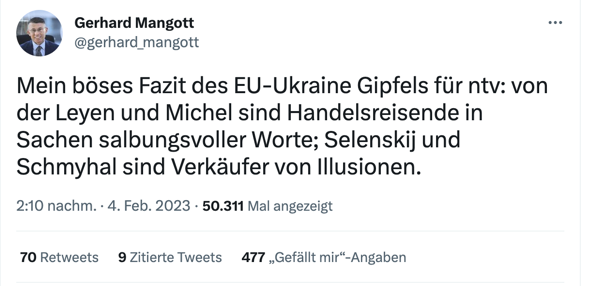
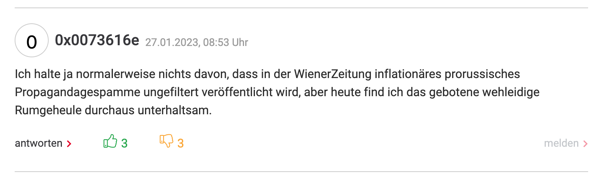
Die Wiener Zeitung meldet derweil, alles ganz normal, “Kein Beamter bleibt ewig im Amt”.
Zuvor hatte der nach Skandalen in seiner Behörde in die Kritik geratene Resnikow einen freiwilligen Rücktritt ausgeschlossen. Er wolle erst zurücktreten, wenn ihn sein Präsident Wolodymyr Selenskyj dazu auffordere, sagte Resnikow am Sonntag bei einer Pressekonferenz in Kiew. “Kein Beamter bleibt ewig im Amt”, schränkte er nach Angaben der Agentur Ukrinfom ein.
Der neue Mann des Vertrauens ist ein Sympathieträger erster Güte der als ehemaliger Militärgeheimdienstchef das volle Vertrauen des besten Präsidenten aller Zeiten genießt -
Korruption quasi ausgeschlossen.
On 4 April 2019, Budanov’s Chevrolet Evanda car was blown up by a Russian with documents in the name of Alexei Lomaka, who planted a mine, but it detonated prematurely. The attacker and the sabotage group that was supposed to blow up the Ukrainian spy chief were detained.[5][6]
In 2020, he became Deputy Director of one of the Departments of the Foreign Intelligence Service of Ukraine. On August 5, 2020, President of Ukraine Volodymyr Zelensky appointed Budanov as head of the Main Intelligence Directorate of the Ministry of Defense.
In September 2022, Budanov participated in the largest prisoner exchange operation between Ukraine and the Russian Federation, when 215 Ukrainian defenders returned home, including more than 100 fighters and commanders of the Azov Regiment.[7]
On March 11, 2022 he became the chairman of the Coordinating Headquarters for the Treatment of Prisoners of War.[8]
On February 5, 2023 Davyd Arakhamia, head of the Servant of the People parliamentary faction, announced that Kyrylo Budanov will be taking Oleksii Reznikov’s position as Defense Minister of Ukraine.[9]
Das Portrait kann man sich schon mal bestellen um es dann lange über die Tür zu hängen.
edit: Kontext Der Absetzung kam wohl noch der obrige Pressetermin dazwischen, und der Umstand, dass laut ukrainischem Recht eine Zivilperson sein muss.
Zwei hochrangige Abgeordnete verwiesen am Montag darauf, dass nach den Regeln in der Ukraine der Verteidigungsminister ein Zivilist sein muss. Das würde gegen den 37-jährigen Militäroffizier Budanow als neuen Ressortchef sprechen. Der 56-jährige Resnikow ist eigentlich Anwalt, er übernahm das Amt im November 2021.
Dass man da laut Regierungspartei bei der Kabinettsumbildung ankündigt den Chef des Miliärgeheimdienstes einsetzen zu wollen, kam bei Experten nicht ganz so gut an.
Aber das muss man bei uns in den Medien ja nicht berichten.
Hat das Portrait für über der Türe doch nicht so lange gehalten… Wird dann wohl ein Sammlerstück. Für die die es innerhalb der zwei Tage in denen der Chef des Militärgeheimdienstes designierter Verteidigungsmenister der Ukraine war, vom Ministerium bestellen konnten…
Ich bin bei sechs Minuten in, noch kein einziger Satz nicht gelogen.
Friedensforscherin: Wir sollten aktuell in Deutschland die Eskalationsdebatte nicht führen, jetzt geht es darum möglichst schnell die deutschen Panzer in die Ukraine zu liefern. Darauf sollte sich die mediale Diskussion stützen.
Expertin der Körber Stiftung: Kampfjets oder nicht, ist jetzt auch egal, Russland denkt so und so, dass der Westen es angreift. Sehe da keine qualitative Eskalation.
Wiegolt (Journalist und Blogger): Es geht doch nur um F16, Deutschland hat nur eine politische Rolle, und im Gegensatz zu den Panzern keine praktische.
Körber Stiftung: mir scheint, dass in Deutschland und den US gerade versucht wird diese Debatte (F16) aktuell abzuwürgen, auch wenn ich glaube dass sie kommen, denn WIRSOLLTENJETZTVIELMEHRDARAUFSCHAUEN, DASSWIRDIEPANZERSCHNELLUNDEFFEKTIV…
Die Friedensforscherin bekommt dabei einen Nick-Krampf über Skype.
-- und vor allem müssen wir auch schauen, dass das auf Dauer aufrecht erhaltbar bleibt mit entsprechender Logistik, Munition und Wartung.
Der ukrainische Botschafter in Deutschland sage laut Körber Stiftung gerade, dass Luftraumüberwachung ja nicht die Prio Nummer eins ist, momentan.
Friedensforscherin: F16 würden die US nicht liefern, da diese zu große Reichweite hätten, worauf die Ukraine Russland angreifen könne.
Also fassen wir zusammen:
Wenn wir die Eskalationsdebatte jetzt nicht führen hetzen die Medien weiter, während sich Experten der deutschen Gesellschaft für Wissenschaft und Politik, und der Körberstiftung hinter ner Eskalationsspirale, eingefettet durch Salamitaktik, verstecken, und das als “LERN-KURVE” (verbatim) an die Öffentlichkeit streuen, SCHWEINE, WICHSER, SÄUE…
Die mediale Diskussion sollte sich aktuell gerade nicht darauf stützen die gespielte Debatte “wie bekommen wir Panzer schneller in die Ukraine” zu spielen. Das IST die Scheindebatte.
Aber Körberstiftung und Friedensforschung prügeln das WEGSCHAUN den Rachen der Bevölkerung runter.
Der Punkt qualitative Eskalation IST wesentlich - nur gesprochen werden darf darüber nicht.
Deutschland übernimmt DEUTLICH mehr als eine politische Rolle, es übernimmt de fakto DIE wesentliche Rolle in Europa in Punkto Kriegslogistik. Seit Monaten. Und die Leopard 2 Panzer werden nicht in Polen oder Tschechien gewartet werden, sondern im Feld. Mit modularen Ersatzteilen. Findet jemand auch nur eine deutsche Versorgungsmannschaft in der Ukraine, befindet sich Deutschland offiziell im Krieg.
Keine Ausreden mehr denkbar. Die deutsche Außenministerin denkt da mehr so in realen Größen, ich mein sie kommt ja mehr so aus dem Völkerrecht.
Sich beim Hochschrauben der Munitionsproduktion auf 20 Milliarden jährlich, staatlich subventioniert - rauszureden, ein Stellvertreterkrieg sei ja noch keine Kriegsbeteiligung, ist ebenfalls eine Jahrhundertlüge.
Das schaffen im Fernsehen nur die Friedensforschung und die Körberstiftung.
Luftraumüberwachung ist die Priorität Nr. 1 wenn einem der Zivilschutz der Ukraine auch nur irgendeinen feuchten SCHEISSDRECK wert ist, aber was solls, wir rüsten anstattdessen lieber Feldzüge auf.
Und lassen österreichische Militärstrategen auf ntv lügen, die Angriffspanzer seine “zum Gegenschlag in zweiter Linie, falls die Russen durch ukrainische Verteidigungsstellungen durchbrechen würden” - und daher Verteidigungswaffen. So dumm kann nur ein österreichischer Militär sein.
Das Argument der Reichweite bei F16 ist komplett erlogen, da die US die ganze Telemetrie unter DRM hat, Und per Knopfdruck jeder F16 die Navigation und die Waffensysteme abdrehen können. Das musst du als Land das die kaufen darf nicht im Paket nur mitkaufen, sondern auch jährlich in Form einer laufenden, abzugeltenden Lizenz bedienen.
Aber jetzt UPS ist es ja mit Panzerlogistik das selbe - UNDDASARGUMENTMUSSTESICHDREHEN!
Angeblich hatten wir darüber ja in Deutschland eine Diskussion wird immer wieder behauptet.
Ich würde nicht Diskussion dazu sagen, sondern mehr so PROPAGANDATOTALVERARSCHE, ohne einen einzigen problematischen Aspekt auch nur zu beleuchten WÄHRENDMANDIEBEVÖLKERUNGSOWEITVERARSCHT dass die verfickte SAUBLÖDEIRMITANT auf der Straße in der Straßenbefragung denkt, das seinen jetzt aber Verteidugungspanzer!
OHNEVERFICKTEGEGENPOSITION.
STERBTENDLICHIHRWICHSER. BRINGTEUCHUMIHRSÄUE.
Das Argument der Reichweite ist auch bereits mehrfach relativiert worden, da die US bereits parallel Waffengattungen liefert („Ground Launched Small Diameter Bomb“ (GLSDB) von Boeing) die auf 150m präzisionsgenau sind. Der ehemalige Pentagon Chef und mehrere Senatoren fordern zeitgleich bereits ATACMS mit 300km Reichweite. Und die kürzeste Distanz zwischen Ukraine und Moskau beträgt 450km Luftlinie.
Aber bei sowas hat die Parade Friedensforscherin, die aktuell in Deutschland nur noch die Debatte hören will, ob denn Deutschland alles dafür tut, dass Panzer möglichst schnell rausgehen, dann leider immer Argumentationslücken. Was heißt Lücken, vollständige Lobotomie ner halben Hemisphäre.
Aber man kann das Argument der Reichweite doch nochmal bringen um zu überspielen, dass man die effektive Reichweite der der Ukraine zur Verfügung stehenden Waffen in den letzten zwei Monaten mehr als verdoppelt hat.
In Kontext gerückt musst du dann als Experte folgendes sagen: “Der US Präsident will aktuell keine F16 schicken wegen der Reichweite”.
Alles gelogen. Alles. Jeder einzelne Satz.
Diese Gesellschaft ist das absolut abgrundtief ALLERLETZTE.
edit: OH, stellt sich raus, du kannst die Bevölkerung noch weiter verarschen! Thomas Wiegold:
“Wenn in der Ukraine ein Panzer kaputt ist, dann lädst du den auf einen Lastwagen, und dann wird der in die Slowakei gefahren, da sitzen Techniker der deutschen Herstellerfirmen, die warten und dann gehts zurück.”
Ehm kurze Anmerkung. Panzerhaubitzen - im Durchschnitt 25 Tonnen. Panzerhaubitze 2000 (für 100 hat Deutschland den Verkauf genehmigt), 40km Reichweite, 58 Tonnen.
Lastenkräne und Schwertransporter 5km von der Frontlinie entfernt?! Die die Leopard 2 dann aus dem Gefecht in die Slowakei karren?!
Hat man euch ins Hirn geschissen? DERPUNKTIST, DASSHIERDIELOGISTIKINSFELDMUSS. Ihr “Experten”.
ABERIHRVONDENHURENSCHEISSMEDIENWARTÜBEREINVERFICKTESJAHR so fucking von Propaganda beeinflusst, dass ihr ja leider keine Diskussion über Panzer zulassen konntet, nach der DANNNICHTVERFICKTEBLOGGERVOLLTROTTEL bei Phoenix sitzen und sich zum KOMPLETTENHORSTMACHEN.
Also, der damals bei MH-17 als erstes vor Ort war.
Der aktuell mit einer mittlerweile von PBS Frontline gesponsorten Dokumentation über Mariupol beim Sundance Filmfestival premiert hat. (Und heute der Präsident der ukrainian association of professional photographers ist.)
edit die verdammte HURENSCHEISSDRECKSGESELLSCHAFT ist derweilen aber was ganz heißem auf der Spur:
Und dazu kommt die dümmste aller möglichen Fluchtgeschichten.
Ich meine möglich ja, aber…
Also wir fassen zusammen. Der Journalist kommt eine Stunde vor dem Beginn des Krieges in Mariupol an (Democracy now Video).
Filmt dann innerhalb eines Krankenhauses in dem er sich bereits recht früh einfindet und dann später auch am 11 März.
Am 11. März befindet er sich zusammen mit einem ukrainischen Soldaten der per codewords mit anderen funkt, im siebenten Stock eines anderen Krankenhauses, als der Soldat in die Kamera sagt “I’m with the Journalist, yes the journalist, - and there are russian tanks near the hospital, I’ve seen them with my own eyes” - dann shaky cam run. Ärzte hätten den Journalisten aber zu einem unklaren Zeitpunkt Gewänder geben um sie zu verstecken. Was passiert mit dem Militäry Man? Erstmal keine Ahnung, später dazu mehr.
Cut. Im selben Krankenhaus (?) - am selben Tag (?) -
The doctors pleaded with us to film families bringing in their own dead and wounded, and let us use their dwindling generator power for our cameras. No one knows what’s going on in our city, they said.
Shelling hit the hospital and the houses around. It shattered the windows of our van, blew a hole into its side and punctured a tyre. Sometimes, we would run out to film a burning house and then run back amid the explosions.
Bitte ladet mit dem wenigen Strom den wir noch haben eure Kameras. Die Journalisten fahren ansonsten aber auch in der Stadt rum (selber Artikel), kommen aber zum Laden der Kameras wieder ins Spital, und schlafen auch im Spital (Democracy now Video), am Boden in den Gängen, möglichst entfernt von Fenstern, wo sie kaum schlafen können. Ok, vielleicht nur die ersten Tage? Oder nur an dem Tag.
Dabei bekommen sie auch mit wie Granaten das Krankenhaus treffen.
Cut. Am 9. März, als der Maternity ward getroffen wird -
On March 9, twin [air raids] shredded the plastic taped over our van’s windows. I saw the fireball just a heartbeat before pain pierced my inner ear, my skin, my face. [Moment, der Van wurde damals auch bereits getroffen?]
We watched smoke rise from a maternity hospital. When we arrived, emergency workers were still pulling bloodied pregnant women from the ruins.
sind sie zuerst nicht dort, sondern in der Stadt, sehen aber plötzlich Rauch von dort aufsteigen, während ihr Van von Feuerbällen/Schockwellen eines twin [Al Jazeera muss einfügen Air Raids] getroffen wird.
Also fahren sie zum Maternity ward - als ihre Batterien schon fast leer sind, und treffen dort zufällig einen Polizisten der weiß, dass das Video den Kriegsverlauf ändern wird -
Our batteries were almost out of juice, and we had no connection to send the images. Curfew was minutes away. A police officer overheard us talking about how to get news of the hospital bombing out.
“This will change the course of the war,” he said. He took us to a power source and an internet connection.
Im Democracy now Video gibt es diesen Polizisten nicht, und sie suchen den restlichen Tag nach einem Ort von dem aus sie diese Bilder senden können.
Ups.
Deshalb können sie auch nicht lange filmen (Batterie schon fast leer), und der Polizist bringt sie dann zu einer Stromquelle, und einem Ort wos auch Internet gibt.
Internet gibts dort mittels “lining up three mobile phones with the video split into three parts”. Und danach verlieren sie wieder ihren internet access.
In the dark, we sent the images by lining up three mobile phones with the video file split into three parts to speed the process up. It took hours, well beyond curfew. The shelling continued, but the officers assigned to escort us through the city waited patiently.
Then our link to the world outside Mariupol was again severed.
Im Democracy now Video erklärt der Photograph die selbe Stelle mit “sie wären (am nächsten Tag?) herumgefahren” und “hätten das Video mittels eines Sattelitentelefons hochgeladen”.
Aber ok, Gedächtnis - passiert.
Dann kams zu den Tweets der russischen Botschaft in London -
The Russian Embassy in London put out two tweets calling the AP photos fake and claiming a pregnant woman was an actress. The Russian ambassador held up copies of the photos at a UN Security Council meeting and repeated lies about the attack on the maternity hospital.
Und sie werden zu lokalen Berühmtheiten.
In the meantime, in Mariupol, we were inundated with people asking us for the latest news from the war.
So many people came to me and said, “Please film me so my family outside the city will know I’m alive.”
Zwei Tage später bekommen sie einen kurzen Anruf von ihrem Editor - der darum bittet die schwangeren Frauen zu verifizieren die sie gefilmt haben, um ihre Existenz zu belegen. (Und wahrscheinlich auch um retroarktiv ihr Einverständnis einzuholen.)
On March 11, in a brief call without details, our editor asked if we could find the women who survived the maternity hospital [attack] to prove their existence. I realised the footage must have been powerful enough to provoke a response from the Russian government.
Der Photograph findet dann mehrere Frauen (?) einige davon mit Kindern, aber die prominenteste im Videomaterial die er verifizieren sollte ist leider bereits mitsamt Kind verstorben.
We found them at a hospital on the front line, some with babies and others in labour. We also learned that one woman had lost her baby and then her own life.
Wie er die restlichen verifiziert hat, weiß nur der Editor.
Und er findet sie in einem anderen Krankenhaus nahe der Front. Wie er sie gefunden hat? Keine Ahnung, keine Beschreibung.
Wir denken uns also ein “Ich suche schwangere Frauen, die evakuiert wurden!” “Ok sie sind in diesem Krankenhaus und wenn du dein Video von heute hochladen willst, geh mit dem Soldaten der das Krankenhaus beschützt in den siebenten Stock!”? als Zwischenpart.
Passiert.
Um dieses neue Video der Redaktion zu schicken, gehen sie also jetzt mit einem Militär (oder einen Polizisten?) - zwei Tage nach dem sie mit dem ersten Polizisten mitgegangen sind - in den siebenten Stock des Krankenhauses “an der Frontlinie” um dieses Video über einen anderen Internetlink abzuschicken.
Und sehen dort - die Szene die im Democracy now Video zu sehen ist.
We went up to the seventh floor to send the video from the tenuous internet link [the tenous internet link in “a random hospital” near the front]. From there, I watched as tank after tank rolled up alongside the hospital compound, each marked with the letter “Z” that had become the Russian emblem for the war.
Warum ein Polizist, oder Soldat mit ihnen im Krankenhaus ist, und mit ihnen in den siebenten Stock zum Internet geht? Keine Ahnung.
Der “Compound” des Spitals muss auch recht groß gewesen sein, denn im Democracy Now Video sind an der Stelle Aufnahmen mit einem Teleobjektiv zu sehen, die so wirken als ob sie von der gegenüberliegenden Seite, zwei Straßen weiter aufgenommen wurden. Das Objektiv ist schon sehr “Tele”.
Passiert schon mal.
We were surrounded: Dozens of doctors, hundreds of patients, and us.
And a military dude.
Oh more than one military dude! Because -
The Ukrainian soldiers who had been protecting the hospital had vanished. And the path to our van, with our food, water and equipment, was covered by a Russian sniper who had already struck a medic venturing outside.
Die dann plötzlich weg waren.
Draußen wird dann eine Krankenschwester erschossen (kommt im Democracy now Video zu Sprache.)
Deshalb trauen sie sich nicht zu ihrem Van.
Der laut dem Democrazy Now Interview aber zerbombt war. Und einen Platten hatte. (Pierced tire.)
Naja vielleicht nur die Fenster, das kam ja auch im Al Jazeera Artikel vor.
Passiert.
Dann Dunkelheit für mehrere Stunden -
Hours passed in darkness, as we listened to the explosions outside. That’s when the soldiers came to get us, shouting in Ukrainian.
It didn’t feel like a rescue. It felt like we were just being moved from one danger to another. By this time, nowhere in Mariupol was safe, and there was no relief. You could die at any moment.
I felt amazingly grateful to the soldiers, but also numb. And ashamed that I was leaving.
Und dann kommen die Soldaten es waren also definitiv Soldaten und kein Polizist - zurück um sie zu retten. Bereits mit Befehl sie zu retten. Und mittlerweile waren es auch ein Dutzend.
Die “Dunkelheit für mehrere Stunden” wird zu Beginn des Artikels noch mal länger beschrieben:
Suddenly at dawn, a dozen soldiers burst in, “Where are the journalists, for f***’s sake?”
I looked at their armbands, blue for Ukraine, and tried to calculate the odds that they were Russians in disguise. I stepped forward to identify myself. “We’re here to get you out,” they said.
The walls of the surgery shook from artillery and machine-gun fire outside, and it seemed safer to stay inside. But the Ukrainian soldiers were under orders to take us with them.
We ran into the street, abandoning the doctors who had sheltered us, the pregnant women who had been shelled and the people who slept in the hallways because they had nowhere else to go. I felt terrible leaving them all behind.
Also nur zu diesem Zeitpunkt haben auch die Journalisten in den Gängen geschlafen? Im Democracy now Video ist das anders kontextualisiert.
Passiert.
Die Soldaten hatten also mittlerweile Befehl die Journalisten aus dem Krankenhaus rauszuholen -
und sind also wieder gekommen, nachdem sie plötzlich verschwunden waren, und haben einfach “wo sind die verdammten Journalisten” geschrien, und da hat sich der von den Ärzten versteckte Photograph ein Herz gefasst und sich zu erkennen gegeben, war aber auch ein wenig beschämt dass sie evakuiert wurden.
Passiert.
Dann passiert folgendes:
We ran into the street, abandoning the doctors who had sheltered us, the pregnant women who had been shelled and the people who slept in the hallways because they had nowhere else to go. I felt terrible leaving them all behind.
Nine minutes, maybe 10, an eternity through roads and bombed-out apartment buildings. As shells crashed nearby, we dropped to the ground. Time was measured from one shell to the next, our bodies tense and breath held. Shockwave after shockwave jolted my chest, and my hands went cold.
We reached an entryway, and armoured cars whisked us to a darkened basement. Only then did we learn from a policeman why the Ukrainians had risked the lives of soldiers to extract us from the hospital.
“If they catch you, they will get you on camera and they will make you say that everything you filmed is a lie,” he said. “All your efforts and everything you have done in Mariupol will be in vain.”
The officer, who had once begged us to show the world his dying city, now pleaded with us to go. He nudged us toward the thousands of battered cars preparing to leave Mariupol.
It was March 15. We had no idea if we would make it out alive.
Die Soldaten mit den gepanzerten Vans, sind mittlerweile wieder zu einem Polizisten geworden. Zu einem Polizisten den die Journalisten bereits kennen (?).
Der vom Maternity ward (?). Der ihnen damals, zwei Tage zuvor, beim Maternity Ward, ein Ort gezeigt hat, an dem sie ihre Kameras laden konnten, und ihr damaliges Video hochladen (?).
Oder bezieht sich das “once begged us to show the world his dying city” auf das Gespräch grad eben? Warum dann “once begged us to show the world his dying city”?
Passiert.
Jetzt kommt der Teil mit dem ich Probleme habe (das Interview geht wieder zurück zum Moment der Dunkelheit, beschreibt danach aber die gesamte Flucht):
The Ukrainian soldiers who had been protecting the hospital had vanished. And the path to our van, with our food, water and equipment, was covered by a Russian sniper who had already struck a medic venturing outside.
Hours passed in darkness, as we listened to the explosions outside. That’s when the soldiers came to get us, shouting in Ukrainian.
It didn’t feel like a rescue. It felt like we were just being moved from one danger to another. By this time, nowhere in Mariupol was safe, and there was no relief. You could die at any moment.
I felt amazingly grateful to the soldiers, but also numb. And ashamed that I was leaving.
We crammed into a Hyundai with a family of three and pulled into a five-kilometre-long (3.1-mile-long) traffic jam out of the city. Approximately 30,000 people made it out of Mariupol that day — so many that Russian soldiers had no time to look closely into cars with windows covered with flapping bits of plastic.
People were nervous. They were fighting, screaming at each other. Every minute there was an aeroplane or [air raid]. The ground shook.
We crossed 15 Russian checkpoints. At each, the mother sitting in the front of our car would pray furiously, loud enough for us to hear.
As we drove through them — the third, the 10th, the 15th, all manned with soldiers with heavy weapons — my hopes that Mariupol was going to survive were fading. I understood that just to reach the city, the Ukrainian army would have to break through so much ground. And it wasn’t going to happen.
At sunset, we came to a bridge destroyed by the Ukrainians to stop the Russian advance. A Red Cross convoy of about 20 cars was stuck there already. We all turned off the road together into fields and back lanes.
The guards at checkpoint 15 spoke Russian in the rough accent of the Caucasus. They ordered the whole convoy to cut the headlights to conceal the arms and equipment parked on the roadside. I could barely make out the white Z painted on the vehicles.
As we pulled up to the 16th checkpoint, we heard voices. Ukrainian voices. I felt an overwhelming relief. The mother in the front of the car burst into tears. We were out.
We were the last journalists in Mariupol. Now, there are none.
Also erstens einmal Gedächtnisverlust wohin sie vom Militär gebracht wurden.
Zweitens der Polizist dort, den sie bereits kannten war ein Polizist?
Das Militär hatte den Auftrag sie dort hinzubringen, wo immer “dort” auch war. Wenn das ein einfacher Polizist war, fress ich meinen Hut.
Das Material war zu dem Zeipunkt bereits von Nationalem Interesse (das Militär hat sie deshalb rausgeholt und der “Polizist” hat ihnen das erklärt), und jetzt kommt die Fluchtgeschichte.
Laut Democracy now Interview hatten sie das gesamte Videomaterial auf einer Festplatte mit dabei als sie geflohen sind, um immer Angst mit der Festplatte geschnappt zu werden.
Laut AL Jazeera Interview sind sie mit einer Familie aus drei Leuten in einem Hyundai durch 15 russische Checkpoints.
Also gesetz dem Fall der Polizist zu dem sie das Militär gebracht hat - war von der Militärpolizei, oder nem Dienst - und gesetz dem (bestätigten) Fall das Video Material war zu dem Zeitpunk von nationalem ukrainischen Interesse - schick ich die Journalisten doch nicht mit dem Material auf einer Festplatte und ner Familie von drei Leuten durch 15 russische Checkpoints.
Ich nehm das Material, kopiers auf mehrere Festplatten, und lass das nicht zusammen mit den Journalisten über den selben Fluchtweg gehen, während ich ihm alles Gute wünsche. Noch dazu während ich damit ne fremde Familie gefährde.
Und ich vermutlich bereits weiß, dass das Material später in einer PBS Cooperation am Sundance Filmfestival landet.
Rohmaterial für einen Film der Machart ist so um die 2TB, verdoppeln wird das und lassen wir es 4TB sein. Die Ukraine hatte seit Anfang März Skylink Access (später mehr davon), bei ungedrosseltem Upload dauert das Hochladen von 4TB zwei Tage. Mitte März haben sie drüber bereits von Times bestätigt Drohnen gesteuert.
Und selbst wenn sie in Mariupol keinen Zugang hatten - was geht in dem Kopf des “Polizisten” vor, von dem Material nicht mehrere Kopien anzulegen? Zuerst riskiert er das Leben von ein dutzend Soldaten um an das Material zu kommen, dann das Leben einer Familie von drei Leuten um es mit dem größt möglichen Risikoprofil (alle Journalisten und das Material gemeinsam in einem Hyundai) aus der Stadt zu bekommen?
Rauf auf eine SD Karte, 10 Mal duplizieren - rein in ein Kinderspielzeug. Drei Familien, nicht fünf - und vor allem die Journalisten erstmal von ihrem Material trennen. Wird ihnen zwar nicht gefallen - aber erhöht die Wahrscheinlichkeit dass sie Durchkommen, die Familie durchkommt, das Material durchkommt…
Die BBC bekommt später noch mal Gelegenheit mit ihr darüber zu reden, und fragt in Details nach wies ihr geht, auch nach Aussagen ihrer Freude und Familie. click
Die Dame wohnt mittlerweile wieder an ihrem Geburtsort in der Separatistenrepublik Donezk, Beeinflussung ist also nicht auszuschließen.
Und schließt jetzt zusammen mit den US die Lieferung von Kampfjets nicht mehr aus.
src: click
Kriegsteilnehmer sei man aber noch immer nicht, da man die ja in der Ukraine warten kann?
Bedeutet die komplette Argumentation hinter dem Punkt die Nato nicht in die Konfrontation gegen eine Atommacht mit hineinzuziehen ist zusammengebrochen.
Die Medien berichten wie gehabt einen SCHEISSDRECK darüber.
Und Scholz? Der war ausschlaggebend. Also das SPD Gremium das das entschieden hat. Auf das dümmlich säuselnde Niveau das an Einzelpersonen festzumachen, begeb ich mich nicht hinunter.
Wobei es angeblich ja in einer Regierungskonferenz entschieden wurde.
Die verfickten Hurenmedien haben mit Lügen und Salamitaktik darauf hingearbeitet.
Kann man mal festhalten.
Diese Gesellschaft ist immer noch das abgrundtief ALLERLETZTE.
Aktuell gibts gerade noch zurückhaltende Worte, dass man sich nicht festlegen möchte, ob man der Ukraine die Krim zurück presst.
Aber Nato Generäle gehen bereits auf Wirtschaftsgipfel, mit Talkingpoints, dass das Schwarze Meer jetzt von ihnen geschützt werden wird.
Die Medien berichtens halt nicht - und die neue Salami wird bereits angeschnitten.
Und WIE Russland gelogen hat, dass das ein Krieg gegen den Westen und die Nato ist!
Und WIE Chomsky gelogen hat, dass die Ukraine von US Militär Journals bereits als defacto Nato Mitglied gehandelt wurde.
Und wie im Vorfeld die verfickte militärische Leitstruktur der Ukraine durch Demokratiepartnerschaften verändert wurde. (1,2)
Wenn Russland den Krieg verliert, bricht es ökonomisch in 30 Jahre zusammen, Bürgerkriege in einer atomaren Großmacht an der Grenze Europas galore.
Das war dann das Vermächtnis der deutschen Grünen.
Gratulation.
(Aside: In der Bild argumentiert man heute, dass man ja die Klimaziele Deutschlands auch erreichen würde, wenn man Deutschland nur deindustrialisiere. Erstmals polemisch. (Kontext: click))
Über eine Eskalation des Krieges sprechen wir derweil natürlich nicht. Russland kann ja nicht mehr eskalieren. Und das ist alles worauf wir schauen.
Der das nur macht, weil er den Rest seines Landes aus der Verwaltung von Schlächtern befreien muss.
Seit Butscha. Nein, Moment, das ist zu spät -- seit Hostomel!
Und bekommt dafür letztes Jahr eine Yale Professur.
Und darf als Sahnehäubchen noch eine von DW initierte Medienkonferenz leiten (DW Global Media Forum) und dabei Schiedsrichter bezüglich der Leistung der westlichen Medien während des Krieges spielen.
Nachdem er sich bei der Victor Pinchuk Foundation casten hat lassen.
Die gesamte europäische Wissenschafts- und Intellektuellenszenen schafft es NICHT dem oder den Narrativen von Kotkin auch nur ein Element hinzuzufügen, oder auch nur ein Element zu relativieren - und gibt die verfickte Propagandascheisse UNGEFILTERTANDIEÖFFENTLICHKEITWEITER.
Johannes Kopf, der in der selben von der Wiener Zeitung moderierten und von der Österreichisch Amerikanischen Gesellschaft gesponserten Veranstaltung sitzt fällt drei Tage später auf, dass er per Bürgerinitiative die Neutralität Österreichs abmontieren müsse. (1,2) Und scheitert kläglich.
Humpra humpta trö! Luftschlacht über der Ukraine mit Eurofightern, betankt und bewaffnet in Nato Staaten, weils eh schon wurscht ist - und “Putin nicht mehr eskalieren kann”..
UND davor eine verfickte huren SCHEISSGESELLSCHAFT, inklusive der Hurensau von Psychologin - die Putin per Ferndiagnose -- zusammen mit ner ganzen Gesellschaft für verrückt erklärt.
Covidkoller attestiert.
Über lange Tische sinniert, die ich noch im Studium als “Signalfunktion, dass man das Heft in der Hand halte und in der Position sehr weit auseinander liege” kennenlernen musste. Das war Prüfungsstoff.
Mit all denn verfickten Attributionen, die eine Gesellschaft an eine solche Diagnose bindet. Die ich bei meiner Mutter so schön kennenlernen durfte. Wegen einer verfickten TV Küchenpsychologie Ferndiagnose.
Die meine Psychotherapeutin auch noch frisst.
Von der sich diese DRECKSGESELLSCHAFT dann einfach mirnichts dirnichts wieder verabschiedet, als sie sich selbst in Angst und Schrecken versetzt hat was Atomdrohungen von nem Verrückten anbelangt hat.
ABERDIEANGSTHATSJAINTEILENGEBRAUCHT, um die Militärische Reaktion eskalieren zu können.
Während bis heute “welches Ziel wir eigentlich verfolgen” “von der Ukraine entschieden werden muss”. Nur F16 und Eurofighter wird sie dafür schon brauchen?!
Und dazu die HURENMEDIEN? “Was halten sie von der Schritt für Schritt Taktik von Scholz?” war die jetzt ganz schlau, oder…
UNDAMNÄCHSTENVERFICKTENTAGforderdet Manfred Weber KRIEGSWIRTSCHAFT, und am TAGDARAUF sagen Polen, Frankreich und die US die Lieferung von Flugzeugen zu. Also lehnen sie zumindest nicht mehr ab.
WASSAGENSIEZUDIESEMGEFINKELTENSCHACHZUGVONSCHOLZ?
War der eh super, oder doch Zöger-, Zauder-Olaf?
WEILKEINESVONDENSCHEISSARSCHLÖCHERN, der Öffentlichkeit noch stecken wollte, dass es bei den jetzt bewilligten Versorgungs- und Reparaturinfrastrukturen in die Ukraine hinein um die Schwelle handelt, an der man eine konkrete Kriegsbeteiligung von Nato Staaten nicht mehr leugnen kann. Wobei “von bestimmten Nato Staaten, wie - Deutschland, Frankreich, Norwegen, (in Vorbereitung Finnland), Polen, USA, … - alle entweder selbst mit Wartungs- und Versorgungsmanschaften für Angriffspanzer involviert, und demnächst in die Bewaffnung von F16 -- aber ein Kriegseintritt wärs doch erst, wenn Deutschland in Russland einmarschiert! Gestern - Burkhard Meißner vom German Institute for Defence and Strategic Studies.
Es ist ja alles nur ein verdammtes Spiel. Das dauert 90 Minuten, dabei darf es kein Qualitätsmedium mehr geben, dass eine kritische Position zu Kriegstreiberei einnimmt.
Dazu vieleicht noch eine 1:20 Strassenumfrage, mit zwei Befragungen und einer Meinung?
Während die Mehrheit der Deutschen in Umfragen gegen die Lieferung von Kampfpanzern waren? das ZDF hat dann noch eine nachgelegt mit 45:38 für Kampfpanzer, der Rest enthaltungen oder weiß nicht -- und das ohne dass wir jemals öffentlich eine Diskussion darüber geführt haben was potentielle Nachteile wären. (Sowas wie Kriegseintritt Deutschlands durch aufbau einer Versorgungs und Wartungsinfrastruktur in die Ukraine hinein -- aber Moment, da gibts ja zu wenig Präsidenzfälle!)
Kommt sofort!
Hier noch Thomas Graham zu den von den US unilateral geführten und unilateral Abgebrochenen Verhandlungen im Dezember 2021 vor dem Krieg über die europäische Sicherheitsordnung, BEIDERKEINFUCKINGEUROPÄISCHERVERTRETERVORORTSEINDURFTE.
Komisch, der Grund des Abbruchs wurde damals vom CFR selbst als “man hätte durchaus weitermachen können, aber die US Administration wollte wohl nicht” von Mitgliedern des CFR selbst kontextualisiert.
Diese Webseite verwendet Cookies um die Nutzungserfahrung für seine Besucher zu verbessern. Bitte informiere dich bei Gelegenheit darüber wie sich Cookies auf deine Privatsphäre im Web auswirken.