Just another small Fiona Hill update

17. November 2023

So if you ever wan­ted to know how the pol­ling indus­try works in line with US for­eign poli­cy think­tanks to gene­ra­te public messaging - well, here is a bewil­de­ring example:

0
1
2

Here is the ent­i­re quote:

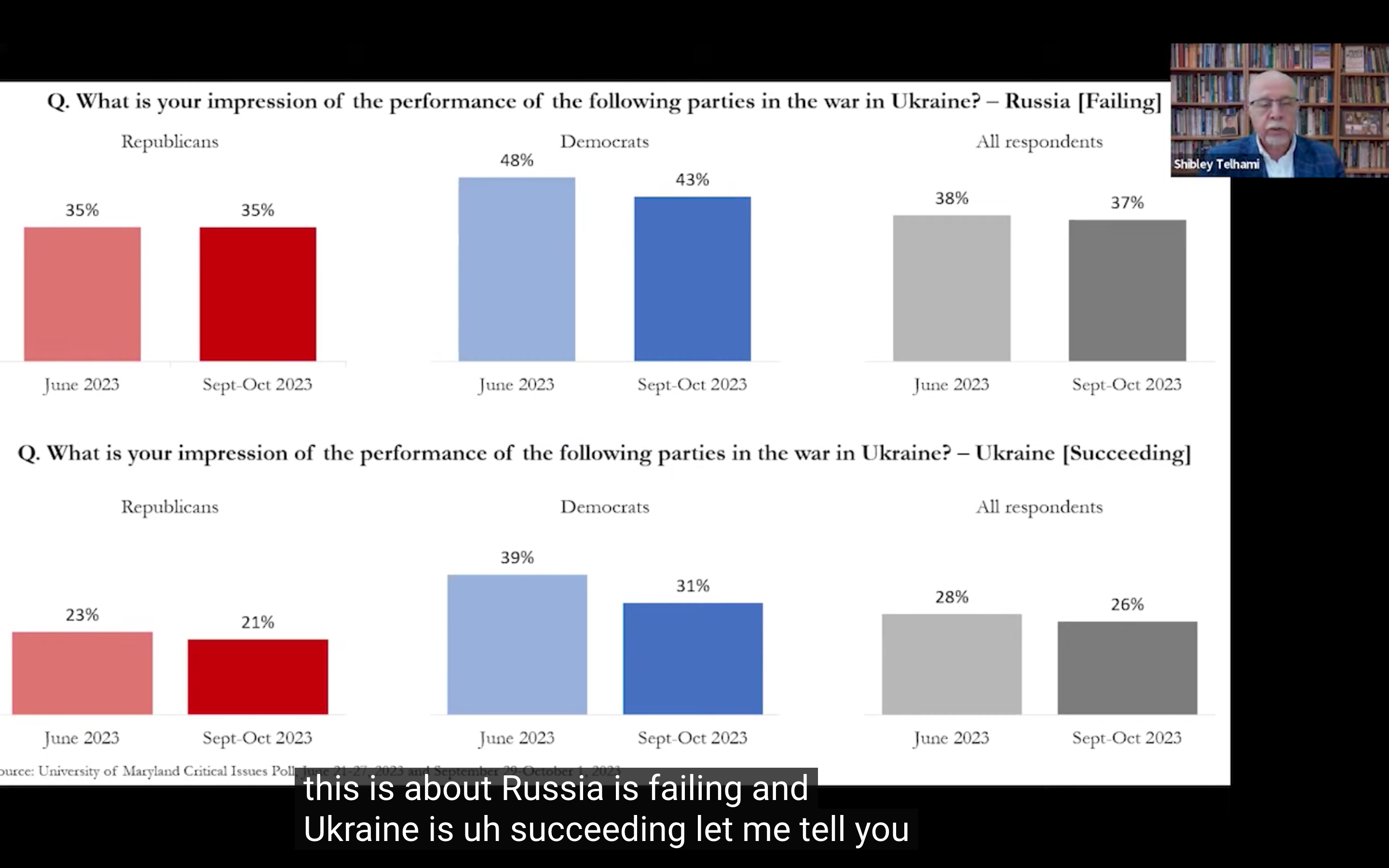
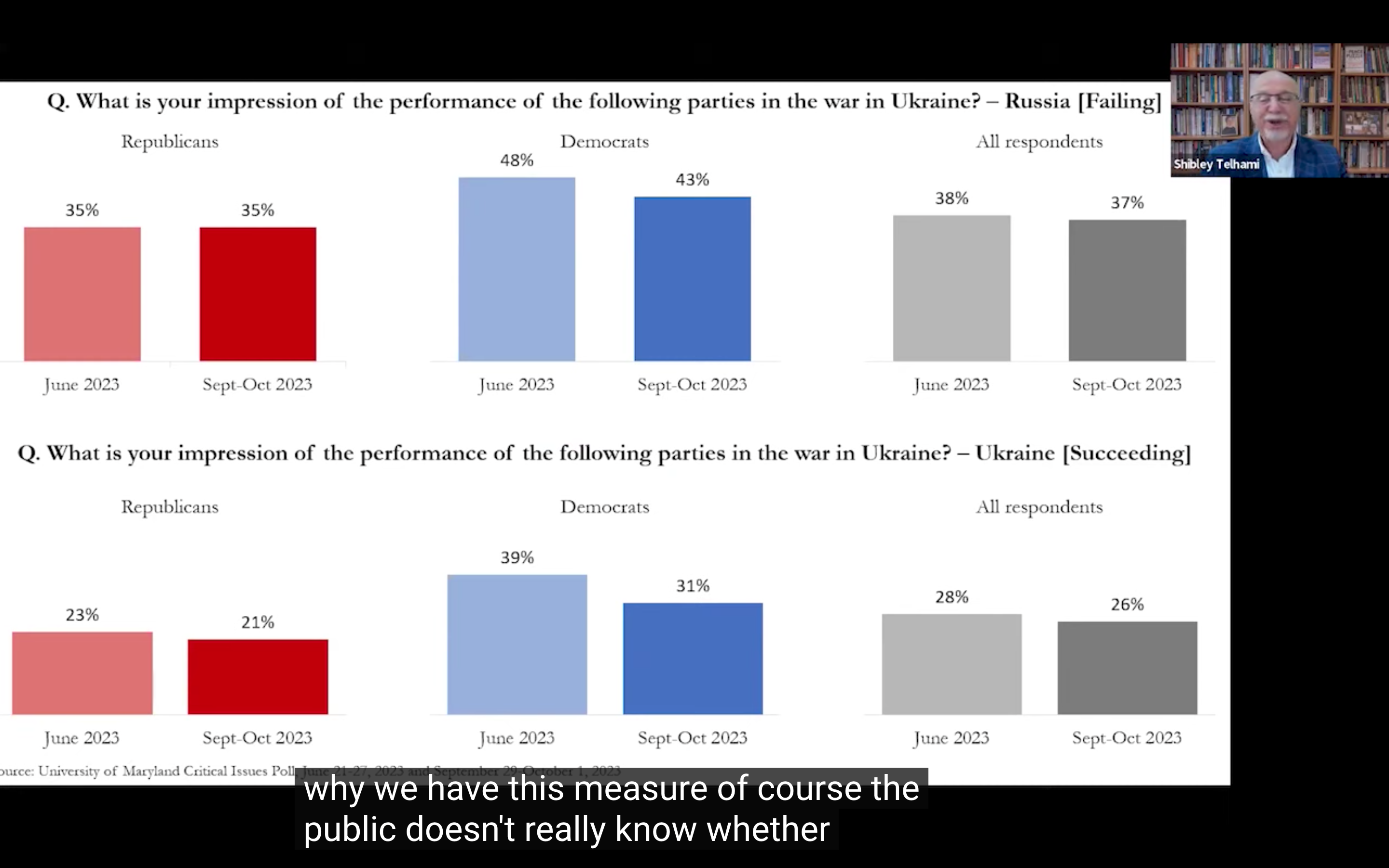
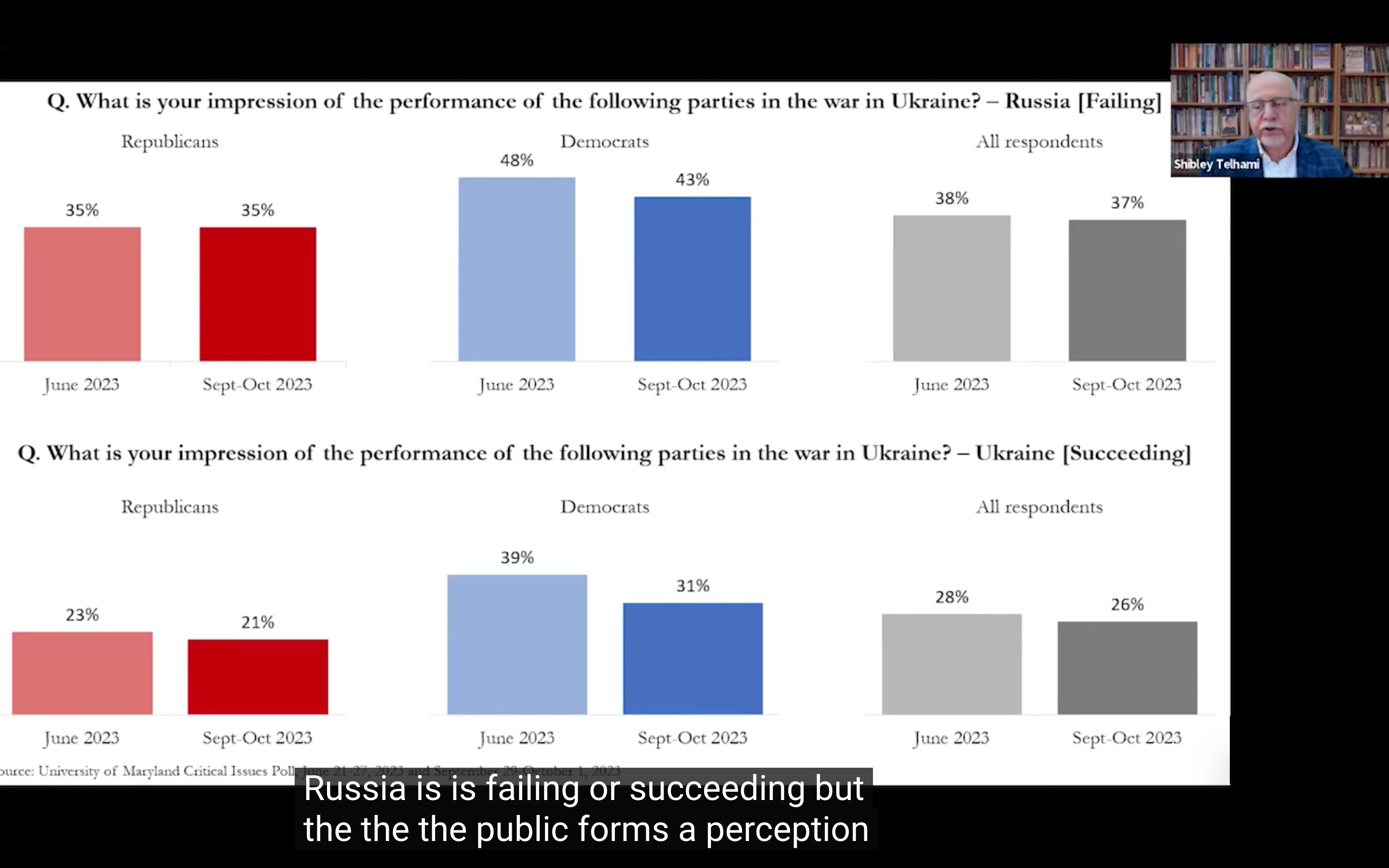
Shi­bley Tel­ha­mi: Let’s look at the next sli­de um which is what is “your impres­si­on of the per­for­mance of the fol­lowing par­ties in the Ukrai­ne war” and this is about Rus­sia is fai­ling and Ukrai­ne is uh suc­cee­ding. Let me tell you why - we have this mea­su­re, of cour­se the public does­n’t real­ly know whe­ther Rus­sia is is fai­ling or suc­cee­ding, but the the public forms a per­cep­ti­on, based on the coverage from the Press, what poli­ti­ci­ans say - um what the Ukrai­ni­ans say, what the Rus­si­ans say, and that impres­si­on we found throughout our pol­ling, to be high­ly cor­re­la­ted with the degree of sup­port. The more they think Rus­sia is fai­ling, the more they want to sup­port Ukrai­ne, the more they think Ukrai­ne is suc­cee­ding, the more they want to sup­port Ukrai­ne. So tho­se two mea­su­res about Rus­sia fai­ling and Ukrai­ne suc­cee­ding have been essen­ti­al. So to the extent that the­re is a chan­ge here, it is inte­res­ting not in the over­all, becau­se when you look at the total public uh all respondents there’s no chan­ge wit­hin the mar­gin of error, the chan­ges wit­hin the mar­gin of error, but the­re is a bit of a troub­ling shift wit­hin Demo­crats. So if you look at yeah um uh you know drop from 48 to 43% about Rus­sia is fai­ling and a big drop in Ukrai­ne is suc­cee­ding uh from 39 to 31% in Sep­tem­ber to Octo­ber and then one final sli­de I’ll show befo­re I ask you to react - which is a ques­ti­on that we only asked this time, becau­se it was about the coun­ter offen­si­ve we knew actual­ly in the spring, that a lot of peop­le were expec­ting a coun­ter expen­si­ve to see um, what - how it impacts you know the the cal­cu­lus of peop­le in terms of suc­cess of fail­u­re of Ukrai­ne. And I was obvious­ly -- initi­al­ly peop­le were hope­ful that the coun­ter offen­si­ve was going to be more suc­cess­ful, it it see­med to have bog­ged down may­be more than peop­le were expec­ting, uh befo­re at least, the public, but sur­pri­sin­gly it’s not uh as bad as I may have expec­ted, becau­se actual­ly it loo­ks like a plu­ra­li­ty of the public, 38%, say been some­what effec­ti­ve, only 5% say very inef­fec­ti­ve and 9% say some­what inef­fec­ti­ve, so obvious­ly a lot of don’t knows that you expect a ques­ti­on like that about 30%, but - you know the per­cep­ti­on about the coun­ter offen­si­ve is more - that it’s more suc­cess­ful than not suc­cess­ful, inclu­ding among Repu­bli­cans -- so that’s inte­res­ting and and obvious­ly pro­mi­sing from the point of view of sup­por­ting Ukrai­ne.

Any reac­tions you had?

Fio­na Hill: Yeah there’s a num­ber of reac­tions and I mean I know that you you know del­ve into a lot of the details in this I mean you just said yourself that a lot of it is shared by wha­te­ver peop­le are hea­ring poli­ti­ci­ans say and that might you know, very well you know, um uh I think um under­li­ned some of the you know issu­es and dif­fe­ren­ces bet­ween Repu­bli­cans and Demo­crats, obvious­ly given you know the the fact that we’­re right in the midd­le now of um our pre­si­den­ti­al elec­tion cam­pai­gn and this has beco­me a domestic poli­ti­cal issue just like you know we alrea­dy said it is in Poland, or has been in Slo­va­kia and you know in Hun­ga­ry and you know else­whe­re whe­re you know ine­vi­ta­b­ly this is part of the fab­ric of uh poli­tics -- also in the media, I mean you know um the­re is a lot of um selec­ti­vi­ty in the way that um this is cove­r­ed by uh dif­fe­rent orga­niz­a­ti­ons some um news­pa­pers that peop­le are rea­ding have cor­re­sponds on the ground, others get it from wire feeds, a lot of peop­le par­ti­cu­lar­ly in youn­ger genera­ti­ons, and I know that you’­ve got some kind of age bra­cket, you know get­ting their infor­ma­ti­on from You­Tube and Insta­gram, you know…

Yeah, never mind that the majo­ri­ty of peop­le pol­led in the US got both of tho­se ques­ti­ons wrong - just - well, just com­ment that the fact that they did is -- obvious­ly pro­mi­sing from the point of view of sup­por­ting Ukrai­ne.

The­re is this say­ing in the pol­ling indus­try, that its not the results of the polls that are tel­ling about socie­ties pre­fe­ren­ces, its the chan­ging of the numbers.

So never­mind, that more peop­le got this wrong than right, the important part is that this loo­ks “obvious­ly pro­mi­sing from the point of view of sup­por­ting Ukraine”.

This (the strong cor­re­la­ti­on part) is then used to craft the public nar­ra­ti­ve, which media most­ly just copies, at least, when it comes from the Broo­kings Insti­tu­ti­on, which is being brie­fed here.

The cor­re­la­ti­on in its­elf is not that asto­nis­hing here (peop­le tre­at wars like a sports event), its more the bla­sé atti­tu­te in which “having a public that gets all of this objec­tively wrong” can be “obvious­ly pro­mi­sing from the point of view of sup­por­ting Ukraine”.

So, that more peop­le on the demo­cra­tic side got this right, is tal­ked about as a pro­blem, becau­se the num­bers fell.

Die­se Gesell­schaft ist das abso­lut gro­tesk und abar­tigst Allerletzte.

No words

17. November 2023

Jeru­sa­lem
CNN
—
Isra­el has drop­ped leaf­lets across parts of sou­thern Gaza cal­ling on civi­li­ans to evacua­te and “head towards known shel­ters,” indi­ca­ting Isra­el could soon expand its ground ope­ra­ti­on against Hamas to the south of the enclave.

Leaf­lets were drop­ped Wed­nes­day on four com­mu­nities to the east of Khan You­nis, the lar­gest city in sou­thern Gaza, warning peop­le living the­re to “evacua­te your resi­dence immediately.”

The com­mu­nities – Al Qar­rah, Khuza’a, Bani Suhai­la, and Absa­an – are near the peri­me­ter fence sepa­ra­ting the Gaza Strip from Isra­el, sug­ges­ting pos­si­ble new incur­si­on points by the Isra­el Defen­se For­ces (IDF) loo­king to take con­trol of the south.

src: click

edit: Es gibt aber natür­lich auch wie­der gute Nach­rich­ten, das hier ist das was der Stan­dard zum sel­ben Zeit­punkt berichtet:
Bildschirmfoto 2023 11 17 um 20 37 13

[Zwei Tank­las­ter pro Tag sind sehr wahr­schein­lich zu wenig um den Mobil­funk in Gaza auf­recht­zu­er­hal­ten. Geschwei­ge denn das Internet.]

Die­se Gesell­schaft ist das abso­lut gro­tesk und abar­tigst Allerletzte.

edit: Die NZZ hat dazu auch einen net­ten Angle:

Der Erfolg der israe­li­schen Ope­ra­ti­on im Gaza­strei­fen hängt von der Umsicht jedes ein­zel­nen Kom­man­dan­ten ab
Je mehr Gelän­de die Boden­trup­pen gewin­nen, des­to bes­ser ist die Zivil­be­völ­ke­rung geschützt. Der Ope­ra­ti­ons­plan kom­bi­niert des­halb mili­tä­ri­sche Kraft mit bewuss­ter Zurückhaltung.

src: click

Je mehr Land­raub, des­to bes­ser, da siche­rer für die Bevöl­ke­rung in Gaza und die Ver­ant­wor­tung für Völ­ker­rechts­ver­stö­ße hän­ge von der Umsicht jedes ein­zel­nen Kom­man­dan­ten ab und kön­ne nicht auf betei­lig­te Füh­rer von Staa­ten pro­ji­ziert werden.

I can’t belie­ve its not Neoimperialism!

I have resi­gned as poe­try edi­tor of the New York Times Magazine.

The Israe­li state’s U.S-backed war against the peop­le of Gaza is not a war for anyo­ne. The­re is no safe­ty in it or from it, not for Isra­el, not for the United Sta­tes or Euro­pe, and espe­cial­ly not for the many Jewish peop­le slan­de­red by tho­se who claim fal­se­ly to fight in their names. Its only pro­fit is the dead­ly pro­fit of oil inte­rests and wea­pon manufacturers.

The world, the future, our hearts—everything grows smal­ler and har­der from this war. It is not only a war of mis­si­les and land inva­si­ons. It is an ongo­ing war against the peop­le of Pales­ti­ne, peop­le who have resis­ted throughout deca­des of occup­a­ti­on, for­ced dis­lo­ca­ti­on, depri­va­ti­on, sur­veil­lan­ce, sie­ge, impr­i­son­ment, and torture.

Becau­se our sta­tus quo is self-expression, some­ti­mes the most effec­ti­ve mode of pro­test for artists is to refuse.

I can’t wri­te about poe­try amidst the ‘rea­son­ab­le’ tones of tho­se who aim to accli­ma­ti­ze us to this unre­a­son­ab­le suf­fe­ring. No more ghoulish euphe­misms. No more ver­bal­ly saniti­zed hell­scapes. No more war­mon­ge­ring lies.

If this resi­gna­ti­on lea­ves a hole in the news the size of poe­try, then that is the true shape of the present.
—Anne Boyer

src: click
Pri­ma­ry source: click

Israel hat noch geprüft…

16. November 2023

… ob es mehr von so Pau­sen ein­le­gen kann, siehe -

Tac­ti­cal Pau­ses? Die haben wir doch gemacht.

Der­weil hat sich der UN Sicher­heits­rat mitt­ler­wei­le dazu hin­rei­ßen las­sen doch eine Reso­lu­ti­on zu ver­ab­schie­den, die ist seit dem recht­lich bindend:

Der Uno-Sicherheitsrat hat eine völ­ker­recht­lich bin­den­de Reso­lu­ti­on mit der For­de­rung nach tage­lan­gen huma­ni­tä­ren Pau­sen im Gaza­strei­fen ange­nom­men. Nach lan­gem Rin­gen einig­te sich das mäch­tigs­te Uno-Gremium auf den gemein­sa­men Beschluss. Isra­el lehnt eine huma­ni­tä­re Pau­se ohne Frei­las­sung der Gei­seln ab.

src: click

Da hat sich Isra­el dazu ent­schie­den den Prüf­vor­gang zu beschleu­ni­gen, und ist zu fol­gen­dem Ent­schluss gekommen: 

Isra­el lehnt UN-Forderung nach “huma­ni­tä­ren Pau­sen” im Gaza­strei­fen ab

src: click

Ah. Na aber gut, dass sies geprüft haben!

Könn­ten wir viel­leicht in Öster­reich jetzt noch irgend­wel­che Demos absa­gen und Slo­gans durch Anlass­ge­setz­ge­bung ver­bie­ten? So zum Spass?

Die­se Gesell­schaft ist das abso­lut gro­tesk und abar­tigst Allerletzte.

Well, maybe just add a touch of propaganda…

15. November 2023

Israel’s offi­cial Ara­bic account affi­lia­ted with the Minis­try of For­eign Affairs pos­ted a sel­fie video of a Pales­ti­ni­an nur­se con­dem­ning Hamas for taking over al-Shifa hos­pi­tal in the Gaza Strip on Nov. 11.

But some things about the video didn’t add up.

Ever­ything about it sma­cked of high school theater—from the bot­ched accent that sound­ed like it was strai­ght out of an Israe­li soap ope­ra to the per­fect­ly scrip­ted IDF tal­king points rol­ling off her tongue.

Hamas were ste­aling the fuel. Check.

Hamas were taking mor­phi­ne. Check.

Then the­re was the pris­ti­ne white lab coat loo­king like it had just come back from the dry clea­ner, the audio track of bombs fal­ling that sound­ed like sam­ples from a late-’80s Casio key­board, and the con­tri­ved stethoscope-waving you‘d expect from an extra on Grey’s Anatomy.

Hamas hadn’t sto­len her make­up though, which was immaculate.

The Pales­ti­ni­an Minis­try of Health logo slap­ped stra­te­gi­cal­ly in the back­ground but visi­ble over her shoul­der loo­ked like an OSINT honeytrap.

“This video must be authen­tic right, I can see the Health Minis­try logo”—at least that’s what whoever made it would hope the bur­geo­ning army of sket­chy anony­mous OSINT (open source intel­li­gence) rese­ar­chers might say.

The only thing mis­sing was a degree han­ging in the back­ground say­ing Tel Aviv Ups­tairs Medi­cal College.

Oh, and perhaps I should have men­tio­ned this first, no one at al-Shifa had ever seen the nur­se before.

Soon, the volu­me of ridi­cu­le direc­ted at tho­se sharing it reached such a pitch that the Isra­el Ara­bic account dele­ted their tweet. I guess they didn’t know the source either.

src: click (Dai­ly Beast)

Schon schei­ße, wenn man das im deutsch­spra­chi­gen Jour­na­lis­mus nicht erwäh­nen darf nicht?

Just a small Fiona Hill update

15. November 2023

Here is the gist of it, Fio­na Hill is still very much nume­ro­lo­gy obsessed.

So in the past 3 hours I tried to find out if what Fio­na Hill pre­sen­ted in a Broo­kings Insti­tu­ti­on talk, as the rea­so­ning for why “the Finns joi­ned NATO”, was a one off laps in arguing that reli­ed hea­vi­ly on an actu­al argu­ment popu­lar in fin­nish socie­ty, or if Fio­na Hill is inde­ed a fan of numerology.

Turns out Fio­na Hill, VERY MUCH a fan of numerology.

So here is the initi­al state­ment again, that was made by Fio­na Hill on the 16th of Sep­tem­ber 2023 in this Broo­kings insti­tu­ti­on video.

(See also: click)

[…] why the Finns joi­ned NATO, becau­se they’­re all in they know whe­re this is hea­ding 1989 for them, did seem like an aberra­ti­on and alt­hough the Finns were embra­cing the Euro­pean Uni­on and basing their embra­cing, their inde­pen­dence - they always had in the back of their minds that histo­ry would come back again - with ano­t­her nine [thats the num­ber 9] like 1939. So they were always rar­ing to go - so I think that we ought to our­sel­ves take a pau­se, you know, when we look through our own lens at 1989, and whe­re we’­ve been and you know how we feel about the war in Ukrai­ne, a lot of other coun­tries are all in, becau­se as uh Timo­thy said they have a dif­fe­rent year zero though they have a dif­fe­rent year nine - they think about a lot of the­se, uhm dates in dif­fe­rent his­to­ri­cal patterns[…]

Now in my mind the ques­ti­on still per­sis­ted, if she real­ly tal­ked about “how Finns think today”, or if she attri­bu­t­ed delu­sio­nal thin­king onto an ent­i­re natio­na­li­ty of peop­le here.

Well, what can I say.…

Not only the Finns are hea­vi­ly into nume­ro­lo­gy accord­ing to Fio­na Hill, the who­le of euro­pe is:

Refe­ren­cing this video deba­te from a Uni­ver­si­ty of Ida­ho Panel, uploa­ded on the 9th of Octo­ber 2023, at about 9 Minu­tes in:

[…] and Sena­tor Borah was of cour­se someo­ne who famous­ly wan­ted to end an out­law war um which was a very Noble ide­al and of cour­se this was after the the May­hem of World War I and he sad­ly you know um pas­sed away in 1940, alt­hough perhaps for­tu­n­a­te­ly -- becau­se he did­n’t live to see uh the United Sta­tes drag­ged into World War II um after the attack on uh Pearl Harbor.

But all of this repe­ti­ti­on of War, a 100 years cycle of wars in Euro­pe, is also col­li­ding with major uh Inter­na­tio­nal cri­ses uh cli­ma­te chan­ge and cli­ma­te dis­as­ters uh which are um cer­tain­ly nota­ble uh around around the world uh, very fast demo­gra­phic chan­ge uh I was tal­king to someo­ne ear­lier about thin­king who would have thought and perhaps who would have thought if you were sit­ting here 50 years ago as an under­gra­dua­te that the world would go from two bil­li­on peop­le to 8 bil­li­on, … […] also very fast rapid tech­no­lo­gi­cal chan­ge uh and all of the con­cerns - I was mee­ting with stu­dents ear­lier who were asking about you know whe­re are we hea­ded with AI you know for examp­le, I’m sure that’s ano­t­her of the the­mes that will spin them­sel­ves out over um in the Borah sym­po­sia in the future and it cer­tain­ly feels like with the tit­le that you’­ve picked, that we’­re in one of the­se apo­ca­lyp­ti­cal uh moments, but I would sug­gest as a his­to­ri­an we’­ve been the­re befo­re - many times - uh Sena­tor Borah’s who­le um expe­ri­ence as the per­son that this com­me­mo­ra­tes would have he would have felt the same for sure, uh back in the the 1920s when he was, you know, part of the Kel­logg Bri­and pact, try­ing to sta­bi­li­ze a world…

src:
https://www.youtube.com/watch?v=BfmWBWG3zd0 (at about 9 Minu­tes in.)

So here the ENTIRE thought pat­tern is again. But now its not the Finns, its “us euro­peans”. And its not Nato we are aiming for, but a “bet­ter, more sta­ble world, with less change”.

So here are the mar­kers of the men­tal image:

1. Pro­po­sed lack of struc­tu­ral safe­ty in the self per­cep­ti­on of ent­i­re coun­tries populations

2. 100 years cycle of war in Europe

3. And both cou­pled to desas­ter moti­ves (cli­ma­te chan­ge, demo­gra­phic chan­ge), then moved into ano­t­her desas­ter moti­ve, with over­po­pu­la­ti­on at the 8 bil­li­on peop­le mark occu­ri­ning at the same time.

And the way she got the­re was through an asso­cia­ti­on with nega­ti­ve emo­ti­ons, per­cei­ved his­to­ric cycles, and numbers.

Coin­ci­dence? I don’t think so.

Mea­ning its Fio­na Hill who­se got a litt­le Covid 19 iso­la­tio­ny, not so much.. like, you know… the rus­si­an guy…

So turns out the lady is cra­zy. At least in part. Lets say she has a spleen.

Well, very well then - and gre­at - becau­se Fio­na Hill was the one that inven­ted the “Putin thinks like a czar” nar­ra­ti­ve for the who­le of Europe.

Which in its ent­i­re­ty goes as fol­lows: “Putin thinks like a czar becau­se of his­to­ri­cal pat­terns he fol­lows, in the stone sta­tu­es Fio­na saw in his office after diner years ago - and not only one but like five sta­tu­es, whe­re the one named Vla­di­mir, which is the only one in front of the Krem­lin and not his office, which she also noti­ced becau­se he was named Vla­di­mir, is dou­bly important, becau­se its Vla­di­mir Putin, and Vla­di­mir the czar, so “Dou­ble Vla­di­mir” (thats a quo­te), and dou­ble Vla­di­mir, is very important - for why Putin inva­ded Ukraine”.

Not joking, see Fio­na Hills arguing here:

Oh, the four stone sta­tu­es theo­ry now got two types of Vla­di­mir on top

So apart from being the main pro­pa­gan­dist for euro­pes war nar­ra­ti­ve, what does the Lady do cur­r­ent­ly - you know job wise?

Fio­na Hill is a seni­or fel­low in the Cen­ter on the United Sta­tes and Euro­pe wit­hin the For­eign Poli­cy pro­gram at Broo­kings. She also holds the pres­ti­gious posi­ti­on of chan­cellor at Durham Uni­ver­si­ty in the United King­dom and was recent­ly elec­ted to the Har­vard Uni­ver­si­ty Board of Overseers.

src: click

Ah. Gre­at.

Die­se Gesell­schaft ist das abso­lut abar­tigst, ver­lo­genst und hin­ter­trie­benst Allerletzte.